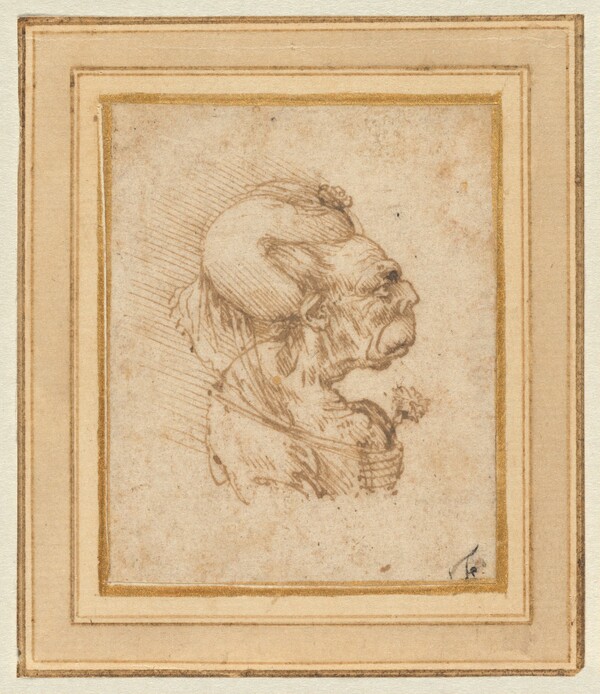
Leonardo da Vinci
Leonardo di ser Piero da Vinci (15 April 1452 – 2 May 1519) was an Italian polymath of the High Renaissance who was active as a painter, draughtsman, engineer, scientist, theorist, sculptor, and architect. While his fame initially rested on his achievements as a painter, he has also become known for his notebooks, in which he made drawings and notes on a variety of subjects, including anatomy, astronomy, botany, cartography, painting, and palaeontology. Leonardo is widely regarded as a genius who epitomised the Renaissance humanist ideal, and his collective works contributed to the development of European art to an extent rivalled only by that of his younger contemporary Michelangelo. Born out of wedlock to a successful notary and a lower-class woman in, or near, Vinci, he was educated in Florence by the Italian painter and sculptor Andrea del Verrocchio. He began his career in the city, but then spent much time in the service of Ludovico Sforza in Milan. Later, he worked in Florence and Milan again, as well as briefly in Rome, all while attracting a large following of imitators and students. Upon the invitation of Francis I, he spent his last three years in France, where he died in...
Read more on Wikipedia →![Wreath of Laurel, Palm, and Juniper with a Scroll inscribed Virtutem Forma Decorat [reverse]](https://image.artoryworks.com/iiif/ff62e8d0-45c4-498f-ad36-6358de827e04.webp)
![Sheet of Studies [recto]](https://image.artoryworks.com/iiif/49c325bf-6243-46eb-8215-f8830fd15641.webp)
![Study of a Madonna [verso]](https://image.artoryworks.com/iiif/942425d5-018d-44a9-ba87-dfb0057226b7.webp)
![Ginevra de' Benci [obverse]](https://image.artoryworks.com/iiif/8f29e3c9-a289-4d53-abf0-31a66e9e98fa.webp)