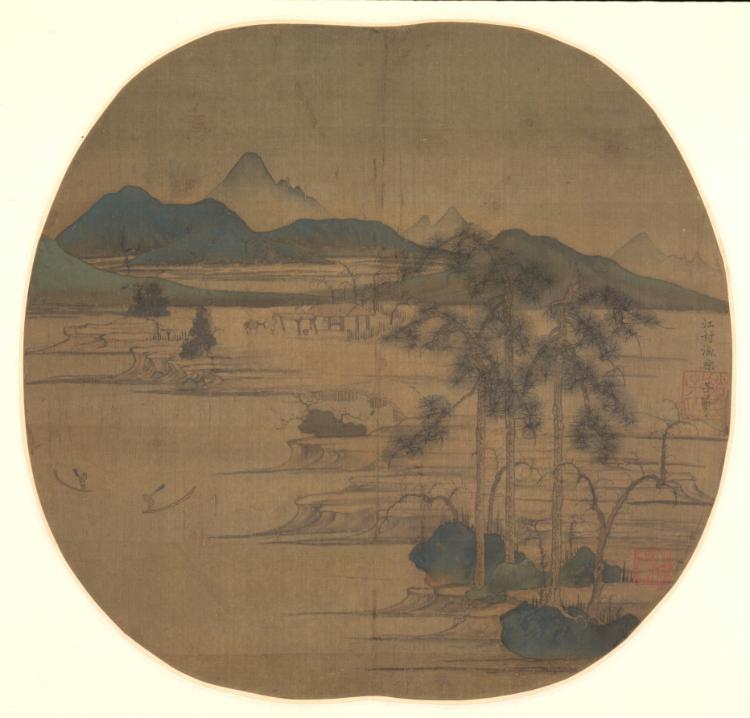
Zhao Mengfu
Zhao Mengfu (Chinese: 趙孟頫; pinyin: Zhào Mèngfǔ; Wade–Giles: Chao Meng-fu; courtesy name Zi'ang (子昂); pseudonyms Songxue (松雪, "Pine Snow"), Oubo (鷗波, "Gull Waves"), and Shuijing-gong Dao-ren (水精宮道人, "Master of the Water Spirits Palace"); 1254–1322), was a Chinese calligrapher, painter, and scholar during the Yuan dynasty. He was a descendant of the Song dynasty's imperial family through Emperor Xiaozong's brother Zhao Bogui who married a lady surnamed Song who was the granddaughter of Emperor Huizong. Zhao Bogui was a descendant of Emperor Taizu, through his son Zhao Defang. He was recommended by the Censor-in-chief Cheng Jufu to pay an audience with Kublai Khan in 1286 at the Yuan capital of Dadu, but was not awarded an important position in office. His work was however, greatly appreciated later by the Confucian-inspired Yuan Emperor Renzong. Zhao was a member of the "Academy of Worthies". He was married to Guan Daosheng, who was also an accomplished poet, painter and calligrapher. His rejection of the refined, gentle brushwork of his era in favour of the cruder style of the eighth century is considered to have brought about a revolution that created the modern Chinese landscape painting...
Read more on Wikipedia →