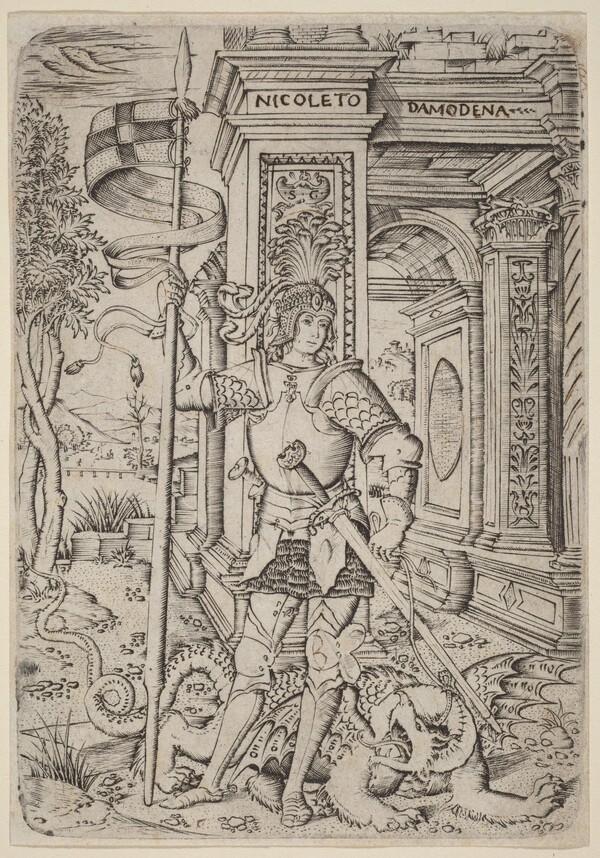
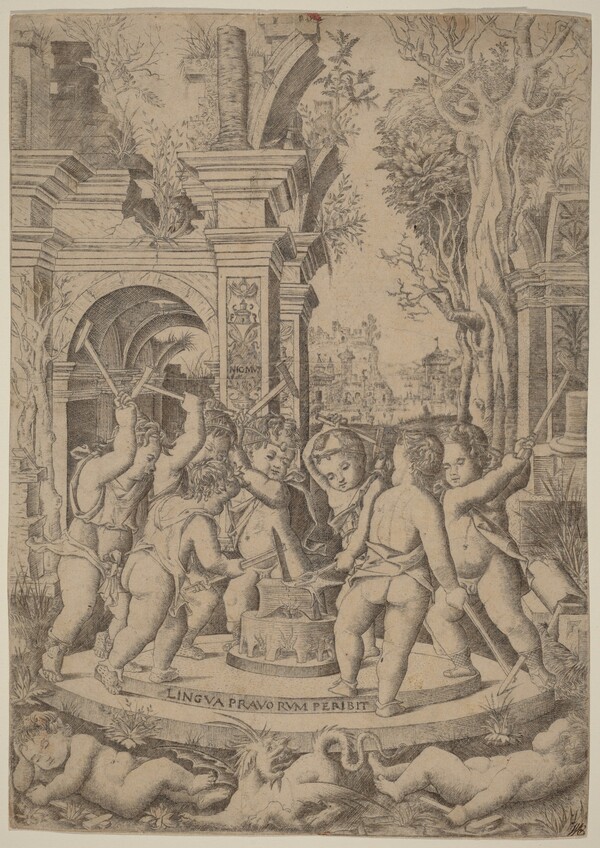
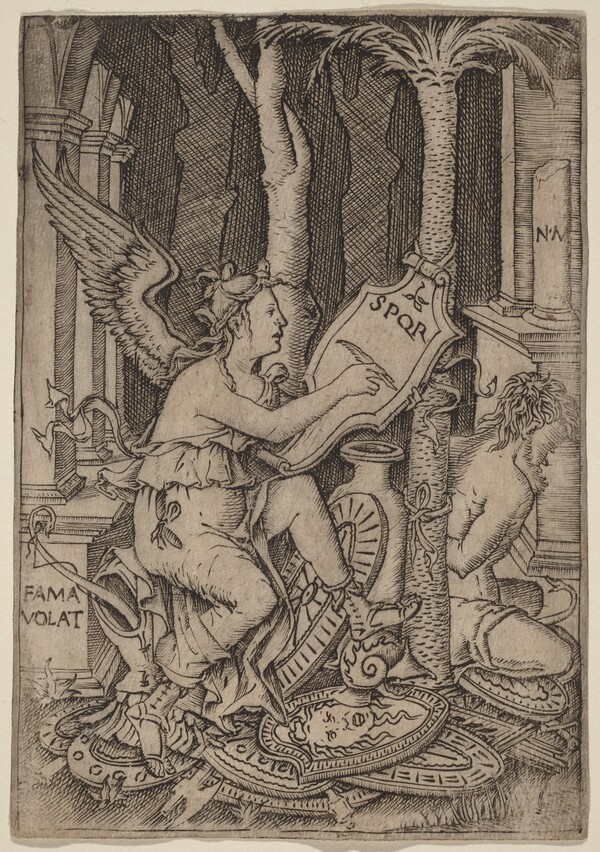
Nicoletto da Modena
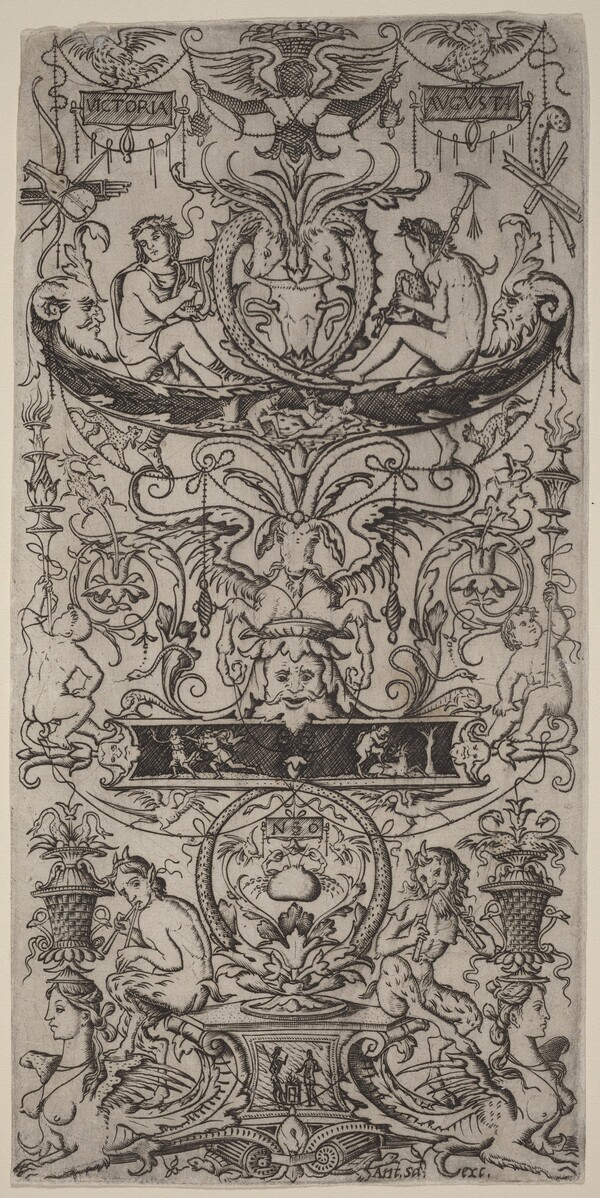
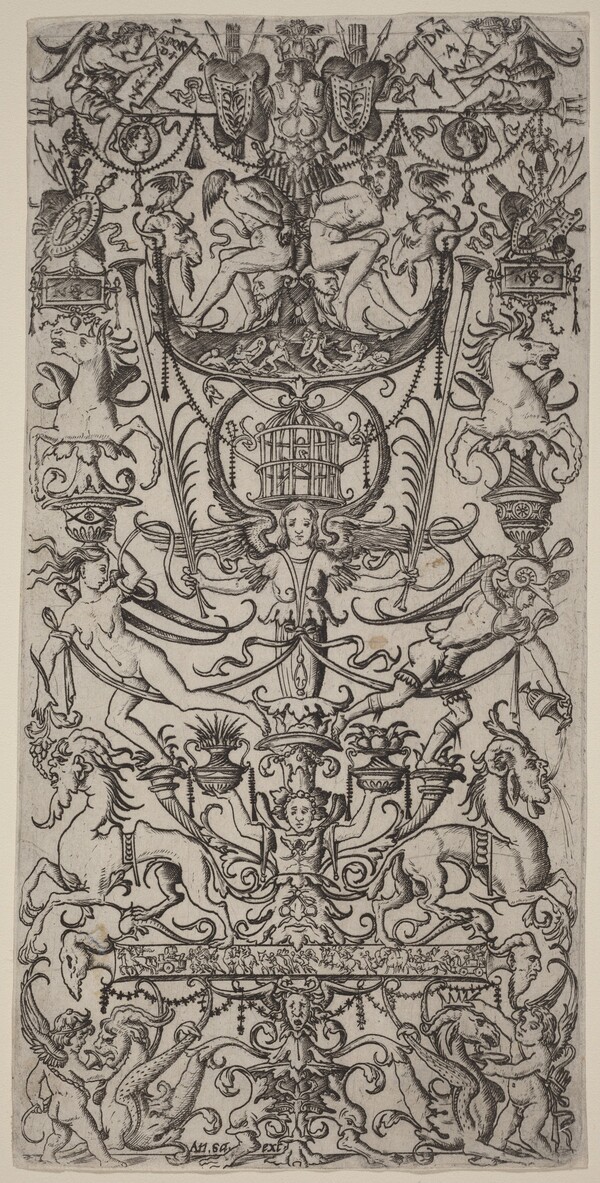
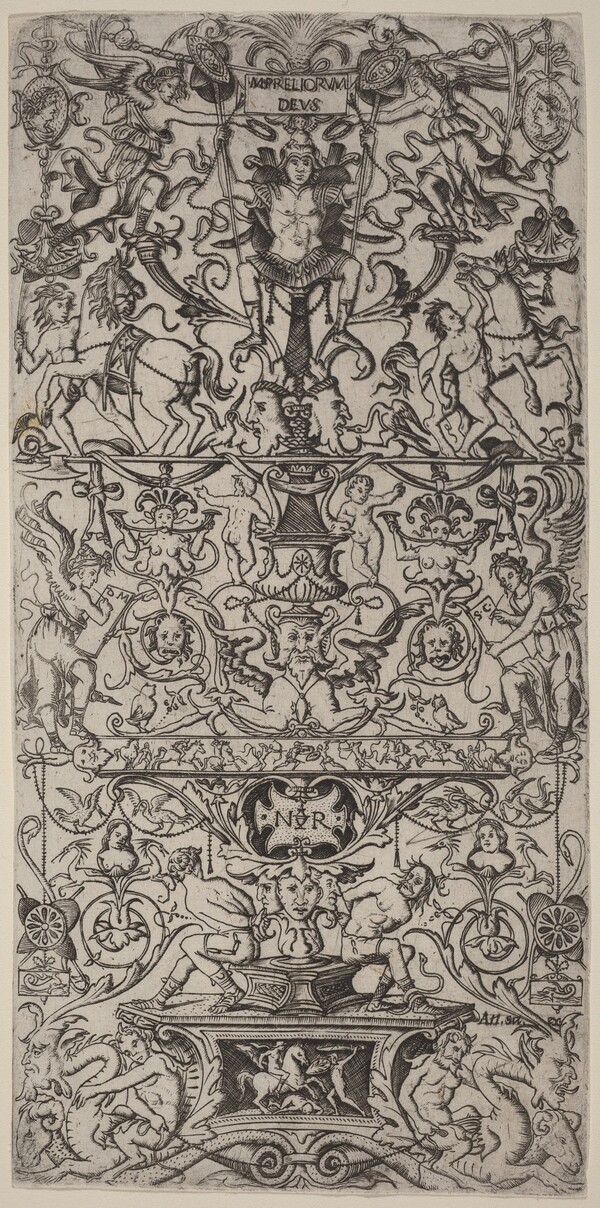
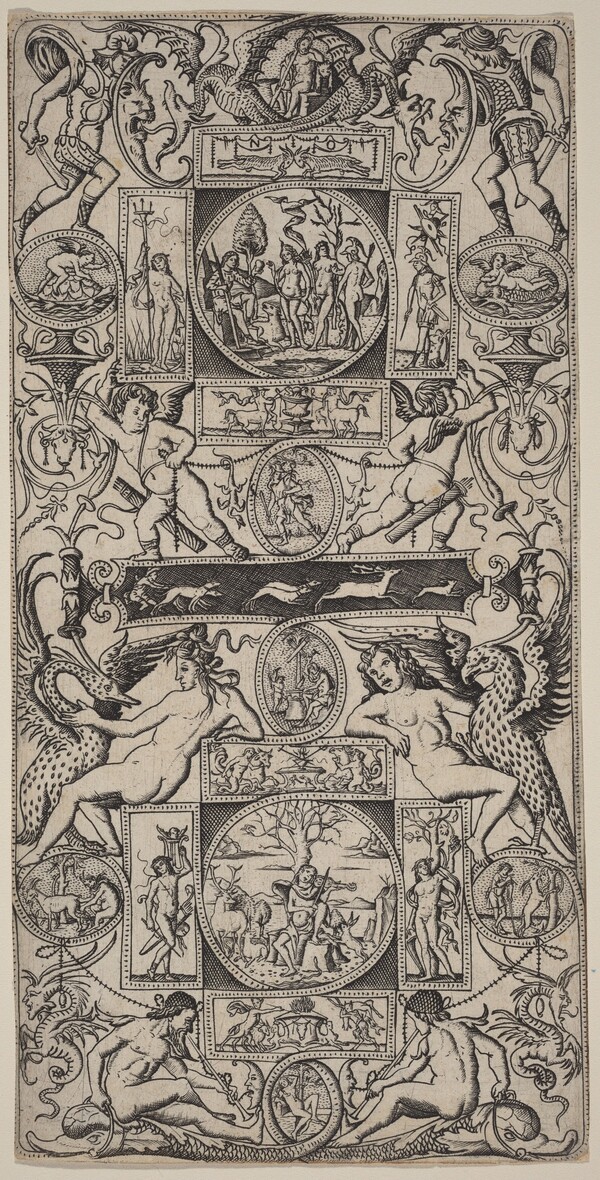
Grotesque is an adjective often used to describe weird shapes and distorted forms such as Halloween masks. In art, performance, and literature, however, grotesque may also refer to something that simultaneously invokes an audience feeling of uncomfortable bizarreness as well as sympathetic pity. The English word first appears in the 1560s as a noun borrowed from French, itself originally from the Italian grottesca (literally "of a cave" from the Italian grotta, 'cave'; see grotto), an extravagant style of ancient Roman decorative art rediscovered at Rome at the end of the fifteenth century and subsequently imitated. The word was first used of paintings found on the walls of basements of ruins in Rome that were called at that time le Grotte ('the caves'). These 'caves' were in fact rooms and corridors of the Domus Aurea, the unfinished palace complex started by Nero after the Great Fire of Rome in AD 64, which had become overgrown and buried, until they were broken into again, mostly from above. Spreading from Italian to the other European languages, the term was long used largely interchangeably with arabesque and moresque for types of decorative patterns using curving foliage elements...
Read more on Wikipedia →