Accession Number
1947.7.53
Medium
etching
Dimensions
N/A
Classification
Credit Line
Rosenwald Collection
Tags
Print Early Modern (1901–1950) Etching American
Background & Context
Background Story
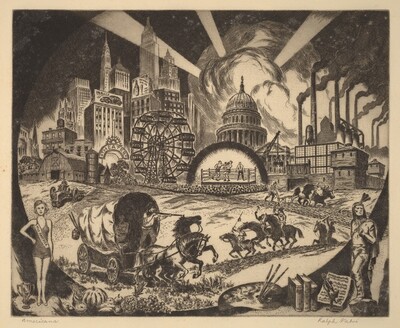
Ralph Fabri (1894-1975) was a Hungarian-born American painter and printmaker known for the etchings and paintings of American scenes that make him one of the most distinctive printmakers of the mid-20th century American tradition. Americana from 1946 depicts an American scene in the precise, detailed etching manner that distinguishes Fabri's best work from the more straightforward printmaking of his contemporaries. The title Americana—referring to objects and traditions that are characteristic of American culture—reflects Fabri's interest in the everyday scenes and objects that define American life, and the 1946 date places this in the immediate post-war period when American artists were increasingly turning to American subjects as a source of artistic inspiration.
Cultural Impact
Americana is important in the history of American printmaking because it demonstrates the precise, detailed etching manner that Fabri brought to American subjects as one of the most distinctive printmakers of the mid-20th century. Fabri's etchings of American scenes—combining the precise detail of the etching medium with the subject of American everyday life—represent an important tradition in American printmaking that found artistic value in the everyday objects and scenes of American culture, and the 1946 etching shows this tradition in the immediate post-war period.
Why It Matters
Americana is Fabri's detailed American etching: an American scene rendered in the precise manner of one of the most distinctive printmakers of the mid-20th century. The 1946 etching reflects the post-war turn to American subjects as a source of artistic inspiration—finding value in the everyday objects and scenes of American culture.