Provenance
Adolph Lewisohn [c. 1849-1938], New York, by 1921; [1] by inheritance to his son Sam Adolph Lewisohn [1884-1951], New York; by inheritance to his wife, née Margaret Seligman [1895-1954], New York; bequest 1954 to NGA.
[1]Lent to Loan Exhibition of Impressionist and Post-Impressionist Paintings, The Metropolitan Museum of Art, 1921, no. 106.
Accession Number
1954.8.1
Medium
oil on canvas
Dimensions
overall: 54.2 x 65.4 cm (21 5/16 x 25 3/4 in.) | framed: 75.3 x 86.4 x 8.9 cm (29 5/8 x 34 x 3 1/2 in.)
Classification
Painting
Credit Line
Gift of Margaret Seligman Lewisohn in memory of her husband, Sam A. Lewisohn
Tags
Painting Impressionist & Modern (1851–1900) Oil Painting Canvas French
Background & Context
Background Story
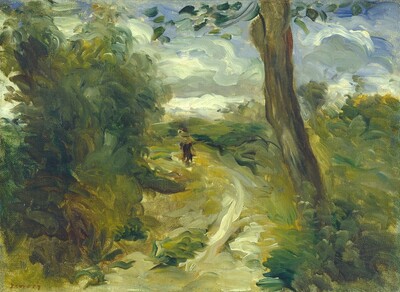
The Mussel Harvest (1879) depicts a traditional coastal activity—the harvesting of mussels from rocks and beds along the Normandy coast—that was both an economic practice and a social ritual. The mussel harvest, like the oyster beds of Cancale that Sargent painted, represented the working relationship between coastal communities and the sea that sustained them. The 1879 date places this during Renoir's most productive Impressionist period, when he was exploring subjects beyond the Parisian leisure scenes that had dominated his early work. The Normandy coast, with its rocky shoreline and its traditional fishing communities, provided Renoir with subjects that combined his interest in human activity with the atmospheric effects of coastal light. Renoir's treatment of the mussel harvesters—figures working in shallow water, bending to the task of gathering shellfish—demonstrates his ability to render the human figure in action with the same fluency he brought to leisure subjects. The painting's palette, with the Normandy coast's characteristic grays and blues punctuated by the warmer tones of the harvesters' clothing, captures the specific atmospheric quality of the Channel coast. The subject also connects Renoir to the broader tradition of coastal genre painting that included Millet's farmers and Daubigny's river workers.
Cultural Impact
Renoir's coastal genre paintings influenced how traditional fishing practices were represented in Impressionist art, combining atmospheric observation with genre documentation. The paintings influenced later artists who similarly found subjects in working coastal communities. The mussel harvest subject influenced how Normandy's working coast was perceived, connecting its scenic beauty to the productive labor that sustained its communities.
Why It Matters
This painting matters because it demonstrates that Renoir's Impressionist method could serve working subjects as effectively as leisure subjects—the same fluency of brushwork and chromatic sensitivity that distinguished his scenes of Parisian pleasure also served the mussel harvesters' labor, arguing that artistic significance lies in the quality of seeing rather than in the social status of what is seen.