Provenance
Elizabeth, 5th Duchess of Gordon [1794-1864]; by descent to the sitter's half-brother, Adam Gordon; thence through his widow, who married a Mr. Reid, to her grandson, Major Duggan [d. by 1918], Newton Garrie, Fochabers, Morayshire, Scotland;[1] sold 1929 by his widow to (P. Jackson Higgs), New York;[2] from whom it was purchased December 1929 by Mrs. William H. Moore, New York; by descent to her son Edward Small Moore [1881-1948], thence to his wife, Jean McGuinley Moore [later Mrs. Charles D. Draper, 1884/5-1954],New York; bequest 1954 to NGA.
[1] The provenance from Adam Gordon to Major Duggan is given in the expertise supplied to P. Jackson Higgs by William Roberts, 5 September 1929, in NGA curatorial files. [2] The picture was advertised as recently acquired by P. Jackson Higgs in _Art_ (December 1929), 5.
Accession Number
1954.9.1
Medium
oil on canvas
Dimensions
overall: 76.9 x 64.2 cm (30 1/4 x 25 1/4 in.) | framed: 94.3 x 81.6 x 6.4 cm (37 1/8 x 32 1/8 x 2 1/2 in.)
Classification
Painting
Credit Line
Gift of Jean McGinley Draper
Tags
Painting Neoclassical & Romantic (1751–1850) Oil Painting Canvas
Background & Context
Background Story
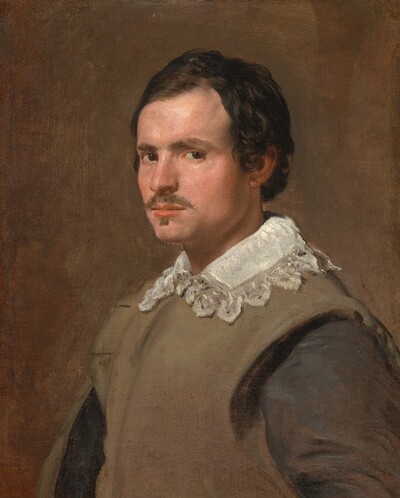
Miss Jean Christie is a portrait in the style of Sir Henry Raeburn, dating to approximately 1810-1830, depicting a young woman from the Scottish elite during one of the most dynamic periods in Scottish history. Sir Henry Raeburn (1756-1823) was Scotland's greatest portrait painter, whose distinctive style—characterized by bold brushwork, dramatic lighting, and an ability to capture both the outward appearance and inner character of his sitters—defined the visual image of Enlightenment Edinburgh and the Scottish upper classes. The designation "style of Raeburn" indicates that this portrait was painted by an artist working in the master's manner, likely a follower, student, or provincial painter who had absorbed Raeburn's approach to portraiture. The period 1810-1830 was a transformative era in Scotland. The Highland Clearances were displacing traditional communities, the Industrial Revolution was reshaping the Lowlands, Edinburgh was establishing itself as a major intellectual and cultural center, and Scottish society was being fundamentally restructured by economic and social change. In this context, portraits of the Scottish elite served as assertions of identity, status, and continuity at a time when traditional hierarchies were being challenged. The subject, Miss Jean Christie, would have been a member of a family prominent enough to commission a portrait, placing her within the network of landowning, professional, and commercial families that constituted Scotland's governing class. Female portraiture in the Raeburn tradition carried particular significance, as Raeburn's portraits of women were celebrated for their directness and psychological penetration, qualities that distinguished them from the more conventional feminine portraiture of the period. A portrait in Raeburn's style would have been expected to convey the sitter's individuality and character rather than merely her social role or physical attractions.
Cultural Impact
Raeburn's portraiture style defined how the Scottish Enlightenment elite visualized itself, creating an image of Scottish identity that combined intellectual confidence with social authority. Portraits in his style extended this visual vocabulary beyond his own workshop, allowing a broader segment of Scottish society to participate in the self-image that Raeburn had created for Edinburgh's intellectual and economic elite.
Why It Matters
This portrait matters as a document of early nineteenth-century Scottish elite culture and the enduring influence of Raeburn's portraiture tradition, reflecting how Scottish identity was constructed and communicated through visual representation during a period of profound social transformation.