Provenance
Camil. II Gonzaga.[1] (J. Baer, New York).[2] (Gallery Sanct Lucas, Vienna); sold 1965 to Nell V. [Mrs. Robert M.] Weidenhammer, Rockville, Maryland; gift (partial and promised) 1992 to NGA; gift completed 2003.
[1] This reference stems from a wax seal on the verso of the painting.
[2] Information contained in a letter dated 5 July 1965 from B.J.A. Renckens, Rijksbureau voor Kunsthistorische Documentatie, to Dr. R. Herzig of Galerie Sanct Lucas (copy in NGA curatorial files).
Accession Number
1992.27.1
Medium
oil on panel
Dimensions
overall: 23.2 x 18.1 cm (9 1/8 x 7 1/8 in.)
Classification
Painting
Credit Line
Gift of Nell V. Weidenhammer
Tags
Painting Baroque (1600–1750) Oil Painting Panel Painting Flemish
Background & Context
Background Story
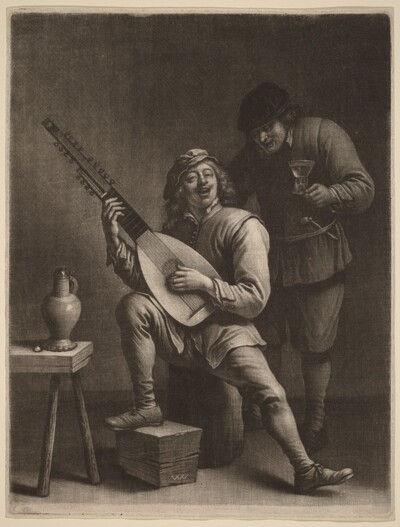
Two Peasants with a Glass of Wine is Teniers at his most economical: two figures, a glass of wine, and a minimum of setting combine to create a scene of rustic companionship that is simultaneously a genre painting and a study in social intimacy. The reduced scale and simplified composition allow Teniers to focus on the interaction between the two figures — their gestures, their expressions, and the social dynamics of sharing a glass of wine. The small panel format concentrates the viewer's attention on this intimate exchange, making the painting feel like a window into a private moment rather than a public spectacle.
Cultural Impact
Teniers' small-format paintings of two or three figures are among his most sought-after works because they combine the intimacy of a portrait with the social observation of a genre scene. Two Peasants with a Glass of Wine is a portrait of companionship — not of specific individuals, but of the social bond that sharing a drink creates. The painting's modest scale and reduced composition make it one of the most direct and personal works in Teniers' extensive output.
Why It Matters
Two Peasants with a Glass of Wine is Teniers at his most intimate: two people, one drink, and the social bond that emerges between them. The small panel format concentrates the scene into a single human exchange — the most essential subject in the most essential form.