
Provenance
Claus Kramer, Küsnacht, Switzerland, by 1971.[1] (sale, Christie, Manson & Woods, London, 13 December 2000, no. 9 [with NGA 2012.99.2]); purchased through (Richard Green, London) by Robert H. [1928-2009] and Clarice Smith, Arlington, VA; by inheritance to Clarice Smith; gift 2012 to NGA.
[1] Kramer lent the painting to a 1971 exhibition in Zurich.
Accession Number
2012.99.3
Medium
oil on copper
Dimensions
overall: 24.13 × 19.05 cm (9 1/2 × 7 1/2 in.) | framed: 35.88 x 31.12 cm (14 1/8 x 12 1/4 in.)
Classification
Painting
Credit Line
Gift of Robert H. and Clarice Smith
Tags
Painting Baroque (1600–1750) Oil Painting Copper German
Background & Context
Background Story
Peter Binoit (c. 1590-1632) was a German still life painter who worked in Frankfurt, known for his precisely observed flower and fruit still lifes in the manner of the early 17th-century German still life tradition. Still Life with Iris from 1623 depicts flowers in the precise, observed manner that distinguishes the early German still life tradition from the more decorative manner of the later Flemish tradition. The 1623 date places this in the period when German still life painting was developing its characteristic manner of precise observation and botanical accuracy.
Cultural Impact
Still Life with Iris is important in the history of still life painting because it demonstrates the precise, observed manner of the early German still life tradition. Binoit's iris is rendered with the botanical accuracy and precise observation that distinguish the German tradition from the more decorative manner of the later Flemish tradition, creating a type of still life that is simultaneously beautiful and scientifically accurate.
Why It Matters
Still Life with Iris is Binoit's German precision in still life: an iris rendered with the botanical accuracy and precise observation that distinguish the early German still life tradition from the more decorative Flemish manner. The 1623 painting shows the scientific accuracy that characterized the German tradition from its beginnings.

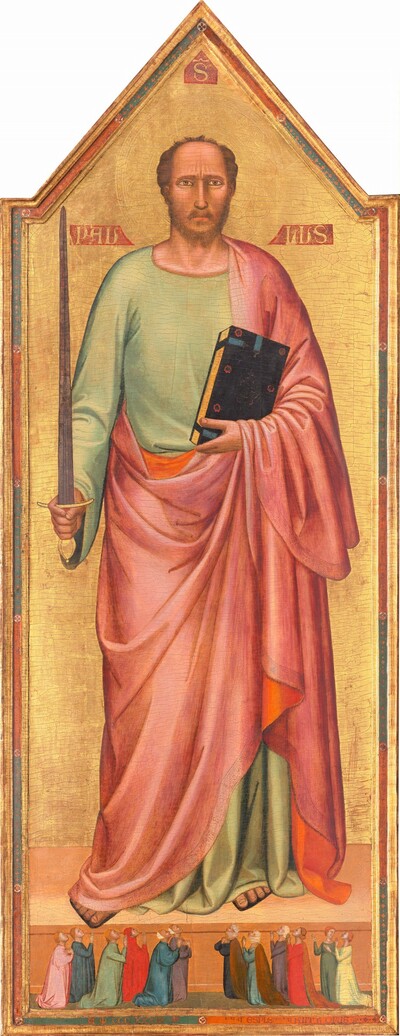
![Saint Bernard and Saint Catherine of Alexandria with the Virgin of the Annunciation [right panel]](https://api.nga.gov/iiif/e6890364-4d99-4684-a62b-5060ee3c3446/full/400,/0/default.jpg)