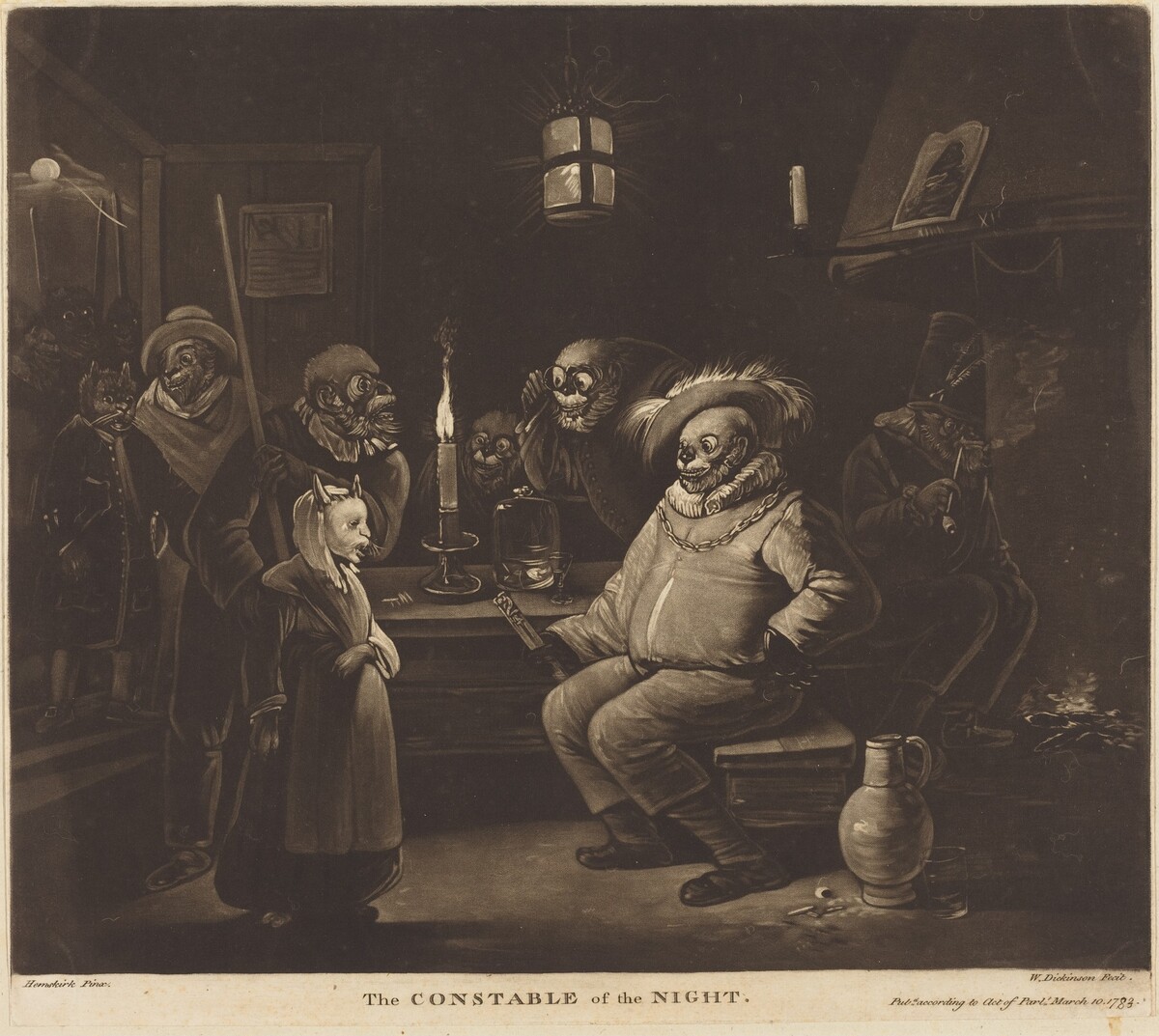
Provenance
Princes of Liechtenstein (on old mount). (Hill-Stone Inc., New York); purchased 2001 by NGA.
Accession Number
2002.8.1
Medium
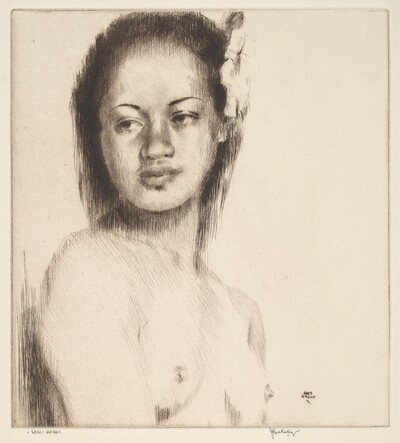
mezzotint on laid paper
Dimensions
plate: 31.4 x 35 cm (12 3/8 x 13 3/4 in.) | sheet: 31.6 x 35 cm (12 7/16 x 13 3/4 in.)
Classification
Credit Line
Ailsa Mellon Bruce Fund
Background & Context
Background Story
Nassau (c. 1915-1918) depicts the capital of the Bahamas—.subject that reveals Prendergast's engagement with tropical color and Caribbean light. The Nassau paintings represent Prendergast's expansion beyond the New England subjects that had dominated his earlier work, demonstrating how his decorative method served tropical conditions where light's intensity and color's saturation exceeded anything New England offered. The Bahamas, with their brilliant sunlight, vibrant architecture, and lush tropical vegetation, provided color subjects ideally suited to Prendergast's mosaic technique. His treatment of Nassau transforms the Bahamian capital into a decorative composition where the local architecture's pastel colors, the vegetation's bright greens, and the sky's intense blue create a chromatic field of extraordinary richness. The 1915-18 date places this during Prendergast's late period, when his decorative style was at its most accomplished and his health was beginning to decline. The tropical subject allowed him to push his chromatic range further than New England subjects permitted, producing works of startling color intensity. The Nassau paintings also document the Bahamas at a specific historical moment—the early 20th century, before tourism transformed the islands into a mass-market destination.
Cultural Impact
Prendergast's Nassau paintings influenced how the Caribbean was represented in American modernist art, establishing decorative treatments of tropical subjects that influenced later American painters who worked in the Caribbean. The paintings influenced how tropical color was used in American painting, demonstrating that decorative chromatic intensity could serve observed rather than invented subjects. The Nassau subject influenced early tourism imagery for the Bahamas.
Why It Matters
This painting matters because it represents the furthest chromatic reach of Prendergast's decorative method—tropical light pushed his color beyond anything New England subjects could produce, revealing the full intensity of his artistic vision. The Nassau paintings argue that great art can emerge from holiday destinations as effectively as from more traditionally respectable artistic sites.