Provenance
(Old Print Shop, Inc., New York); purchase February 1957 by the Corcoran Gallery of Art, Washington; acquired 2015 by the National Gallery of Art.
Accession Number
2015.19.81
Medium
oil on academy board
Dimensions
overall: 33.66 × 46.36 cm (13 1/4 × 18 1/4 in.) | framed: 40.64 × 50.8 × 5.08 cm (16 × 20 × 2 in.)
Classification
Painting
Credit Line
Corcoran Collection (Museum Purchase through a gift of Josephine Boardman Crane)
Tags
Painting Impressionist & Modern (1851–1900) Oil Painting Board American
Background & Context
Background Story
William Gilbert Gaul (1855-1919) was an American painter known for the precisely observed scenes of Southern life and Civil War subjects that make him one of the most important painters of the post-Civil War American experience. Picking Cotton from c. 1890 depicts cotton picking in the precisely observed, documentary manner that distinguishes Gaul's best work from the more romantic paintings of Southern life by his contemporaries. The c. 1890 date places this in the post-Reconstruction period, when cotton picking remained one of the most important economic activities in the South, and Gaul's precisely observed depiction documents the reality of Southern agricultural labor in the decades after the Civil War.
Cultural Impact
Picking Cotton is important in the history of American painting because it documents the reality of Southern agricultural labor in the decades after the Civil War. Gaul's precisely observed paintings of Southern life—based on firsthand observation of the post-Reconstruction South—represent one of the most honest visual records of the Southern experience in the decades after the Civil War, and the c. 1890 painting shows this documentary tradition at its most precise and unflinching.
Why It Matters
Picking Cotton is Gaul's documentary Southern life: cotton picking rendered in the precisely observed manner of one of the most important painters of the post-Civil War American experience. The c. 1890 painting documents the reality of Southern agricultural labor in the decades after the Civil War with unflinching honesty.
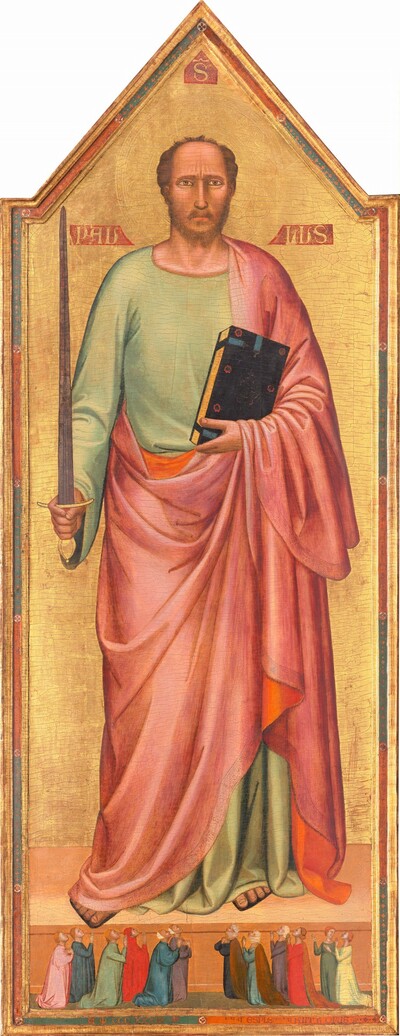
![Saint Bernard and Saint Catherine of Alexandria with the Virgin of the Annunciation [right panel]](https://api.nga.gov/iiif/e6890364-4d99-4684-a62b-5060ee3c3446/full/400,/0/default.jpg)