Provenance
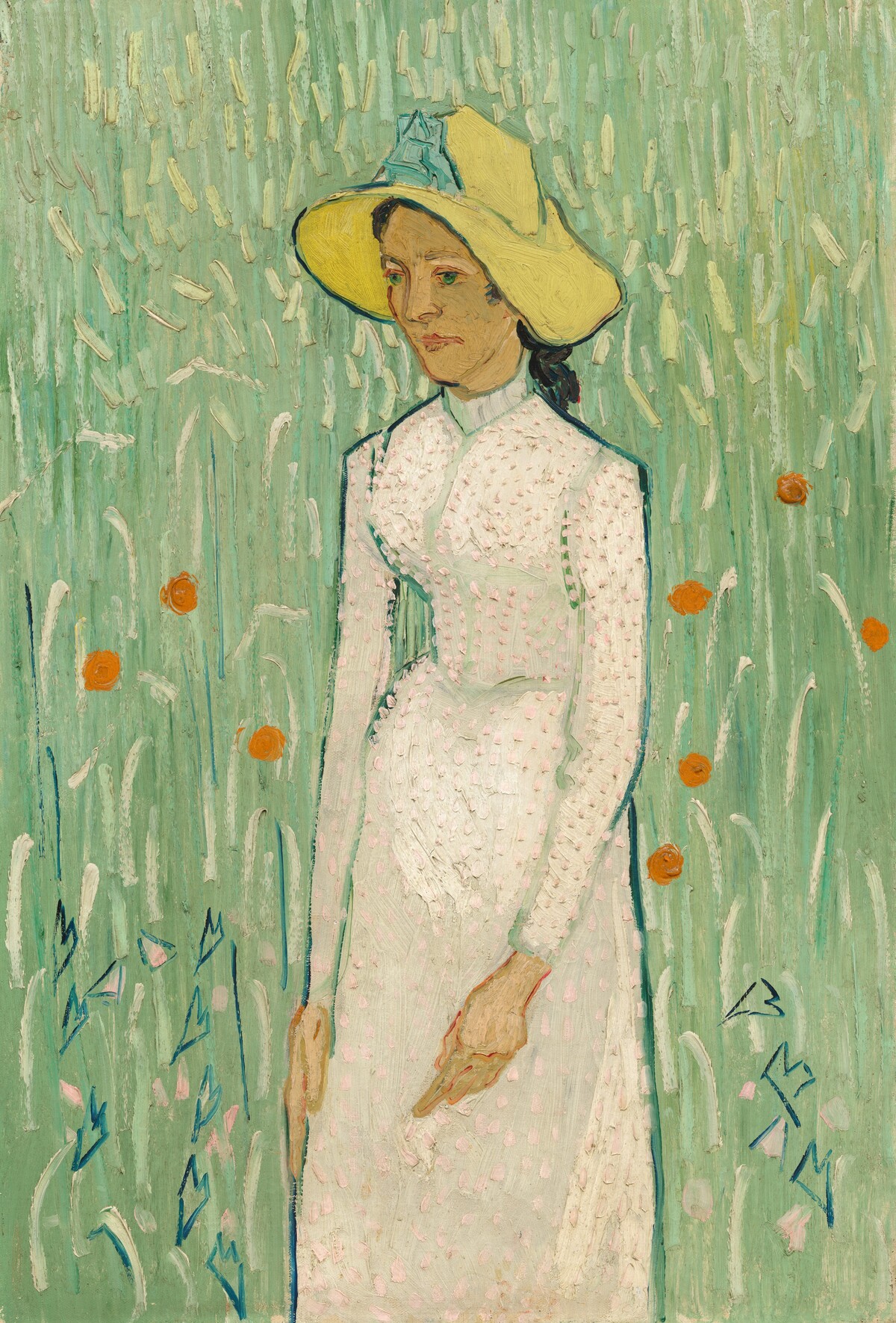
Mme Johanna van Gogh-Bonger [1862-1925], the artist's sister-in-law, Amsterdam; {1] sold August 1908 to (J.H. de Bois [C.M. van Gogh], The Hague); sold August 1908 to Richard Kisling [1862-1917], Zürich;[2] Mme Hedwig Glatt-Kisling, Zürich until 1929;[3] (Max Bollag, Zürich); by whom sold 1951 to Chester Dale [1882-1962], New York;[4] bequest 1963 to NGA.
[1] Listed no. 255 in the Andries Bonger stock list of 1890 as ‘Jeune fille en blanc’ (12). This is a reference to a size 12 figure canvas which measured 61 x 50 cm. The painting is now considered to have been painted on a size 15 marine canvas, which measured 65 x 45 cm., Van Gogh, for his own artistic reasons, wanting to exploit the less orthodox, more elongated shape. This slight discrepancy in the canvas size is understandable given that Bonger’s assessments were presumably being made by eye alone.
[2] Walter Feilchenfeldt, _Vincent van Gogh & Paul Cassirer, Berlin_, Amsterdam, 1988, p. 120. Silvia Volkart, in _Richard Kisling (1862-1917): Sammler, Mäzen und Kunstvermittler_, Bern, 2008, p. 15, reproduces the page in Kisling's account book that documents the purchase.
[3] The Swiss dealer Max Bollag sold privately and then held a public auction of the Kisling collection on 18 November 1929. This painting was not included in the 1929 sale and remained with Bollag until its acquisition by Dale in 1951.
[4] Date and source of acquisition according to Chester Dale papers in NGA curatorial files.
Accession Number
1963.10.30
Medium
oil on canvas
Dimensions
overall: 66.7 x 45.8 cm (26 1/4 x 18 1/16 in.) | framed: 96.2 x 73.7 cm (37 7/8 x 29 in.)
Classification
Painting
Credit Line
Chester Dale Collection
Background & Context
Background Story
Portrait of Pope Innocent X, painted in 1650 during Velazquez's second visit to Rome, is one of the greatest portraits ever painted and the most psychologically penetrating depiction of power in Western art. Pope Innocent X Pamphilj, one of the most formidable pontiffs of the 17th century, sits in full papal regalia, his face a mask of shrewd, suspicious intelligence.
The story of the painting's reception has become legendary. When Innocent X saw the completed portrait, he is said to have exclaimed: Troppo vero! - Too true! Whether or not the anecdote is accurate, it captures the painting's essential quality: a truthfulness so merciless that even its subject found it uncomfortable.
Velazquez painted the portrait during his second trip to Rome (1649-1651), when he was at the height of his powers. The painting demonstrates his signature technique: broad, loose brushstrokes that, seen up close, dissolve into pure paint, but that, viewed from the proper distance, resolve into an illusion of reality so convincing that it seems to rival nature itself. The Pope's white surplice, his red mozzetta, and the gold embroidery of his chair are each rendered with a different handling of paint, creating a surface of extraordinary variety and subtlety.
Cultural Impact
Velazquez's portrait of Innocent X established the standard for truthful portraiture that every subsequent portraitist has had to confront. Francis Bacon's scream-ing Popes, painted three centuries later, are explicitly a response to this painting - an attempt to tear away the mask of formal authority that Velazquez revealed but left in place.
Why It Matters
This painting is the supreme example of Velazquez's paradox: an image of power that is simultaneously a masterpiece of flattery and a devastating act of exposure. The Pope's expression is alert, intelligent, and utterly without warmth - the face of a man who sees through everyone because he has seen too much.