Provenance
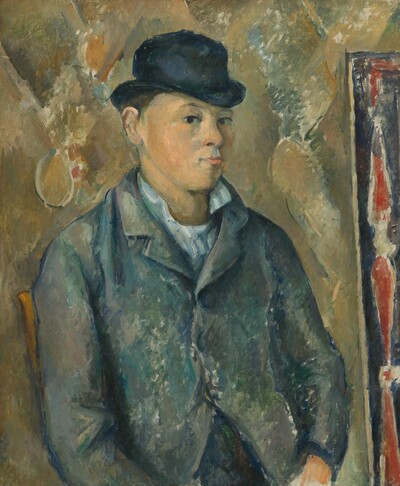
Probably a gift of the artist to Gustave Caillebotte [1848-1894], Paris, in whose estate it remained until 1932.[1] (Galerie André Weil, Paris); (Galerie Étienne Bignou, Paris); sold 29 November 1932 to Chester Dale [1882-1932], New York;[2] bequest 1963 to NGA.
[1] According to John Rewald, _The Paintings of Paul Cézanne: a Catalogue Raisonné_, New York, 1996, no. 265, Caillebotte bequeathed this painting to the French state, but it was refused.
[2] Chester Dale acquisition date and source according to his papers in NGA curatorial files.
Accession Number
1963.10.105
Medium
oil on canvas
Dimensions
overall: 73 x 59.8 cm (28 3/4 x 23 9/16 in.) | framed: 94.6 x 81.3 cm (37 1/4 x 32 in.)
Classification
Painting
Credit Line
Chester Dale Collection
Tags
Painting Impressionist & Modern (1851–1900) Oil Painting Canvas French
Background & Context
Background Story
The Scream, painted in 1893, is the most iconic image of modern anxiety and the founding work of Expressionism. It depicts a figure standing on a bridge, hands pressed to its face, mouth open in a wordless cry, while the sky behind it erupts in bands of lurid red and orange and the landscape below seems to liquefy into wavelike forms.
Edvard Munch described the experience that inspired the painting in his diary: I was walking along the road with two friends - the sun set - the sky turned a bloody red - I stood there, trembling with anxiety - I felt an infinite scream passing through nature. This description makes clear that the scream is not the figure's alone but nature's: the entire visible world has become a scream, and the figure merely registers what the environment is already expressing.
Munch produced four versions of The Scream: two paintings and two pastels, along with a lithograph that disseminated the image across Europe. The painting's unprecedented distortion of the human figure - its skull-like head, its sexless body, its hands pressed to its cheeks - and its equally distorted landscape - the swirling sky, the wavelike ground - created a visual language of psychological extremity that defined Expressionism and influenced every subsequent art movement that took inner experience as its subject.
Cultural Impact
The Scream became the most reproduced artwork of the 20th century and the visual shorthand for modern anxiety. Its influence on Expressionism, Surrealism, and the culture of psychological distress that defines modernity is immeasurable: it is the image that launched a thousand therapies.
Why It Matters
This painting is the moment when Western art broke with the tradition of depicting the external world and turned instead to the inner landscape of fear, desire, and anguish. The figure on the bridge, screaming into a sky that screams back, is the first modern self: isolated, anguished, and unable to distinguish between the self and the world that surrounds it.