Provenance
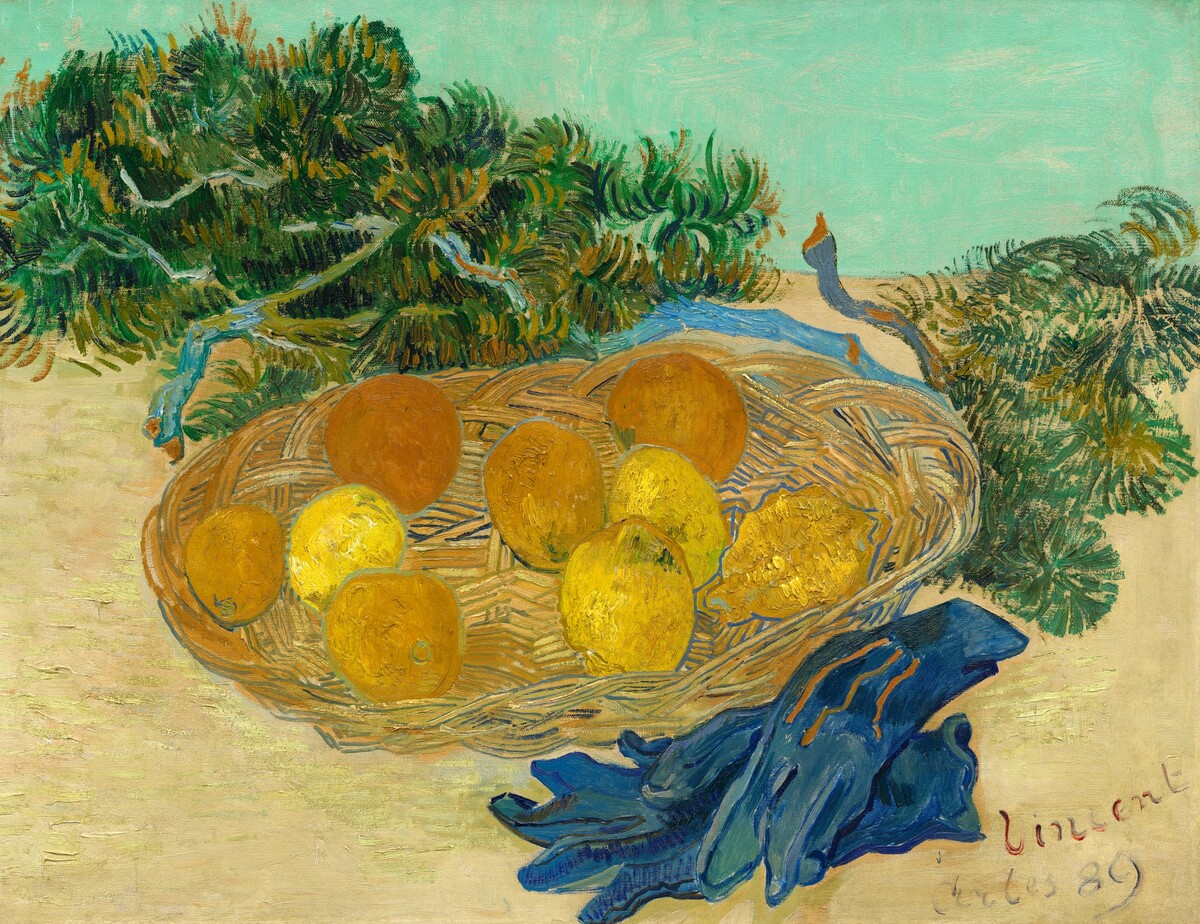
Sent 2 May 1889 by the artist to his brother, Theo van Gogh, Paris [1857-1891]; gift to Emile Bernard [1868-1941]; sold by Madame Bernard on 7 January 1899 for 150 francs to (Ambroise Vollard [1866-1939], Paris);[1] sold probably 1899 to Cornelis Hoogendijk [1866-1911], Amsterdam;[2] by inheritance to his sister, Maria Ida Adriana (Riet) van Blaaderen-Hoogendijk [1874-1942, Mrs. Gerrit Willem van Blaaderen], The Hague; her son, Tom van Blaaderen [1910-1950], Laren;[3] his wife, Hermanna F. van Blaaderen-van Geuns [1915-2002, later Mrs. Warren-van Geuns], Loenen aan de Vecht, in 1951.[4] Private collection, London.[5] (Marlborough Fine Arts, London), in 1955; probably acquired there by Sir Alexander Korda [1893-1956], London; by inheritance to his third wife, Alexandra Boycun Korda [1928-1966, later Mrs. David Metcalfe]; (Korda collection sale, Sotheby’s, London, 14 June 1962, no. 22); purchased by (Charles H. Willis), probably for Paul Mellon [1907-1999], Upperville, Virginia;[6] bequest 1999 to NGA, with life interest to his wife, Rachel Lambert Mellon [1910-2014].
[1] Bernard understood from his mother that it sold with two other works for a total of 700 francs; according to the Vollard register it sold for 150 francs
[2] This is likely one of the van Goghs Hoogendijk bought from Vollard in May and July, 1899 (Vollard account books, July 1894- May 1900, John Rewald Papers, Box 54-2, Gallery Archives, National Gallery of Art, copy NGA curatorial files). Hoogendijk lent the painting to the Rijksmuseum from 1906 to 1911, along with other paintings from his collection. The painting was not included in the posthumous Hoogendijk sale held at Frederik Muller, Amsterdam, 21-22 May 1912. For details about Hoogendijk's collection, see Herbert Henkels, "Cézanne en Van Gogh in het Rijksmuseum voor Moderne Kunst in Amsterdam: de collectie van Cornelis Hoogendijk (1866-1911)," _Bulletin van het Rijksmuseum_ 41, no. 3/4 (1993): 155-287.
[3] He lent the painting to a 1947 exhibition shown in London, Birmingham, and Glasgow. It was briefly in the hands of Van Wisselingh in 1948, according to a newspaper clipping, Jan Engelman, _De Tijd_, 3 July 1948. ‘Vincent van Gogh en de Hagenaars, Een stilleven bij Van Wisselingh.’ The article is misleading for Van Wisselingh merely acted as middleman at the time of the exhibition in the Stedelijk, after which the painting returned to its owner, Tom van Blaaderen.
[4] The year of ownership is given in the documentation on a reproduction of the painting held by The Frick Art Reference Library, New York (call number Gogh, Vincent van 316-2f).
[5] _XIXth and XXth Century French Masters_, Exh. cat., Marlborough Fine Art Ltd., London, 1955: 58.
[6] According to James Feron, "Korda Collection Brings $1,300,000," _The New York Times_ (15 June 1962): 24, the painting was purchased by Willis, who attended the auction and "said he was buying the work for a client." The sale as a whole made 4.5 million florins and the still life fetched f. 800,00o (approximately $231,000) according to Dutch newspaper reports _Krantenknipseldienst_ the following day. Mr. Mellon owned the painting by at least 1966, when it was exhibited at the NGA with works from his own and his sister's collections.
Accession Number
2014.18.13
Medium
oil on canvas
Dimensions
overall: 48 × 62 cm (18 7/8 × 24 7/16 in.) | framed: 65.72 × 79.38 × 8.57 cm (25 7/8 × 31 1/4 × 3 3/8 in.)
Classification
Painting
Credit Line
Collection of Mr. and Mrs. Paul Mellon