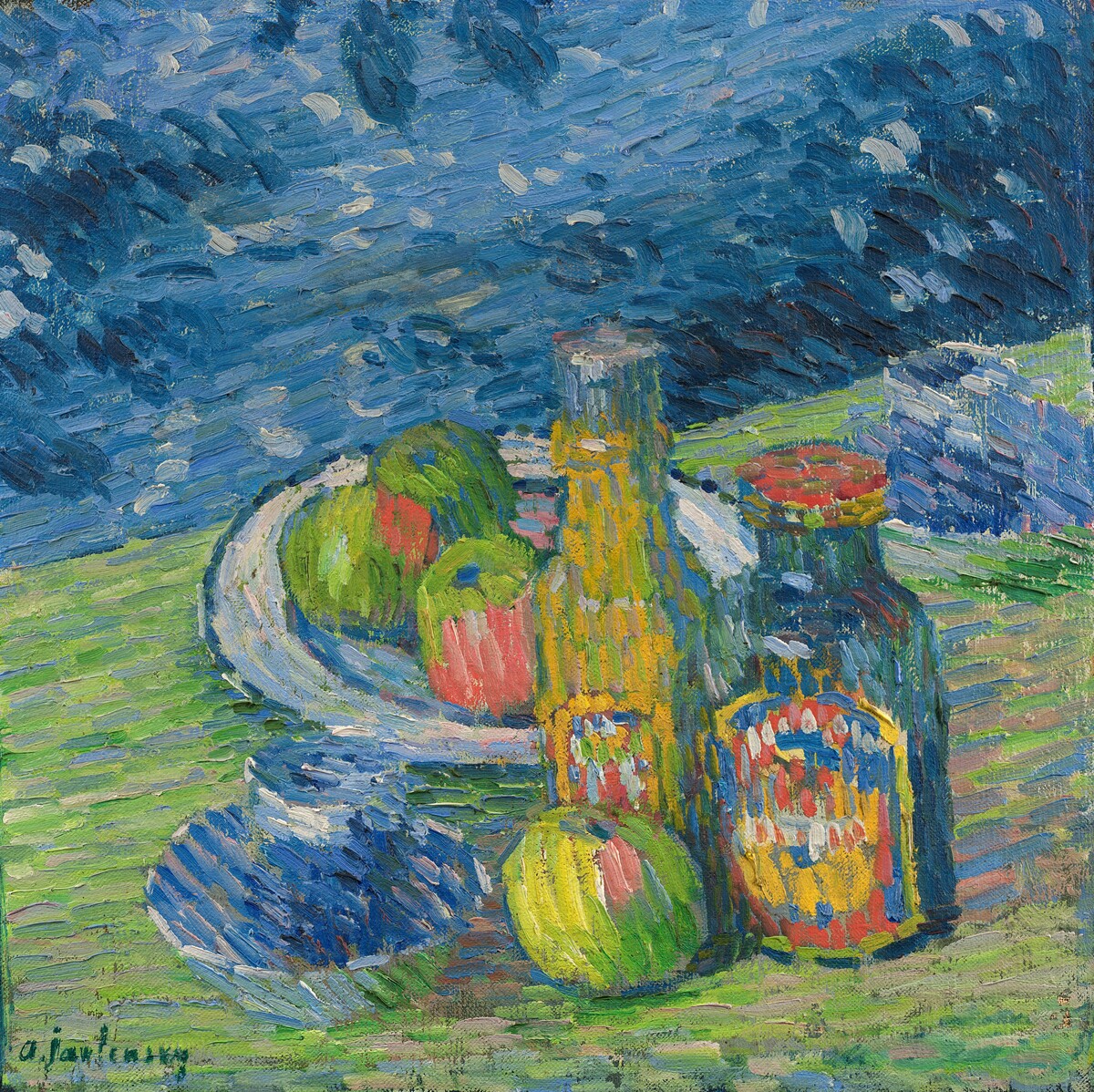
Provenance
Benjamin and Lilian Hertzberg, New York;[1] bequest 2004 to NGA.
[1] There is a label on the reverse from Kleemann Galleries, New York, with the number K7254; it is possible this is where the Hertzbergs purchased the painting.
Accession Number
2004.140.38
Medium
oil on canvas
Dimensions
overall: 48 x 49.2 cm (18 7/8 x 19 3/8 in.) | framed: 67 x 67.6 x 4.8 cm (26 3/8 x 26 5/8 x 1 7/8 in.)
Classification
Painting
Credit Line
Gift of Benjamin and Lillian Hertzberg
Background & Context
Background Story
The Colossus, painted between 1808 and 1812, depicts a giant figure looming above a dark landscape through which a stream of terrified people and animals flee in panic. The giant's legs disappear into clouds; only his massive torso and clenched fists are visible, his head turned away as though confronting an unseen enemy beyond the horizon.
The painting has long been associated with Goya's response to the Peninsular War (1808-1814), in which Napoleon's armies invaded Spain and encountered a ferocious guerrilla resistance. The Colossus, interpreted as a symbol of the Spanish people's defiant resistance to foreign domination, became one of the most iconic images of national identity in Spanish art.
Yet the painting resists simple allegory. The giant could be a defender or an aggressor; the fleeing crowd could be escaping from him or from something beyond him. The painting's ambiguity is characteristic of Goya, who trusted the viewer's imagination more than his own explanations. The Colossus stands at the boundary between the Enlightenment and Romanticism - between an art that explains and an art that leaves room for mystery and fear.
Cultural Impact
The Colossus created one of the most powerful images of collective fear and national resistance in Western art. Its vision of a giant looming above a fleeing population has been repeatedly invoked in times of crisis, from the Spanish Civil War to the contemporary refugee crisis.
Why It Matters
This painting captures Goya's most modern quality: the refusal to resolve ambiguity. The Colossus terrifies, but we cannot say exactly why - and this uncertainty, this refusal of explanation, is what makes the painting as disturbing and as relevant today as it was in 1808.


