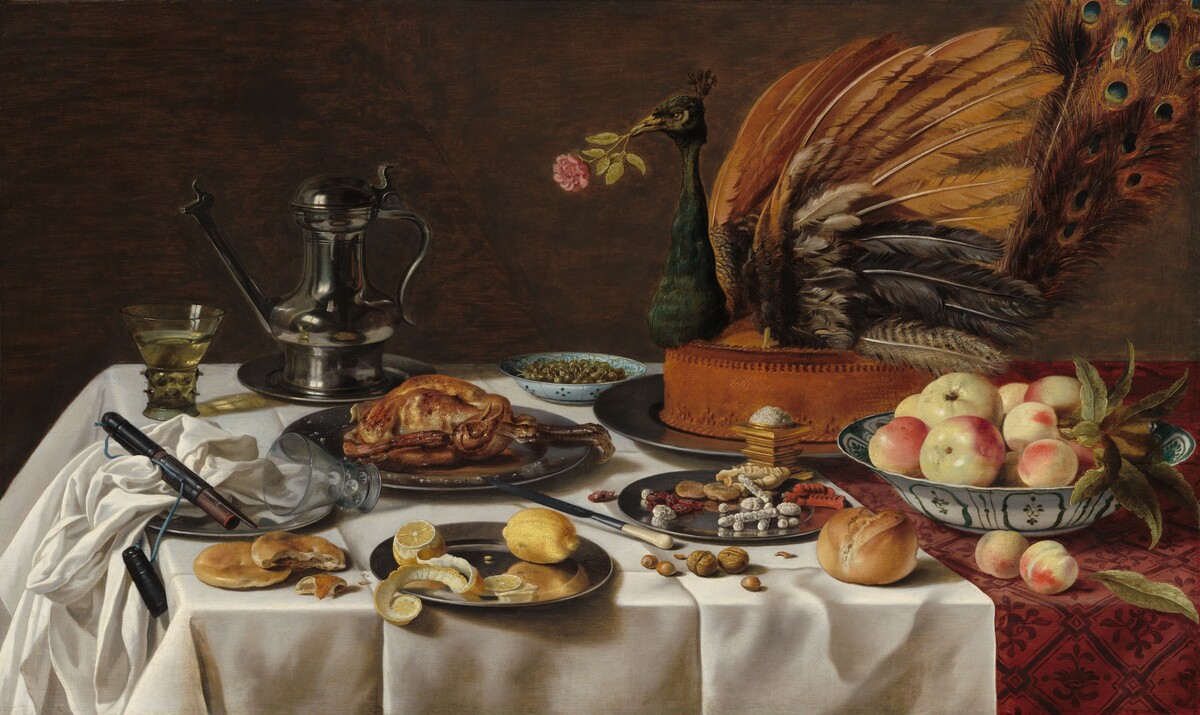
Provenance
Acquired, probably in 1827, by private collector, England; by descent in the family;[1] (sale, Sotheby's, London, 8 July 1999, no. 4); (consortium of dealers, including Otto Nauman, Ltd., New York); sold to James X. Mullen, Boston; purchased 26 November 2013 through (Otto Naumann, Ltd., New York) by NGA.
[1] This provenance is given in the 1999 sale catalogue, entry by Martina Brunner-Bulst.
Accession Number
2013.141.1
Medium
oil on panel
Dimensions
overall: 77.5 × 128.9 cm (30 1/2 × 50 3/4 in.)
Classification
Painting
Credit Line
The Lee and Juliet Folger Fund
Background & Context
Background Story
The Stone Breakers, painted in 1849, depicts two laborers - a boy and an old man - breaking rocks by the roadside. It was one of the first major paintings to represent working-class labor without idealization, scandalizing the Salon audience accustomed to heroic narratives.
Courbet painted it after the 1848 Revolution, which raised hopes for social justice before being crushed. The painting declared that ordinary lives were as worthy of serious treatment as gods and heroes. The boy, too young for such work, and the old man, too old to retire, embodied the cycle of poverty trapping generations.
The painting was destroyed during World War II when Allied bombing damaged Dresden. Only photographs survive, making it one of the most influential lost works in art history - a painting whose absence has amplified rather than diminished its impact.
Cultural Impact
The Stone Breakers established social realism as a major force in French painting and influenced every subsequent artist who depicted working-class life, from Millet to the Social Realists of the 1930s.
Why It Matters
This painting, even destroyed, remains the founding document of realist art: proof that the unadorned truth of working lives can be as compelling as any myth, and that the artist who refuses to idealize may achieve a truth more profound than beauty.
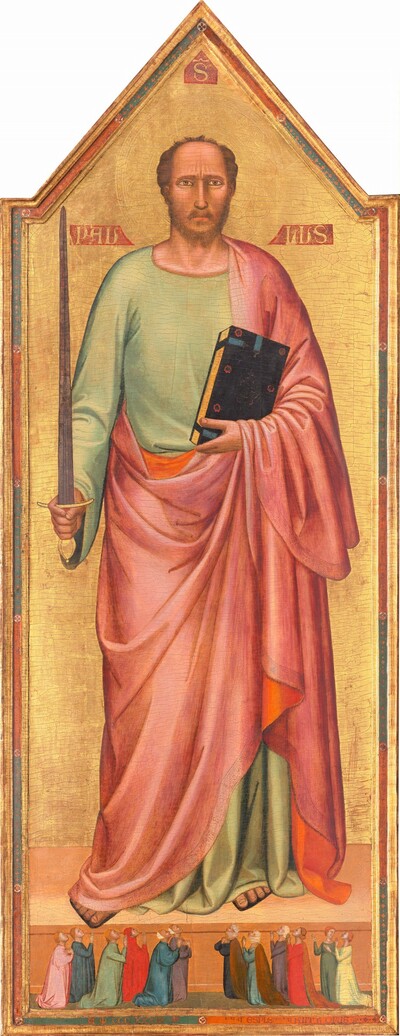
![Saint Bernard and Saint Catherine of Alexandria with the Virgin of the Annunciation [right panel]](https://api.nga.gov/iiif/e6890364-4d99-4684-a62b-5060ee3c3446/full/400,/0/default.jpg)