Provenance
Acquired from the artist 1901 by William A. Clark [1839-1925];[1] bequest 1926 to the Corcoran Gallery of Art, Washington; acquired 2014 by the National Gallery of Art.
[1] Dana H. Carroll, "Catalogue of Objects of Fine Arts and Other Properties at the Home of William Andrews Clark, 962 Fifth Avenue" (1925, unpublished manuscript, Corcoran Archives), pt. I, 106. According to the catalogue entry, the painting was “purchased direct from the Artist, 1901.”
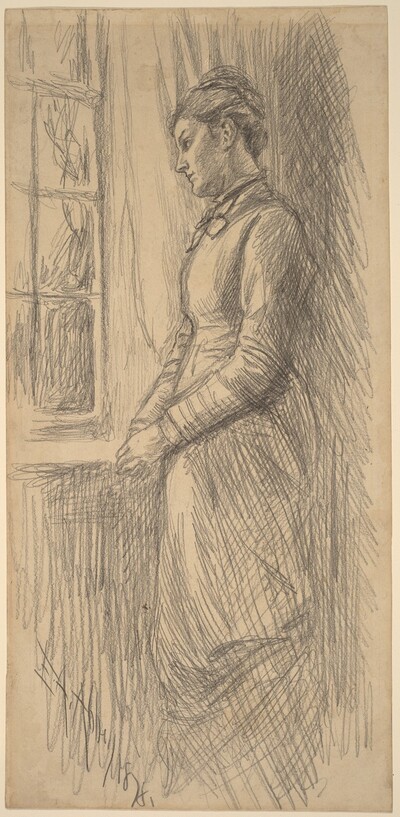
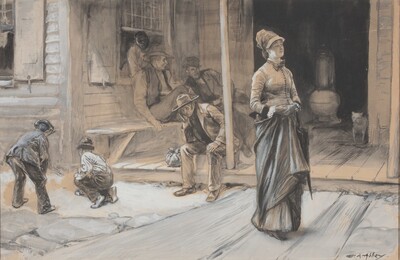
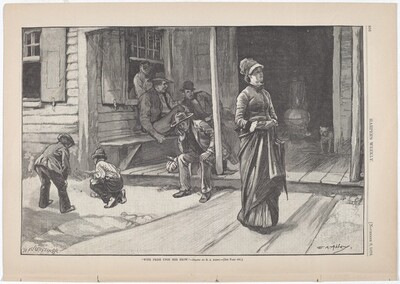
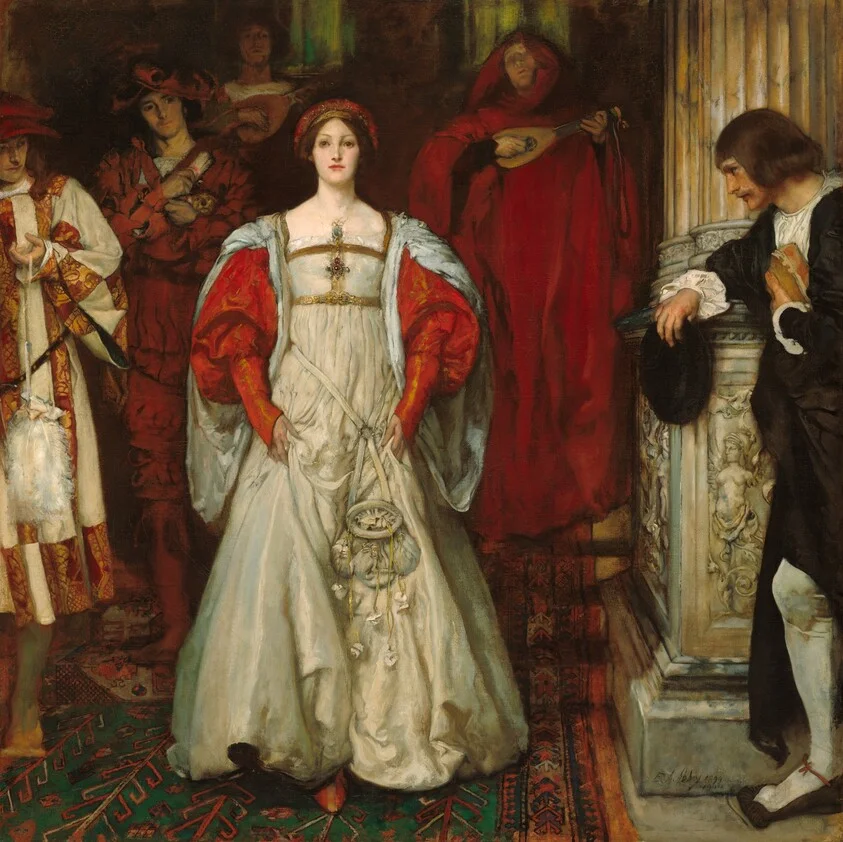
"Who Is Sylvia? What Is She, That All the Swains Commend Her?"
1896-1899; reworked 1900
Accession Number
2014.136.19
Medium
oil on canvas
Dimensions
overall: 121.92 × 121.92 cm (48 × 48 in.) | framed: 158.12 × 158.12 × 13.97 cm (62 1/4 × 62 1/4 × 5 1/2 in.)
Classification
Painting
Credit Line
Corcoran Collection (William A. Clark Collection)
Tags
Painting Impressionist & Modern (1851–1900) Oil Painting Canvas American
Background & Context
Background Story
The Transfiguration, painted between 1516 and 1520, is Raphael's last painting and one of the most debated works in the history of art. Commissioned by Cardinal Giulio de Medici for the Narbonne Cathedral, it depicts two events simultaneously: the Transfiguration of Christ on Mount Tabor in the upper half, and the failed attempt of the disciples to cure a possessed boy in the lower half.
Raphael died on April 6, 1520, at the age of 37, leaving the painting unfinished. It was displayed at his funeral, where it served as both his masterpiece and his epitaph. The contrast between the radiant upper half, where Christ floats in divine light, and the chaotic lower half, where the disciples struggle helplessly with human suffering, has been read as Raphael's final theological statement: divine grace exists, but it does not easily descend to the world of human pain.
The painting's composition is both its glory and its problem. The upper register, with its pyramidal group of Christ, Moses, and Elijah, is a masterwork of High Renaissance balance. The lower register, with its writhing figures and dramatic gestures, points toward the Mannerist breakdown of classical order. Raphael, in his final work, had begun to see beyond the harmony he had spent his career perfecting.
Cultural Impact
The Transfiguration is the most influential unfinished painting in Western art. Its dual composition established the paradigm of the sacra conversazione that would dominate Italian altarpiece painting for a century, and its unfinished state became a symbol of the artist's mortality.
Why It Matters
This painting captures the exact moment when the High Renaissance passes into Mannerism: the moment when Raphael, the greatest master of balance and harmony, began to see that beauty alone cannot contain the full truth of human suffering. The painting is his testament to the limits of perfect art.