
Provenance
(sale, Phillips, London, 14 March 1977, no. 48). (sale, Hotel Drouot, Paris, 25 March 2016, no. 9); (Galerie Claude Vittet, Paris); purchased October 2016 by NGA.
Accession Number
2016.147.1
Medium
oil on panel
Dimensions
overall: 17 × 23.2 cm (6 11/16 × 9 1/8 in.)
Classification
Painting
Credit Line
The Lee and Juliet Folger Fund
Tags
Painting Baroque (1600–1750) Oil Painting Panel Painting Dutch
Background & Context
Background Story
St Francis in Ecstasy, painted around 1480, is Giovanni Bellini's most celebrated landscape. It depicts Saint Francis standing on a rocky outcrop, arms spread wide, receiving the stigmata from a divine light that streams from the upper left. Behind him, a panoramic landscape unfolds: a hill town, a shepherd with his flock, a field, a river, and a distant sea.
The painting represents a revolution in the depiction of landscape. Where earlier painters used landscape as a decorative backdrop, Bellini made it an integral part of the spiritual experience. Francis's ecstasy is not isolated but a response to the entire created world: the light, the landscape, the animals, and the distant city all participate in the moment of divine communication.
Bellini was the dominating figure of Venetian painting, and St Francis in Ecstasy demonstrates his signature achievement: the fusion of Northern European detailed landscape observation with Italian monumental figure painting. The warm, golden light became the hallmark of Venetian painting, influencing Giorgione, Titian, and every painter in the Venetian tradition.
Cultural Impact
Bellini's St Francis established the Venetian tradition of landscape painting that would dominate European art for the next century. His integration of figure and landscape influenced Giorgione, Titian, and the entire Venetian school - and through them, every painter who has sought to represent the natural world as a site of spiritual experience.
Why It Matters
This painting captures Bellini's most beautiful synthesis: a saint in a landscape, both equally real and equally luminous. Francis stands in the world as though he were part of it - and the world responds to his ecstasy by becoming more intensely itself.

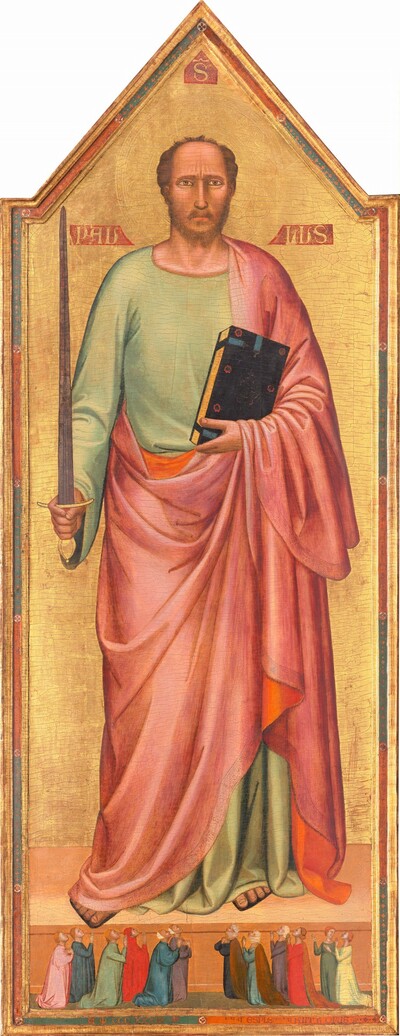
![Saint Bernard and Saint Catherine of Alexandria with the Virgin of the Annunciation [right panel]](https://api.nga.gov/iiif/e6890364-4d99-4684-a62b-5060ee3c3446/full/400,/0/default.jpg)