Provenance
The artist [1897-1983], until at least 1947. Lawrence A. [b. 1925] and Barbara Fleischman, Detroit, at least by 1960, to 1965.[1] (Kennedy Galleries, New York); purchased 24 March 1967 by Robert H. and Clarice Smith, Washington, D.C.; gift 1972 to NGA.
[1] The artist showed the painting in exhibitions through 1947, and the painting was lent by the Fleischmans to exhibitions between 1960 and 1965.
Accession Number
1972.7.1
Medium
oil on canvas
Dimensions
overall: 122.7 x 76.9 cm (48 5/16 x 30 1/4 in.) | framed: 144.8 x 98.7 x 5.1 cm (57 x 38 7/8 x 2 in.)
Classification
Painting
Credit Line
Gift of Robert H. and Clarice Smith
Tags
Painting Early Modern (1901–1950) Oil Painting Canvas American
Background & Context
Background Story
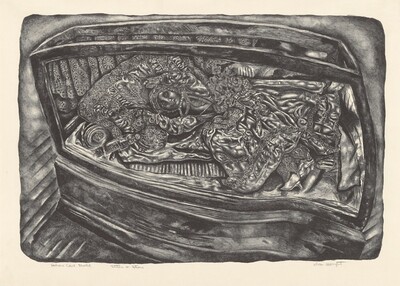
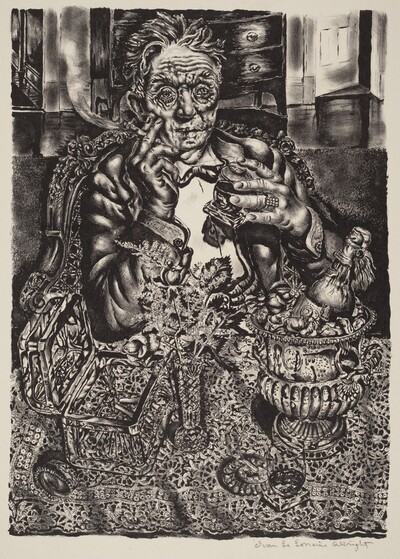
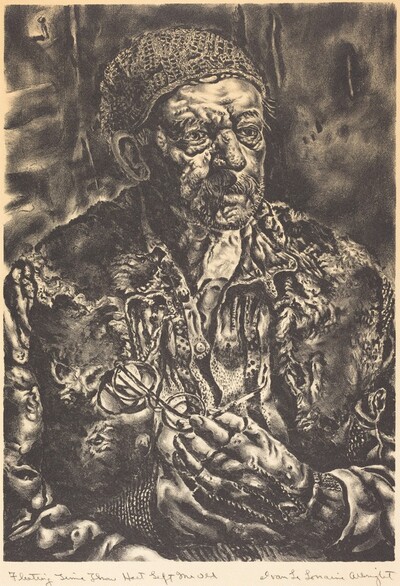
Ivan Albright (1897-1983) was an American painter known for his meticulously detailed, often grotesque paintings of the human condition—decay, aging, and mortality—rendered with a technical precision that makes his work among the most disturbing in American art. There Were No Flowers Tonight from 1929 depicts a funereal still life in the macabre manner that distinguishes Albright's best work—the absence of flowers at a funeral standing as a metaphor for the absence of beauty in the face of death. The 1929 date places this in Albright's early period, when he was developing the macabre manner and meticulous technique that would make his later paintings, including Picture of Dorian Gray (1943-44), among the most distinctive in American art.
Cultural Impact
There Were No Flowers Tonight is important in Albright's oeuvre because it demonstrates the macabre manner and meticulous technique that he was developing in the late 1920s. The funereal still life—a subject without flowers at a funeral—stands as a metaphor for the absence of beauty in the face of death, establishing the preoccupation with mortality and decay that would define Albright's entire career and make him one of the most distinctive painters in American art.
Why It Matters
There Were No Flowers Tonight is Albright's macabre still life establishing his preoccupation with mortality: a funereal subject without flowers, standing as a metaphor for the absence of beauty in the face of death. The 1929 painting demonstrates the meticulous technique and morbid subject that would define Albright's entire career and make him one of the most distinctive painters in American art.