Provenance
Possibly Anticuario Rafel García, Madrid, end of nineteenth century [according to Prado 2008]. Durand-Ruel, New York, c. 1905 [according to a letter from Durand-Ruel to Martin A. Ryerson dated January 13, 1913, copy in curatorial file]; sold to Martin A. Ryerson (died 1932), Chicago, 1913 [according to the letter cited above]; on loan to the Art Institute from 1917; bequeathed to the Art Institute, 1933.
Accession Number
16367
Medium
Oil on canvas
Dimensions
82.3 × 63.3 cm (32 3/8 × 24 7/8 in.); Framed: 120.4 × 94.7 cm (47 3/8 × 37 1/4 in.)
Classification
Painting
Credit Line
Mr. and Mrs. Martin A. Ryerson Collection
Background & Context
Background Story
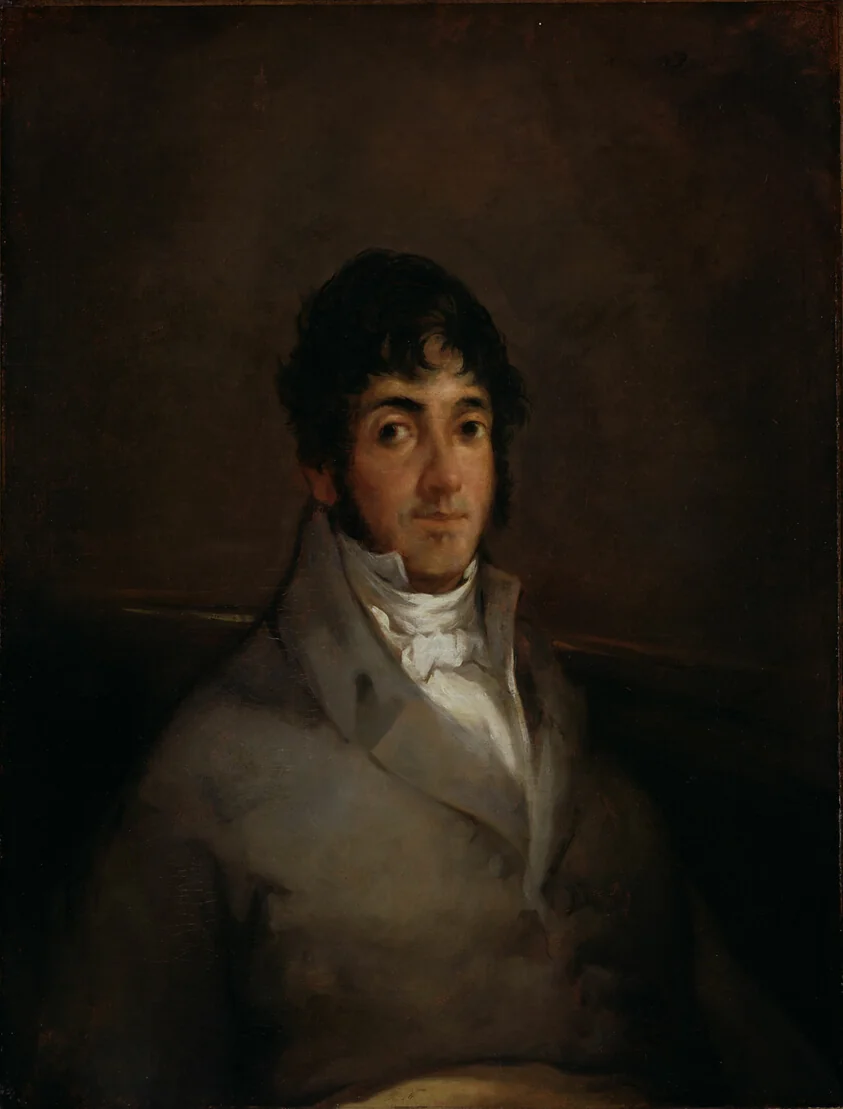
This half-length portrait of Isidoro Máiquez, painted around 1807, captures one of the most celebrated actors of the Spanish stage during the final years of the ancien régime. Máiquez was famous for his performances in the classical repertory of Calderón and Lope de Vega, and Goya's portrait presents him with the dignified bearing of a tragic hero rather than the flamboyance expected of theatrical subjects. The actor is shown in contemporary dress against a dark, neutral background, his face emerging from shadow with the concentrated light that Goya had perfected in his court portraits. The psychological penetration is remarkable: Máiquez's slightly asymmetrical eyes and compressed lips suggest a man who has spent his life assuming other identities and has perhaps lost track of his own. This painting belongs to a small group of Goya portraits of cultural figures outside the aristocratic world—writers, musicians, and performers whom he respected as fellow professionals. The brushwork is notably freer than in his official commissions, with visible strokes in the clothing and background that anticipate the painterly liberation of his final years. The muted palette of blacks, grays, and warm flesh tones creates an atmosphere of sober introspection that aligns the actor with the philosopher-kings of Velázquez's court portraiture.
Cultural Impact
This portrait elevated the actor to aristocratic dignity, anticipating modern celebrity portraiture by treating a performer as a thinking subject rather than a theatrical curiosity.
Why It Matters
It matters because Goya looked at an actor and saw a soul in costume—proving that theatrical people could be as serious as generals.


