Description
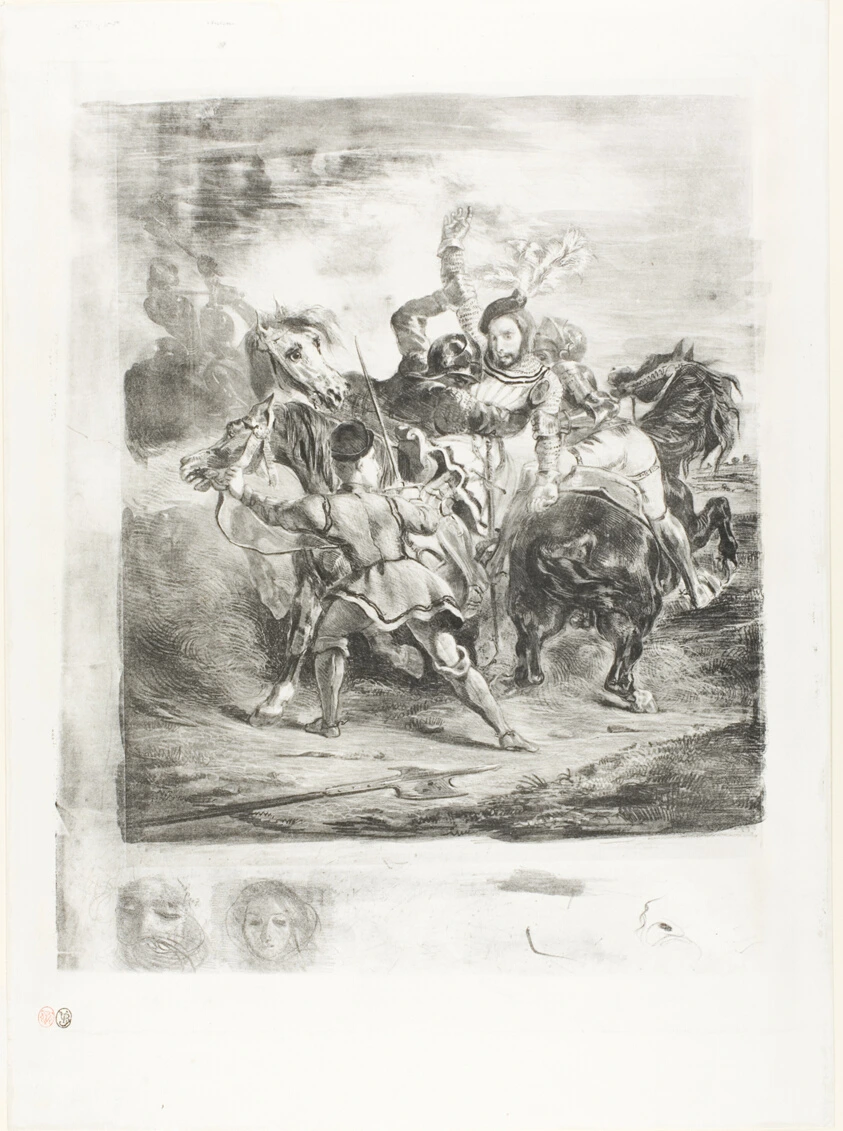
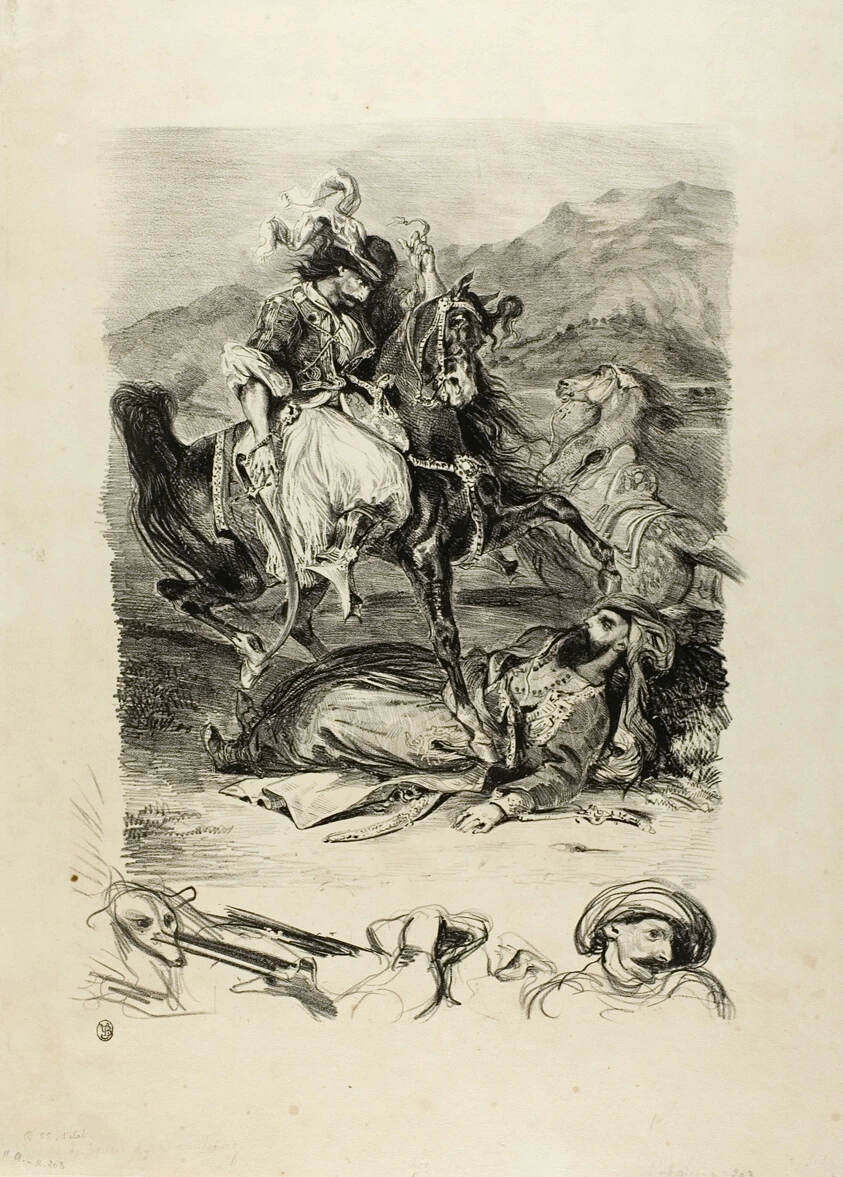
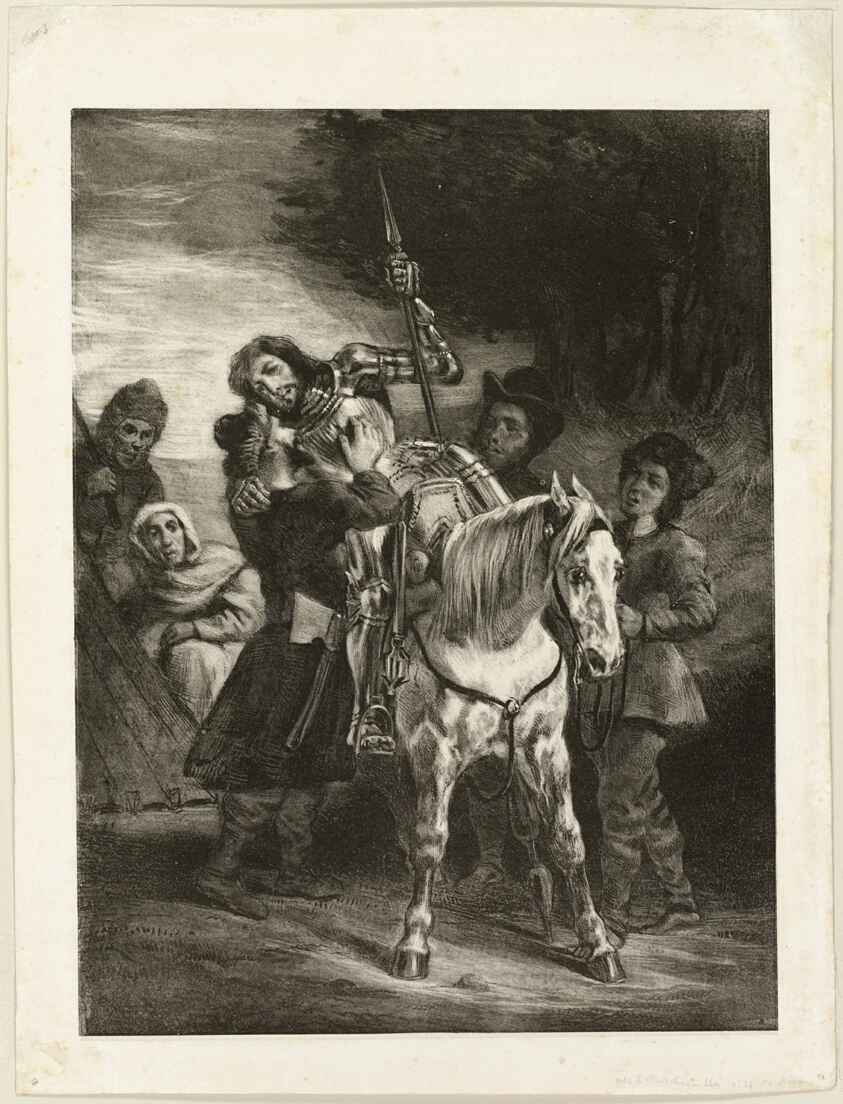
Numerous variations of this subject can be found throughout the work of Delacroix. The glistening skin and flamelike mane of the horse are common features in his lithographs of 1827-29. It is possible that this drawing is an illustration for Shakespeare's Henry VI.
Provenance
(Leon?) Suzor, Paris [according to curatorial file]. Sold by B. C. Holland, Chicago, to the Art Institute, 1969.
Accession Number
30948
Medium
Graphite, with touches of stumping, on cream wove paper
Dimensions
24.9 × 31.7 cm (9 13/16 × 12 1/2 in.)
Classification
graphite
Credit Line
Purchased with funds provided by Margaret Day Blake
Background & Context
Background Story
Eugène Delacroix's "Fallen Horse and Dead Knight" (c. 1827–1829) is a graphite drawing with touches of stumping on cream wove paper, depicting a scene of tragic intensity from a medieval or romantic battle. Delacroix (1798–1863) was the leader of French Romanticism, and his drawings often capture moments of extreme action and emotion with extraordinary energy. This drawing shows a horse collapsed to the ground, its rider—a knight—lying dead or dying beside it. The graphite technique is rapid and expressive, the lines searching for the forms rather than describing them with academic precision. The stumping adds areas of soft tone that create atmosphere. This drawing likely relates to Delacroix's large-scale history paintings of the 1820s, perhaps to "The Battle of Nancy" or to one of his many works inspired by the poetry of Byron or the history of the Crusades. The subject of a fallen warrior and his horse was a recurring theme in Romantic art, symbolizing both the heroism and the tragedy of war.
Cultural Impact
Delacroix's battle drawings exemplify the Romantic fascination with extreme states of physical and emotional experience, capturing moments of violence and pathos with extraordinary graphic energy.
Why It Matters
This drawing of a fallen horse and dead knight captures the Romantic spirit of Delacroix's art: the heroic tragedy of battle, the expressive power of the fallen body, rendered with the energy and passion of a master draftsman.