Provenance
John Singleton Copley, Boston, 1770 to 1774. Samuel Eddy Barrett, Chicago, by 1912; by descent to Mrs. Samuel Eddy Barrett, Chicago, from 1912 to 1924; by descent to Miss Adela Barrett, Brookline, MA, from 1924 to 1956; bequeathed to the Art Institute of Chicago, 1957.
Accession Number
6835
Medium
Oil on canvas
Dimensions
82.6 × 63.5 cm (32 1/2 × 25 in.)
Classification
Painting
Credit Line
Gift of the Estate of Adela Barrett
Background & Context
Background Story
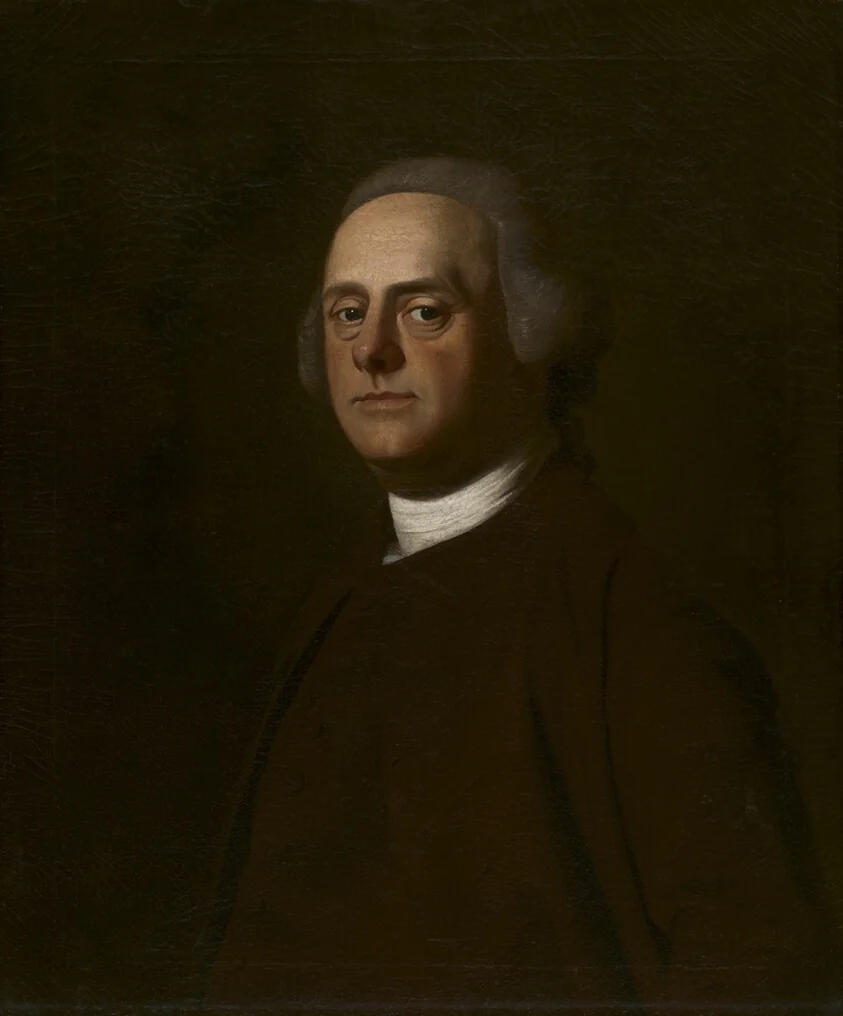
John Singleton Copley's Joseph Gerrish (1770) is an oil on canvas portrait of a prominent American merchant and public official. Copley (1738-1815) was the greatest American painter of the colonial period, known for his sharp, detailed portraits of Boston merchants, politicians, and their families. This portrait shows Gerrish, a merchant who served as a colonel in the militia and as a representative to the General Court of Massachusetts. Copley's treatment is characteristically precise: the features are rendered with remarkable clarity, the textures of skin, hair, and fabric are captured with extraordinary skill. The sitter's expression is direct and engaging, conveying both his social position and his individual character. The palette is restrained but rich, with the dark tones of the costume set against a more neutral background. This portrait, painted in the decade before the American Revolution, captures the confidence and prosperity of the colonial merchant class that would soon lead the fight for independence.
Cultural Impact
Copley was the first great American painter, and his portraits of colonial Bostonians are among the most important visual documents of pre-Revolutionary America.
Why It Matters
This portrait of Joseph Gerrish captures the confidence and prosperity of the colonial merchant class with Copley's characteristic precision and psychological insight.


