Description
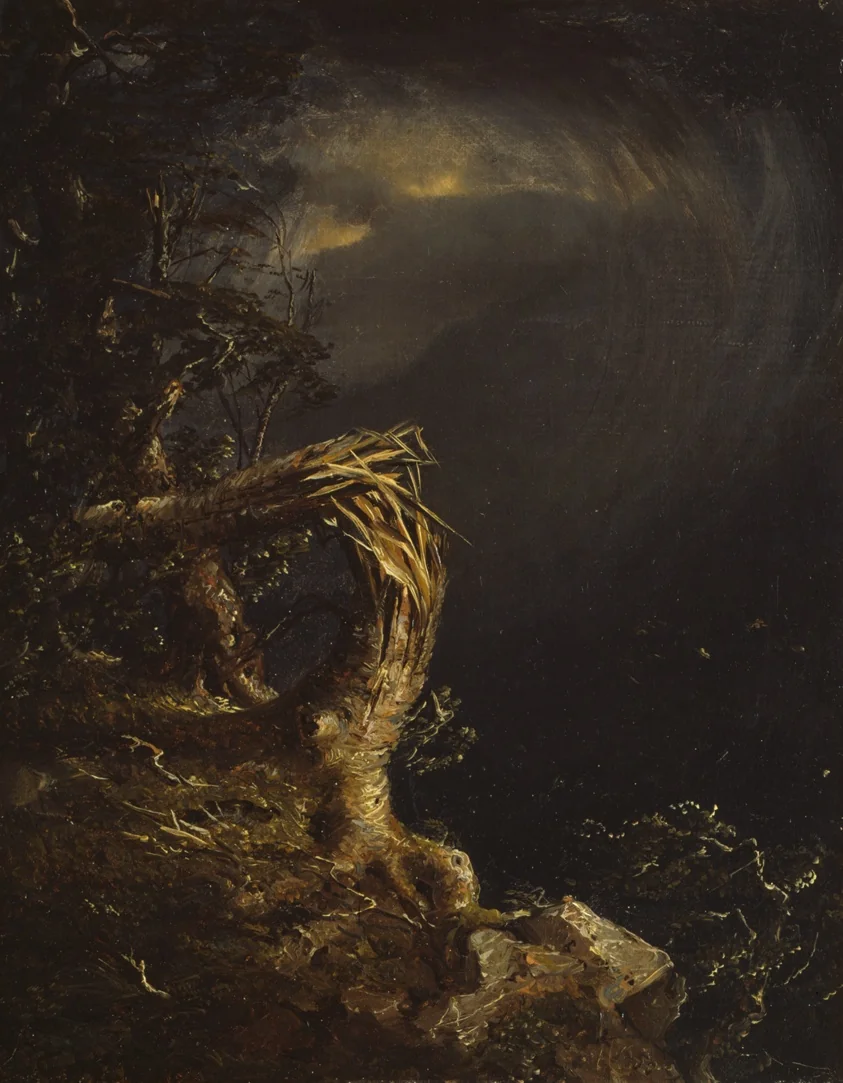
Like his fellow Hudson River School landscapists, Jasper Cropsey sketched in nature and then combined motifs he had observed into his compositions in his New York studio. In the late 1840s and early 1850s he traveled frequently to the Catskills, where he produced this oil sketch. Here, the gnarled trunk and branches of the weather-beaten tree offered the artist interesting variations of color, tone, and line. Cropsey often included such old trees in his paintings in emulation of Thomas Cole, whom he greatly admired. In Cropsey’s work, as in that of Cole, the subject introduces a sense of time and history into the scene, as well as conveying the sublime power of nature.
Accession Number
129639
Medium
Oil on canvas
Dimensions
43.2 × 35.6 cm (17 × 14 in.)
Classification
Painting
Credit Line
Gift of Jamee J. and Marshall Field