Accession Number
85298
Medium
Pen and brown ink on ivory laid paper
Dimensions
43.8 × 30.8 cm (17 1/4 × 12 3/16 in.)
Classification
pen and ink drawings
Credit Line
The Leonora Hall Gurley Memorial Collection
Background & Context
Background Story
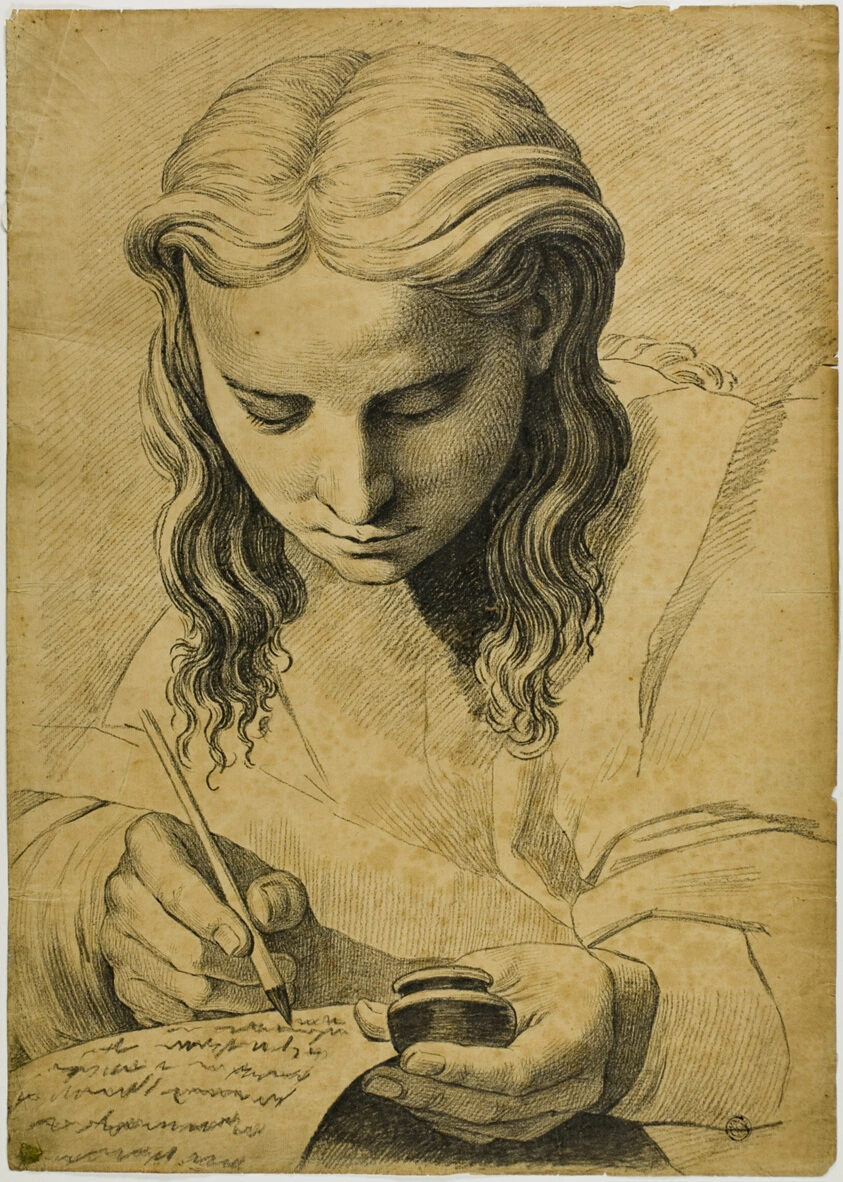
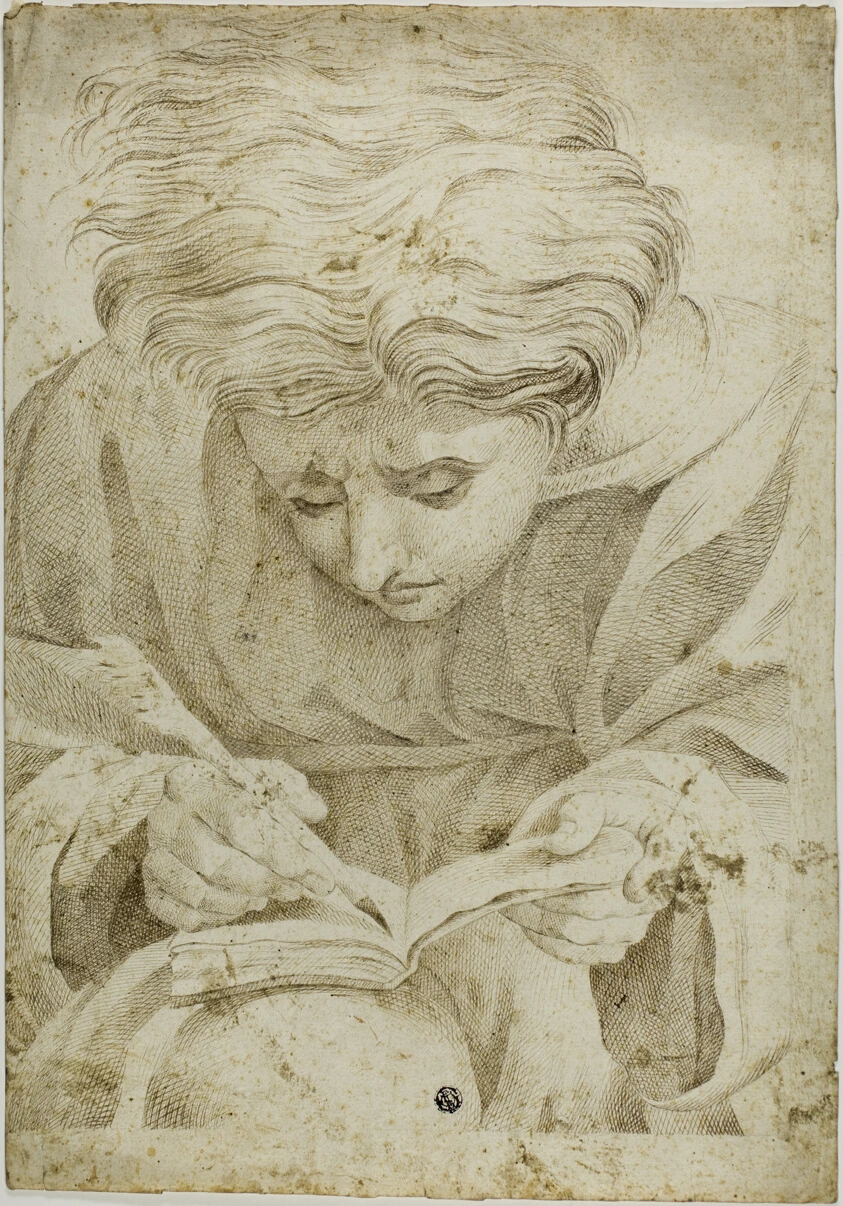
This drawing of a seated youth writing in a book, attributed to Raphael and executed in pen and brown ink on ivory laid paper, belongs to the broader tradition of Renaissance draftsmanship that descended from the master's workshop and continued to influence European art long after his death in 1520. The subject—a young man absorbed in study—reflects the humanist values of the Renaissance, in which education and contemplation were considered the highest forms of human activity. The technique of pen and brown ink, with its controlled line and careful hatching, demonstrates the disciplined approach to drawing that Raphael's followers inherited from the master and transmitted through generations of academic training. The attribution to Raphael himself is complicated by the date of execution: the sheet appears to belong to the seventeenth or eighteenth century, long after the master's death, suggesting that it is either a copy after a lost original or an original composition by an artist working in Raphael's style. Such attributions were common in the history of collecting: drawings of quality were often assigned to famous names to increase their value and prestige. Regardless of authorship, the image demonstrates the enduring power of the High Renaissance ideal of balanced composition, calm expression, and harmonious proportion. Art historians have connected this type of study to the broader tradition of "studioso" imagery in Italian art, from the scholars of Ghirlandaio to the philosophers of Raphael's own "School of Athens." The drawing also documents the material culture of Renaissance education: the book, the writing implement, and the posture of the seated figure all reflect the practices of a period when literacy was expanding and the book was becoming the central medium of intellectual transmission.
Cultural Impact
This later attribution after Raphael transmitted High Renaissance humanist values through pen-and-ink academic tradition, documenting the enduring power of balanced composition and studious contemplation across centuries of collecting.
Why It Matters
It matters because someone drew a boy reading and called it Raphael—proving that even copies could keep the Renaissance alive if the line was steady enough.