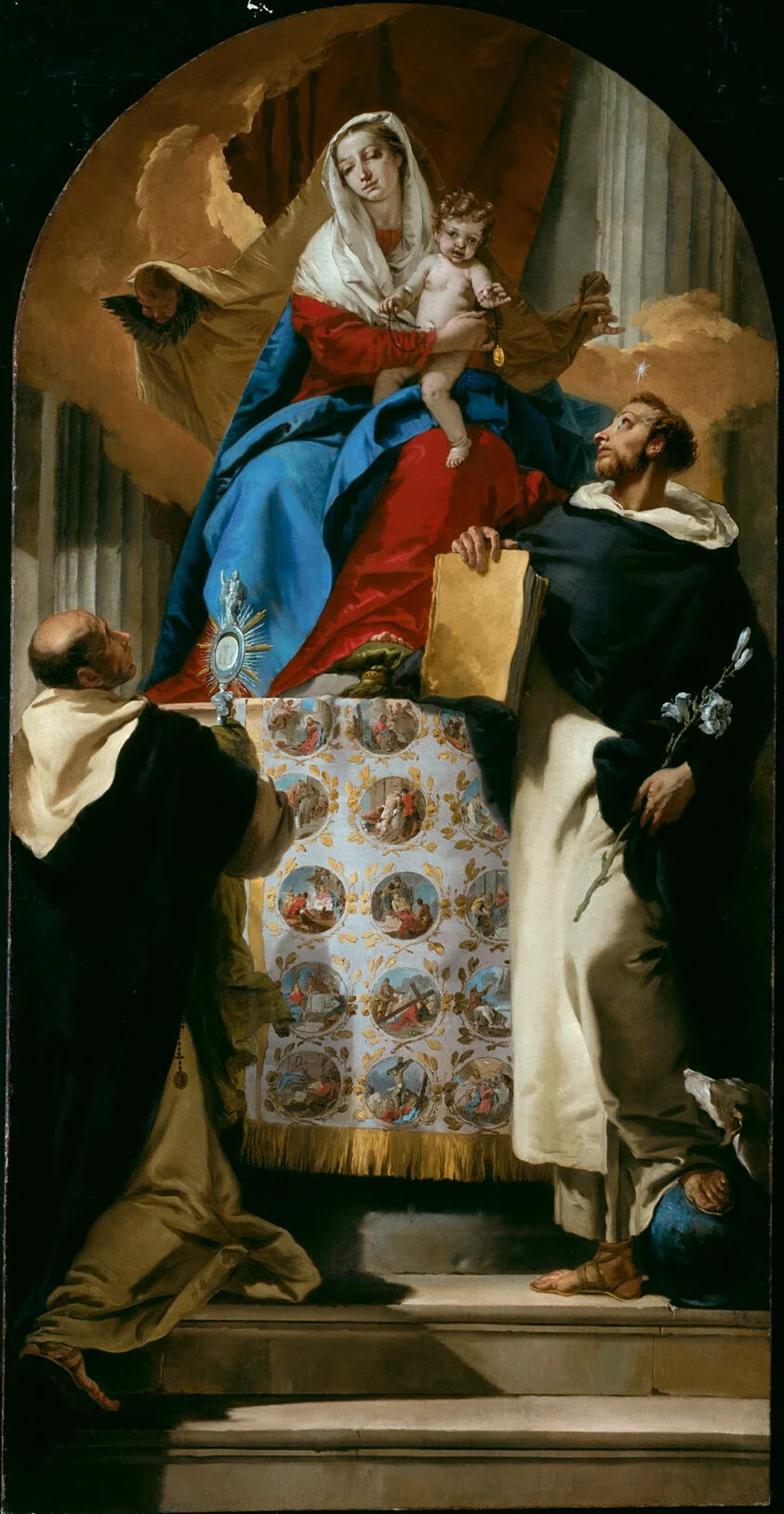
Virgin and Child with Saints Dominic and Hyacinth

Description

In this altarpiece, Giovanni Battista Tiepolo conceived the traditional subject of the Virgin and Child with interceding saints as if the two figures have miraculously appeared on an altar in a light-filled vision, surrounded by the golden clouds of heaven. The infant gives Saint Dominic a rosary; the saint had founded a preaching order that was closely associated with the use of the rosary as a spiritual exercise. The embroidered decorative scenes on the altar cloth depict the mysteries of the rosary, key events in the lives of Mary and Jesus. The devout believer would have meditated on these images while repeating the cycle of prayers marked by rosary beads.

Virgin and Child with Saints Dominic and Hyacinth

Giovanni Battista Tiepolo

1730–35

Accession Number

16434

Medium

Oil on canvas

Dimensions

274.3 × 137.2 cm (108 × 54 in.); Framed: 303.6 × 174 × 12.7 cm (119 1/2 × 68 1/2 × 5 in.)

Classification

oil on canvas

Museum

The Art Institute of Chicago

Chicago, United States

Credit Line

Mr. and Mrs. Martin A. Ryerson Collection

Background & Context

Background Story

Giovanni Battista Tiepolo's "Virgin and Child with Saints Dominic and Hyacinth" (1730–35) is an oil on canvas altarpiece showing the Virgin Mary with the Christ Child, accompanied by two saints. Saint Dominic, founder of the Dominican Order, is shown with his traditional attributes—perhaps a book, a lily, or the rosary. Saint Hyacinth (Jacek), a Dominican missionary who brought Christianity to Poland, is also depicted. The Virgin and Child are shown in glory, perhaps on clouds, while the saints look up in adoration. Tiepolo's composition is characteristic of the Baroque altarpiece: the figures are arranged in a dynamic, ascending composition, the light from above illuminating the Virgin and Child. The palette is rich and luminous, with the blues and reds of the Virgin's traditional colors set against the gold and white of the heavenly realm. This early work from 1730–35 shows Tiepolo already in command of the grand religious style that would make him the most celebrated painter of his generation.

Cultural Impact

Tiepolo's religious paintings represent the culmination of the Venetian tradition of altarpiece painting, combining the grandeur of the Baroque with the luminous color and graceful design of the Rococo.

Why It Matters

This altarpiece with the Virgin and Child and Dominican saints captures the spiritual glory of the heavenly realm, Tiepolo's luminous colors and dynamic composition creating an image of divine majesty and grace.