Provenance
Sold by Associated American Artists to the Whitney Museum of American Art, New York, Apr. 7, 1937–1950. M. Knoedler’s, New York, by Mar. 22, 1971 [letter from Patricia Hills dated Sept. 28, 1994]. Mr. and Mrs. Eddy G. Nicholson, by 1995 [New York 1995 auct. cat.]; sold, Christie’s, Mar. 5, 2003, lot 94, to Dorothy Braude Edinburg, Brookline, MA; given to the Art Institute of Chicago, 2013.
Accession Number
186429
Medium
Graphite, heightened with white chalk, on brown wove paper
Dimensions
21.6 × 16.3 cm (8 9/16 × 6 7/16 in.)
Classification
prints and drawing
Credit Line
Gift of Dorothy Braude Edinburg to the Harry B. and Bessie K. Braude Memorial Collection
Background & Context
Background Story
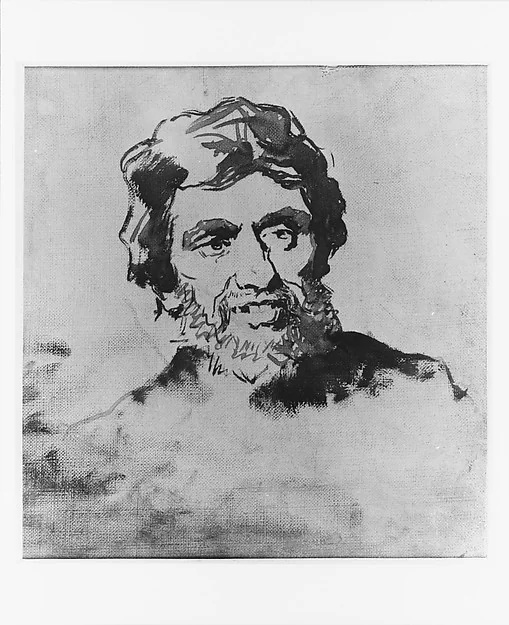
Eastman Johnsons Portrait of Mrs. Jeremiah Chandler from 1847 is an early graphite drawing heightened with white chalk that demonstrates the artists precocious skill as a portraitist at the age of twenty-two. The drawing depicts a woman of mature years with the dignified composure appropriate to her social station, her features modeled with a combination of graphite shading and white chalk highlights that create a convincing sense of volume and presence on the brown wove paper. The brown paper serves as a middle tone from which the graphite builds shadow and the white chalk creates light, a technique Johnson may have learned from the portrait miniaturists who were active in New England during the 1840s, or from his study of European drawing manuals. The drawing is executed with an assurance that belies Johnsons youth, and it already displays the directness of observation and psychological acuity that would make him Americas leading portrait painter of the Civil War era. Mrs. Chandlers expression combines social formality with something more personal, a faint amusement or irony that suggests Johnson was observing character as well as recording likeness, a quality that distinguishes his best portraits from the merely competent productions of the itinerant portraitists who were his early competition.
Cultural Impact
Johnson early portraits in graphite and chalk document the development of American portraiture from itinerant folk practice to professional art, and his ability to capture psychological nuance in simple drawing media set a standard for American portrait drawing that influenced the traditionthrough Eakins and into the 20th century.
Why It Matters
An accomplished early portrait drawing by the young Johnson, using graphite and white chalk on brown paper to model Mrs. Chandlers features with the psychological acuity and observational directness that would make him Americas leading genre and portrait painter.