Provenance
Pierre Crozat (1665-1740), Paris [inscription (Lugt 3612), recto, lower right, in pen and brown ink]. 15th Earl of Shrewsbury (1753–1827), Alton Towers, Staffordshire, England [Deering collection records]. Charles Deering (1852–1927), Chicago [stamp (Lugt 516) verso, lower right, in blue]; by descent to his daughters, Mrs. Chauncey McCormick (née Marion Deering; 1886–1965), Chicago and Mrs. Richard Ely Danielson (née Barbara Deering; 1885–1957), Chicago; given to the Art Institute of Chicago, 1927.
Accession Number
49220
Medium
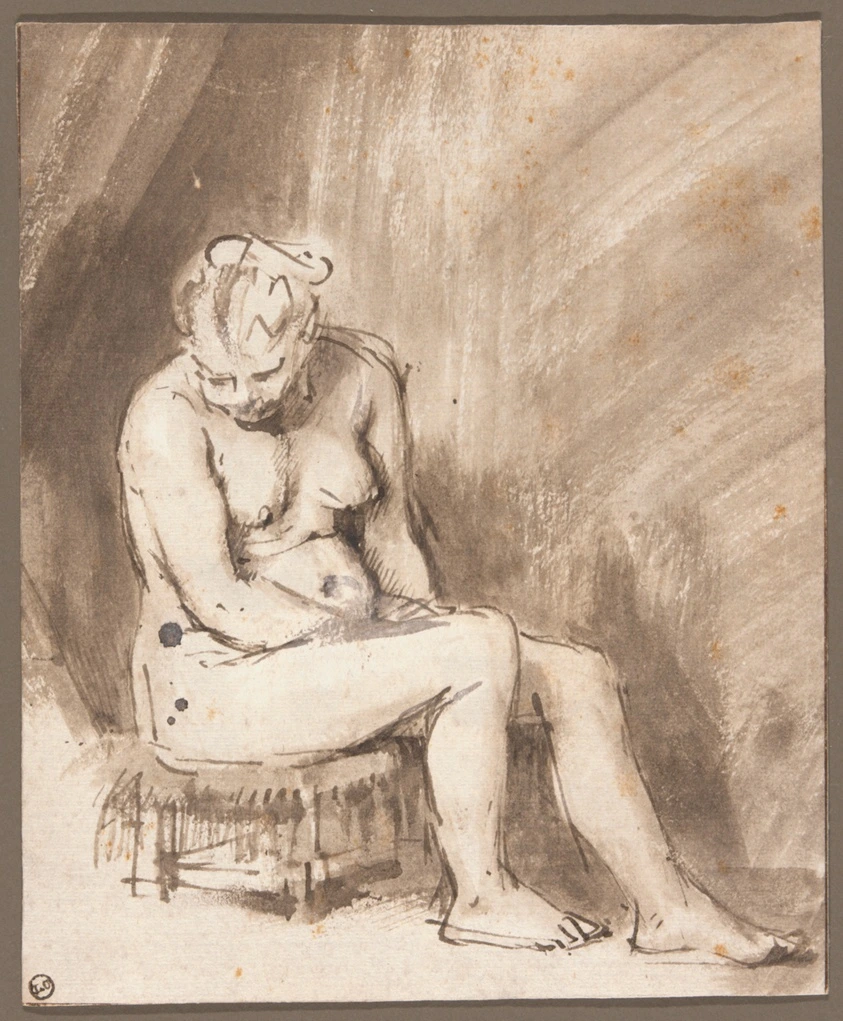
Pen and brown ink, with brush and brown wash, on cream laid paper
Dimensions
19.4 × 24.4 cm (7 11/16 × 9 5/8 in.)
Classification
pen and ink drawings
Credit Line
The Charles Deering Collection
Background & Context
Background Story
Rembrandt's The Good Samaritan depicts the biblical parable. Rembrandt treated this subject multiple times, typically showing the Samaritan helping the wounded man with the compassion that gives the parable its meaning.
Cultural Impact
Rembrandt's religious works reveal the depth of his human sympathy.
Why It Matters
This Good Samaritan expresses the parable's message of compassion.