Accession Number
82313
Medium
Red chalk on tan laid paper, laid down on grayish-tan wove paper
Dimensions
40.8 × 32.1 cm (16 1/8 × 12 11/16 in.)
Classification
drawings (visual works)
Credit Line
The Leonora Hall Gurley Memorial Collection
Background & Context
Background Story
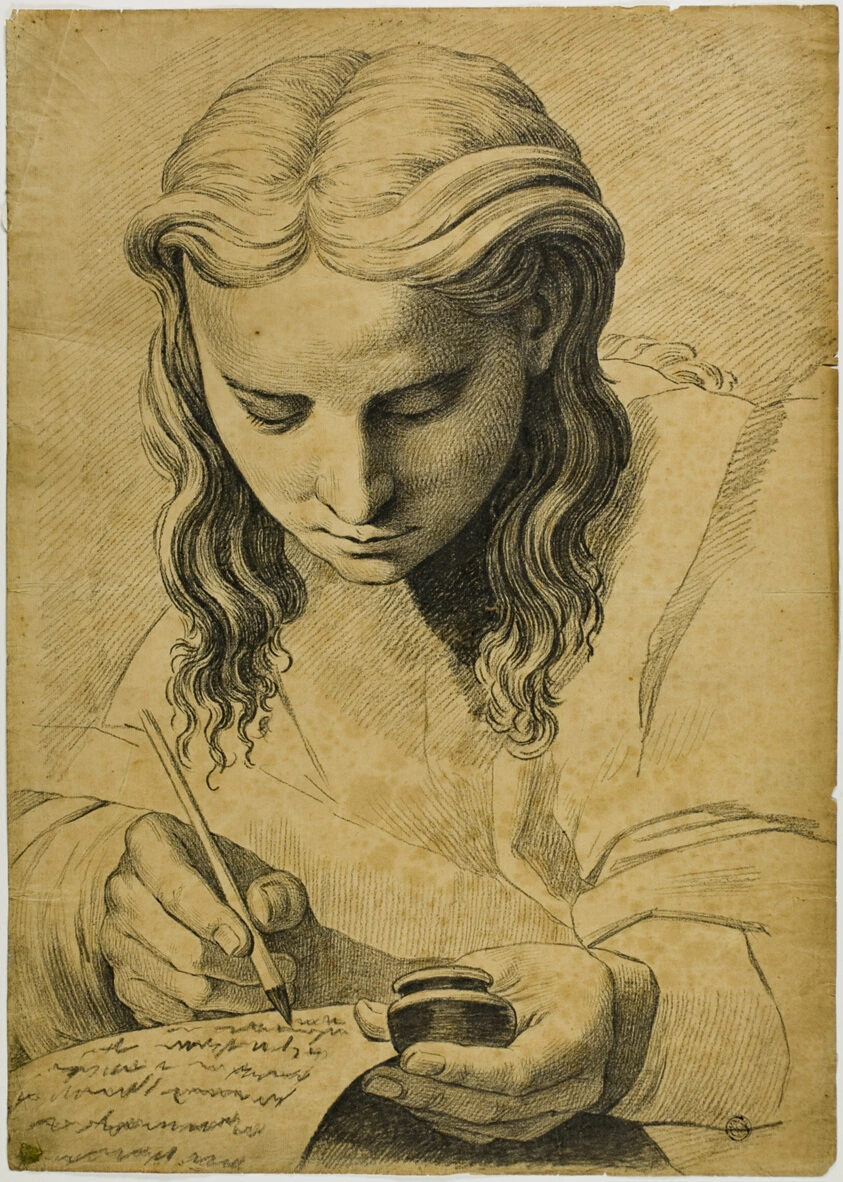
This drawing of a child's head looking upward, attributed to Raphael and executed in red chalk on tan laid paper, belongs to the rich tradition of Renaissance head studies that served both as preparatory work for larger compositions and as independent objects of aesthetic contemplation. The subject—a young face turned upward in an expression of wonder, prayer, or aspiration—reflects the Renaissance fascination with childhood as a state of natural grace and spiritual receptivity. The medium of red chalk, or sanguine, was prized by Renaissance draftsmen for its capacity to create warm, atmospheric tones that suggest living flesh more effectively than the cooler blacks of ink or charcoal. The tan laid paper provides a middle tone that makes the red chalk appear to glow, creating an illusion of rosy health and youthful vitality that would have served the artist in preparing figures for Madonnas or altarpieces. The attribution to Raphael is complicated by the date of execution: the sheet belongs to the seventeenth century, long after the master's death, suggesting that it is either a copy after a lost original or an independent work by a later artist working in the Raphael tradition. Such attributions were common in the history of collecting, when dealers and collectors assigned prestigious names to drawings of quality. Regardless of specific authorship, the image demonstrates the enduring influence of Raphael's ideal of childhood: the rounded cheeks, the large eyes, and the upturned face all derive from the master's treatment of the Christ Child and infant saints. Art historians have connected this type of study to the broader tradition of "putto" imagery in Italian art, from the playful cherubs of Donatello to the angelic children of Raphael's own Madonnas. The drawing also documents the material culture of Renaissance draftsmanship: the red chalk stick, the prepared paper, and the specific hatching patterns all reflect workshop practices that remained standard for centuries.
Cultural Impact
This later red-chalk attribution after Raphael transmitted Renaissance childhood idealism through warm sanguine atmosphere, demonstrating how putto imagery and workshop sanguine practice preserved High Renaissance grace across centuries.
Why It Matters
It matters because someone drew a child looking up and borrowed Raphael's name—proving that even borrowed light could feel divine if the cheeks were round enough.