Accession Number
1967.10.2
Medium
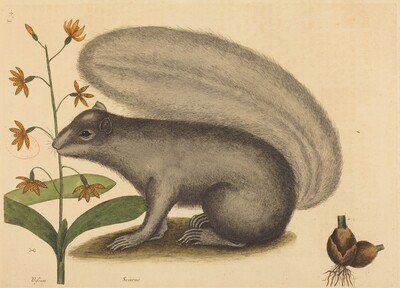
etching and engraving with hand coloring on laid paper
Dimensions
plate: 35.7 × 26.2 cm (14 1/16 × 10 5/16 in.) | sheet: 50.7 × 34.9 cm (19 15/16 × 13 3/4 in.)
Classification
Credit Line
Gift of Dr. and Mrs. George Benjamin Green
Tags
Print Baroque (1600–1750) Etching Engraving Paper
Background & Context
Background Story
Mark Catesby (1683-1749) was an English naturalist and artist whose Natural History of Carolina, Florida, and the Bahama Islands (published 1731-43) was the first published account of the flora and fauna of North America with colored illustrations. The Ground Dove from Catesby's Natural History depicts the small dove species Columba passerina with the plant species that Catesby typically included as habitat, in the etching and engraving with hand coloring that was the standard medium for 18th-century natural history illustration. The 1731-43 publication date places this in the period when Catesby's Natural History was revolutionizing European understanding of North American natural history.
Cultural Impact
Catesby's Ground Dove is important in the history of natural history illustration because it comes from the first published account of North American flora and fauna with colored illustrations, a work that revolutionized European understanding of the natural history of the New World. Catesby's combination of scientific observation and artistic skill established the standard for natural history illustration that would influence Audubon and others throughout the 18th and 19th centuries.
Why It Matters
The Ground Dove is Catesby's revolutionary natural history: a hand-colored etching and engraving from the first published account of North American flora and fauna with colored illustrations (1731-43). The illustration combines scientific observation with artistic skill in a work that revolutionized European understanding of American natural history and established the standard for natural history illustration.