
Provenance
The artist [1903-1970]; his estate; consigned 1970 to (Marlborough Gallery, Inc., New York); transferred 1977 back to the artist's estate;[1] transferred 1979 to The Mark Rothko Foundation, Inc., New York; gift 1986 to NGA.
[1] For a detailed discussion of the transactions surrounding the Rothko estate see Lee Seldes, _Legacy of Mark Rothko_, New York, 1978.
Accession Number
1986.43.19
Medium
oil on canvas
Dimensions
overall: 68.5 x 96.8 cm (26 15/16 x 38 1/8 in.) | framed: 73.5 x 101.8 x 5.2 cm (28 15/16 x 40 1/16 x 2 1/16 in.)
Classification
Painting
Credit Line
Gift of The Mark Rothko Foundation, Inc.
Tags
Painting Early Modern (1901–1950) Oil Painting Canvas American
Background & Context
Background Story
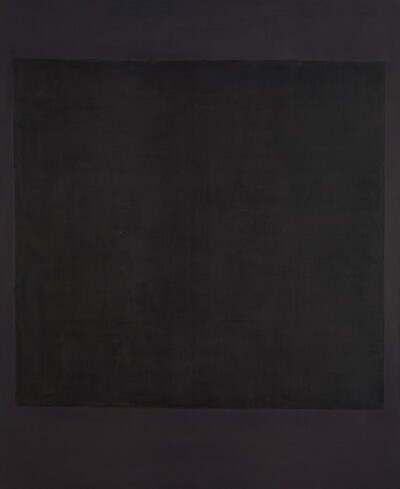
Rural Scene, painted around 1936, belongs to Mark Rothko's early period - years before he developed the floating color-field abstractions that would make him one of the most important artists of the 20th century. At this stage, Rothko was painting figurative works influenced by the mood of Depression-era America and the mythological themes that preoccupied him throughout the 1930s.
The painting depicts a landscape with figures in a rural setting, rendered in the muted earth tones and thin, scrubbed surfaces that characterize Rothko's early work. The figures are vaguely defined, absorbed into their environment rather than standing apart from it - a strategy that anticipates Rothko's later elimination of the figure entirely. The color, though muted, already shows his instinct for creating emotional atmosphere through chromatic relationships.
Rothko would later repudiate these early figurative works, but they are essential for understanding his development. The same impulse that led him to paint figures dissolving into landscape would lead him to paint rectangles dissolving into color. The subject changes; the underlying quest - to create an image that bypasses rational thought and speaks directly to emotion - remains constant.
Cultural Impact
Rothko's early figurative works have been rediscovered as essential precursors to his mature abstractions. They demonstrate that the emotional intensity of his color-field paintings was not born from formal experiment but from decades of wrestling with the problem of how to make paint express feeling without relying on recognizable subject matter.
Why It Matters
Rural Scene is a document of Rothko before Rothko - an artist searching for a visual language adequate to his emotional and philosophical concerns. The muted colors, the dissolving figures, the atmospheric surface all point toward the breakthrough that would come a decade later, when Rothko finally found his voice in the floating rectangles of pure color.
![Abstract Composition in Black, Blue, Green, Red, Yellow, and Gray [verso]](https://api.nga.gov/iiif/9eb300d5-cd33-419e-b35d-3a199b27e57a/full/400,/0/default.jpg)
![No. 17 [or] No. 15](https://api.nga.gov/iiif/cdef8773-6058-4a73-aee0-6eacce555bbd/full/400,/0/default.jpg)
![No. 7 [or] No. 11](https://api.nga.gov/iiif/73facf55-14dd-4997-b59c-cd93d67c1bea/full/400,/0/default.jpg)