
Provenance
The artist [1903-1970]; his estate; consigned 1970 to (Marlborough Gallery, Inc., New York); transferred 1977 back to the artist's estate;[1] transferred 1979 to The Mark Rothko Foundation, Inc., New York; gift 1986 to NGA.
[1] For a detailed discussion of the transactions surrounding the Rothko estate see Lee Seldes, _Legacy of Mark Rothko_, New York, 1978.
Accession Number
1986.43.28
Medium
oil on hardboard
Dimensions
overall: 71.1 x 91.5 cm (28 x 36 in.)
Classification
Painting
Credit Line
Gift of The Mark Rothko Foundation, Inc.
Tags
Painting Early Modern (1901–1950) Oil Painting Board American
Background & Context
Background Story
This early work from Rothko's formative period shows an influence far removed from the luminous color fields that would make him famous. Woman Sewing belongs to Rothko's urban realist phase of the early 1930s, when he was painting the working-class neighborhoods of New York City under the influence of Max Weber and the social realist spirit of the Depression era. The composition is vertical, cramped, and deliberately unglamorous: a woman bent over her sewing, the room tight around her, the colors muted and earthy. This is Rothko before he became Rothko — an immigrant artist painting the world he saw around him.
Cultural Impact
Understanding Rothko's early figurative work is essential for understanding his later abstractions. The concern with human solitude, the vertical format that would become his signature, and the emotional intensity that would eventually express itself through color alone are all present here in embryonic form. The woman sewing in a confined space will become, three decades later, a rectangle suspended in luminous emptiness — but the emotional logic is continuous.
Why It Matters
Woman Sewing is proof that Rothko's genius was not born from nothing. The empathy, the solitude, the compression of human experience into essential forms — all of it begins here, in the modest rooms of Depression-era New York.
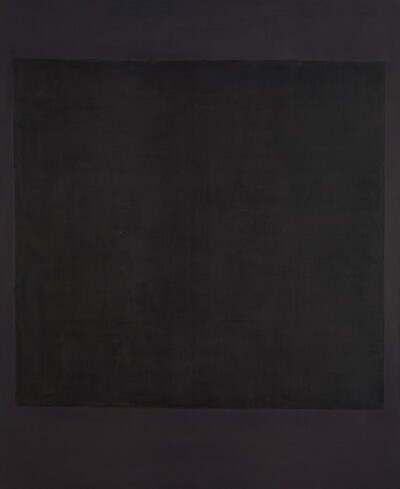
![Abstract Composition in Black, Blue, Green, Red, Yellow, and Gray [verso]](https://api.nga.gov/iiif/9eb300d5-cd33-419e-b35d-3a199b27e57a/full/400,/0/default.jpg)
![No. 17 [or] No. 15](https://api.nga.gov/iiif/cdef8773-6058-4a73-aee0-6eacce555bbd/full/400,/0/default.jpg)
![No. 7 [or] No. 11](https://api.nga.gov/iiif/73facf55-14dd-4997-b59c-cd93d67c1bea/full/400,/0/default.jpg)