
Provenance
The artist [1903-1970]; his estate; consigned 1970 to (Marlborough Gallery, Inc., New York); transferred 1977 back to the artist's estate;[1] transferred 1979 to The Mark Rothko Foundation, Inc., New York; gift 1986 to NGA.
[1] For a detailed discussion of the transactions surrounding the Rothko estate see Lee Seldes, _Legacy of Mark Rothko_, New York, 1978.
Accession Number
1986.43.38
Medium
oil on canvas
Dimensions
overall: 61.35 × 81.3 cm (24 1/8 × 32 in.) | framed: 68.58 × 88.9 × 8.26 cm (27 × 35 × 3 1/4 in.)
Classification
Painting
Credit Line
Gift of The Mark Rothko Foundation, Inc.
Tags
Painting Early Modern (1901–1950) Oil Painting Canvas American
Background & Context
Background Story
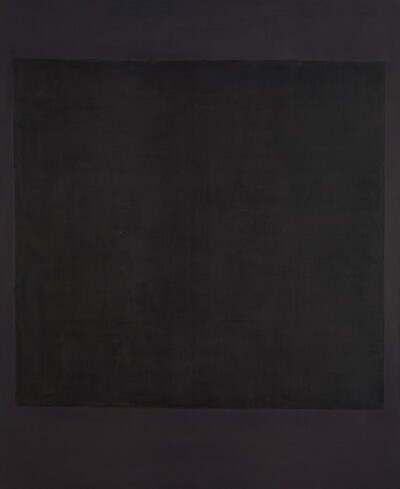
Contemplation, painted in 1937-1938, shows Mark Rothko moving further toward the abstraction that would define his career. The painting depicts a seated figure absorbed in thought, but the figure is already dissolving into the surrounding space - edges blurring, volumes flattening, the boundary between self and environment becoming indeterminate.
The painting's title is its subject. Rothko was deeply influenced by Nietzsche's Birth of Tragedy and by the mythological archetypes of Carl Jung, and his paintings of the 1930s are populated by figures engaged in primal, contemplative acts - not narrative episodes but states of being. The figure in Contemplation is not doing anything; it simply exists, immersed in thought and in the paint that surrounds it.
The color palette - deep greens, blues, and earth tones - creates an atmosphere of inwardness and withdrawal. The surface is thin and scrubbed, as though Rothko were painting not on the canvas but into it, pushing the image below the surface rather than building it up. This technique of painting into the ground anticipates the luminous, stained-canvas technique of his mature work.
Cultural Impact
Contemplation reveals the philosophical foundations of Rothko's art. His mature color-field paintings were never abstract in the sense of being non-representational; they were representations of contemplative states - visual equivalents of the experience of being absorbed in thought, feeling, or the infinite.
Why It Matters
This painting marks a crucial step in Rothko's journey from figuration to abstraction. The figure in Contemplation is half-present - visible enough to be recognized as human, transparent enough to be seen through. Within a decade, the figure would vanish entirely, leaving only the contemplative state it once embodied.
![Abstract Composition in Black, Blue, Green, Red, Yellow, and Gray [verso]](https://api.nga.gov/iiif/9eb300d5-cd33-419e-b35d-3a199b27e57a/full/400,/0/default.jpg)
![No. 17 [or] No. 15](https://api.nga.gov/iiif/cdef8773-6058-4a73-aee0-6eacce555bbd/full/400,/0/default.jpg)
![No. 7 [or] No. 11](https://api.nga.gov/iiif/73facf55-14dd-4997-b59c-cd93d67c1bea/full/400,/0/default.jpg)