Provenance
Private collection, Paris, by at least 1959,[1] possibly Jacques Laroche [1904-1976]; by whom sold 1965 to (Wildenstein & Co., New York);[2] sold 20 January 1966 to Ailsa Mellon Bruce [1901-1969], New York;[3] bequest 1970 to NGA.
[1]Lent to an exhibition in London in 1959 from a private collection in Paris. [2]See letter dated 13 August 1999 from Wildenstein's, in NGA curatorial files. [3]Invoice from Wildenstein and Co. to Ailsa Mellon Bruce dated 20 January 1966, copy in NGA curatorial records.
Accession Number
1970.17.56
Medium
oil on canvas
Dimensions
overall: 55.9 x 39.4 cm (22 x 15 1/2 in.) | framed: 74.3 x 60.6 x 8.3 cm (29 1/4 x 23 7/8 x 3 1/4 in.)
Classification
Painting
Credit Line
Ailsa Mellon Bruce Collection
Tags
Painting Early Modern (1901–1950) Oil Painting Canvas French Color: Orange
Background & Context
Background Story
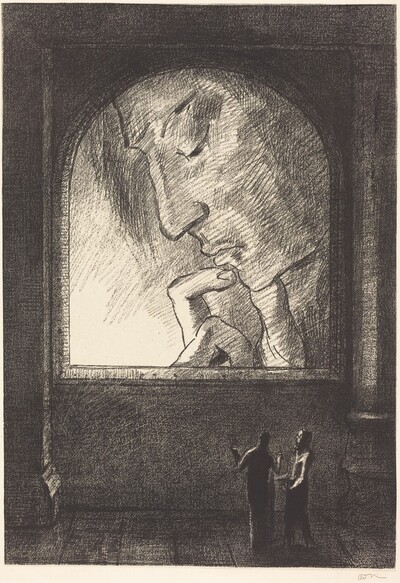
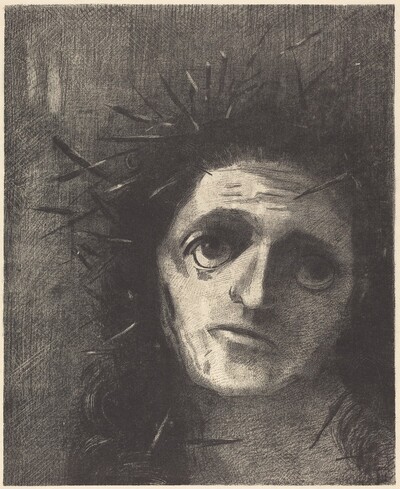
Odilon Redon (1840-1916) spent the last decades of his life transforming himself from the artist of dark, visionary noirs (charcoal drawings of monsters and dreamscapes) into one of the most radiant flower painters in the history of art. Flowers in a Vase from around 1910 is a product of this late flowering: vivid blooms arranged in a vase against an undefined background, painted with the luminous color and decorative flair that distinguish Redon's late work from his earlier monochrome dreamscapes. The flowers are not botanical specimens but chromatic events—explosions of color that celebrate the visual pleasure of painting as much as the beauty of the flowers themselves.
Cultural Impact
Redon's late flower paintings are among the most beloved works of the Symbolist movement, but they represent a departure from the movement's typical darkness and ambiguity. Where the early Symbolists explored nightmares and the unconscious, Redon's late flowers explore the pleasure of color for its own sake—a kind of visual hedonism that anticipates the color experiments of the Fauves. The transformation from noir to color is one of the most remarkable artistic developments in the history of French painting.
Why It Matters
Flowers in a Vase is Redon's late transformation made visible: the artist of nightmares and monsters has become the painter of radiant blooms, and the charcoal blacks of the noirs have been replaced by the most vivid colors on his palette. The flowers are not observed but imagined—chromatic events rather than botanical specimens.