Accession Number
85759
Medium
Pen and brown ink on tan laid paper, laid down on cream laid paper
Dimensions
23.2 × 19 cm (9 3/16 × 7 1/2 in.)
Classification
pen and ink drawings
Credit Line
The Leonora Hall Gurley Memorial Collection
Background & Context
Background Story
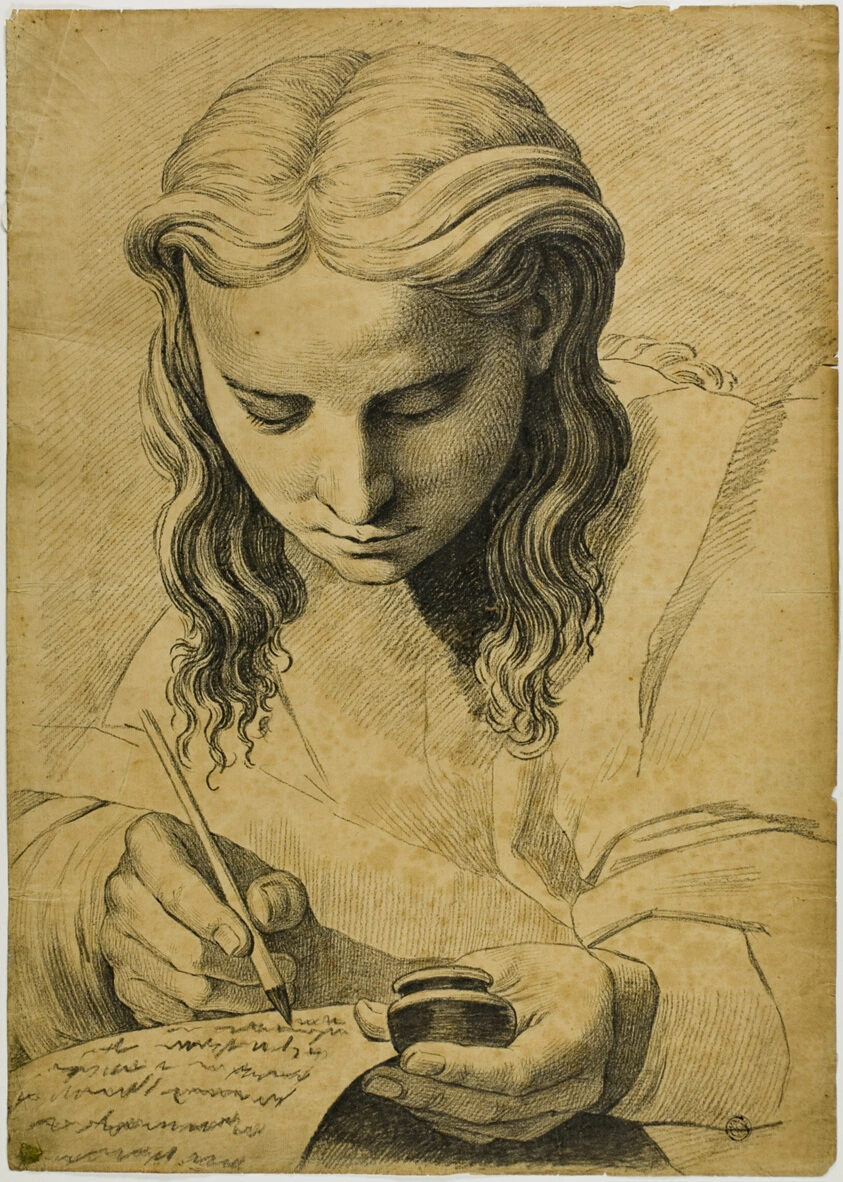
"Study for the Emperor Constantine Offering the Tiara to Pope Sylvester" is an undated pen and brown ink drawing by Raphael that demonstrates the High Renaissance master's engagement with the themes of imperial and papal authority, the image showing the moment of the Donation of Constantine rendered with the same classical grace and compositional balance that characterized his most powerful historical compositions. The composition is a medium-sized drawing—23.2 × 19 centimeters—showing Constantine kneeling before Pope Sylvester with the pen and brown ink on tan laid paper laid down on cream laid paper creating a surface of extraordinary precision and historical grandeur. The drawing suggests both the physical reality of the imperial ceremony and the spiritual significance of the papal authority, the technique suggesting both the classical balance of the composition and the theological weight of the historical narrative. Art historians have connected this study to the broader tradition of the donation scene in Renaissance art, from the frescoes of the Vatican to the paintings of the papal tradition, noting that Raphael's treatment is more focused on the compositional clarity and the classical restraint, the transformation of historical propaganda into timeless beauty, than the political assertion or the theological argument of these other traditions.
Cultural Impact
This undated pen-ink study made Constantine donation classically restrained through medium 23cm precise brown-line compositional balance and tan-cream laid-paper historical grandeur, using High Renaissance papal engagement to transform imperial propaganda into timeless beauty beyond Vatican political theological assertion.
Why It Matters
It matters because Raphael drew an emperor kneeling to a pope and made the paper feel like it was holding up the weight of church and state in perfect balance—proving that even power could be graceful if the line was refined enough.