Accession Number
95792
Medium
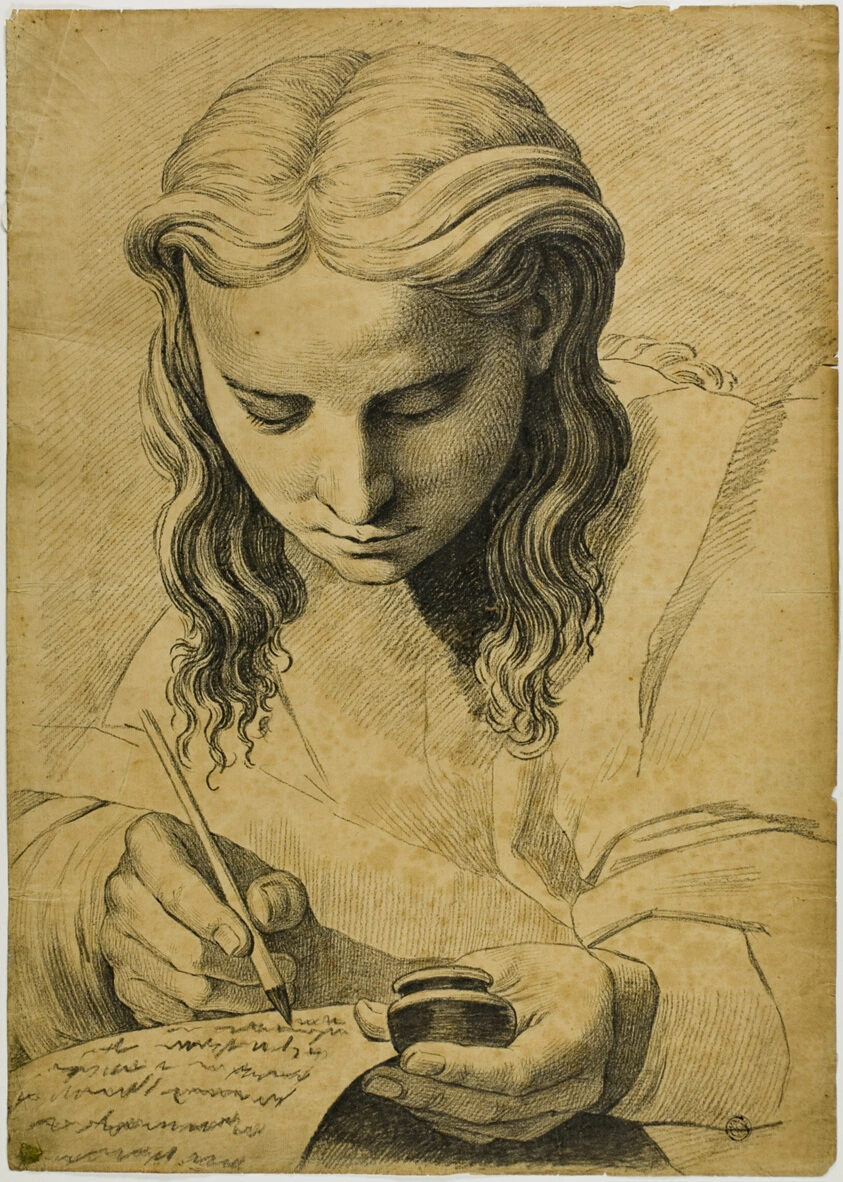
Pen and brown ink, with red chalk, on ivory laid paper
Dimensions
19.4 × 20.2 cm (7 11/16 × 8 in.)
Classification
pen and ink drawings
Credit Line
The Leonora Hall Gurley Memorial Collection
Background & Context
Background Story
This drawing titled Transfiguration and attributed to the circle of Raphael from around 1530 is a pen and brown ink drawing with red chalk on ivory laid paper that depicts the biblical subject of Christs transfiguration on the mountain, a subject that Raphael had painted in his celebrated altarpiece for the Vatican completed in 1520 just before his death. The drawing, whether by Raphael himself or by an artist in his workshop, demonstrates the compositional method that Raphael developed for complex narrative subjects in which two or more episodes are combined in a single composition, with the transfigured Christ above and the possessed boy below. The pen and brown ink provides the Linear definition of the figures, while the red chalk adds the tonal modeling that gives the figures sculptural presence in the round. The date of around 1530, a decade after Raphaels death, suggests that this drawing is a copy or variant of the famous composition rather than a preparatory study, but copies after Raphaels compositions were themselves significant documents in the 16th century, when the dissemination of his compositional inventions through drawings and prints was a major force in the development of European art. The ivory laid paper provides a warm ground that enhances the tonal coherence of the drawing and gives the figures the atmospheric presence of a finished work rather than a mere sketch.
Cultural Impact
Drawings after Raphaels compositions were among the most important vehicles for the dissemination of his style throughout Europe, and their influence on the practice of drawing and composition extends through the 16th century and beyond. The Transfiguration drawing demonstrates the compositional method that made Raphaels work the model for narrative painting throughout Europe.
Why It Matters
A pen and brown ink drawing with red chalk from around 1530 depicting the Transfiguration after Raphaels celebrated Vatican altarpiece, demonstrating the compositional method of combining multiple episodes and the sculptural figure modeling that disseminated Raphaels style throughout European art.