Accession Number
43580
Medium
Graphite on tan tracing paper
Dimensions
14.3 × 15.2 cm (5 11/16 × 6 in.)
Classification
graphite
Credit Line
The Charles Deering Collection
Background & Context
Background Story
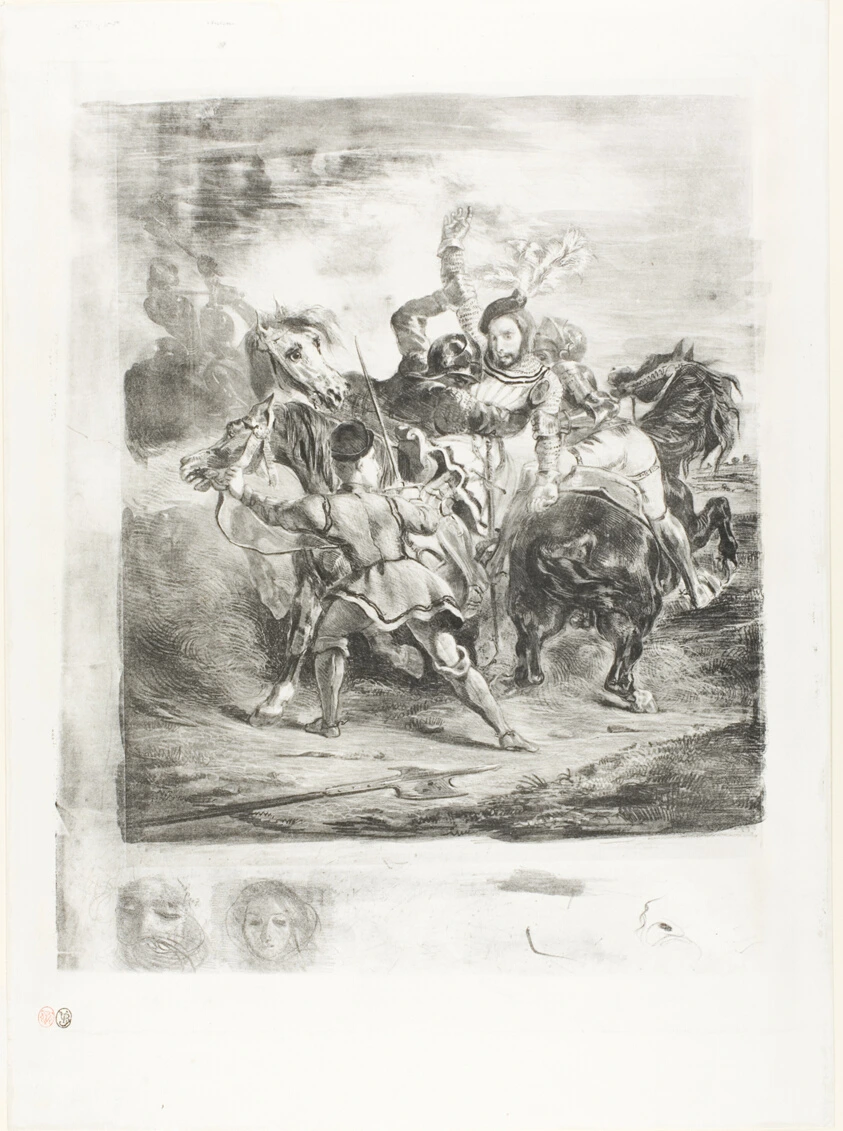
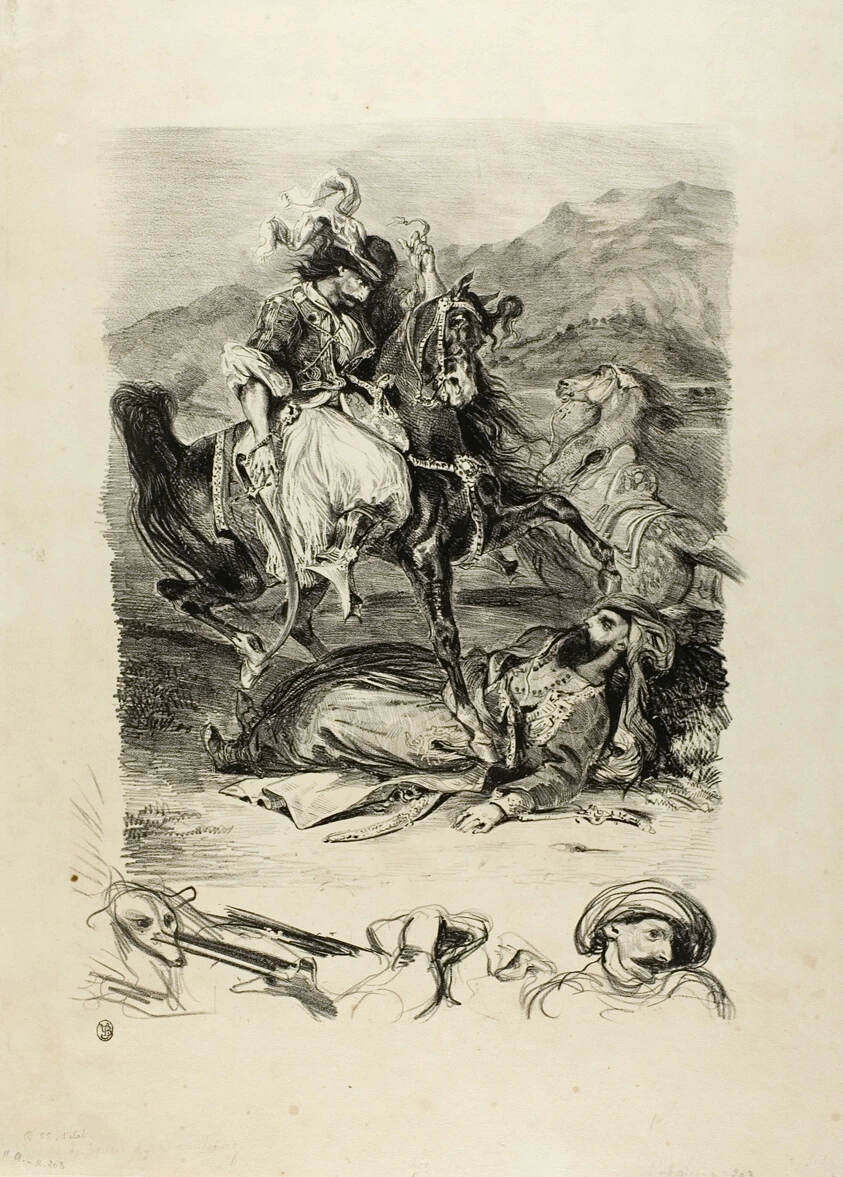
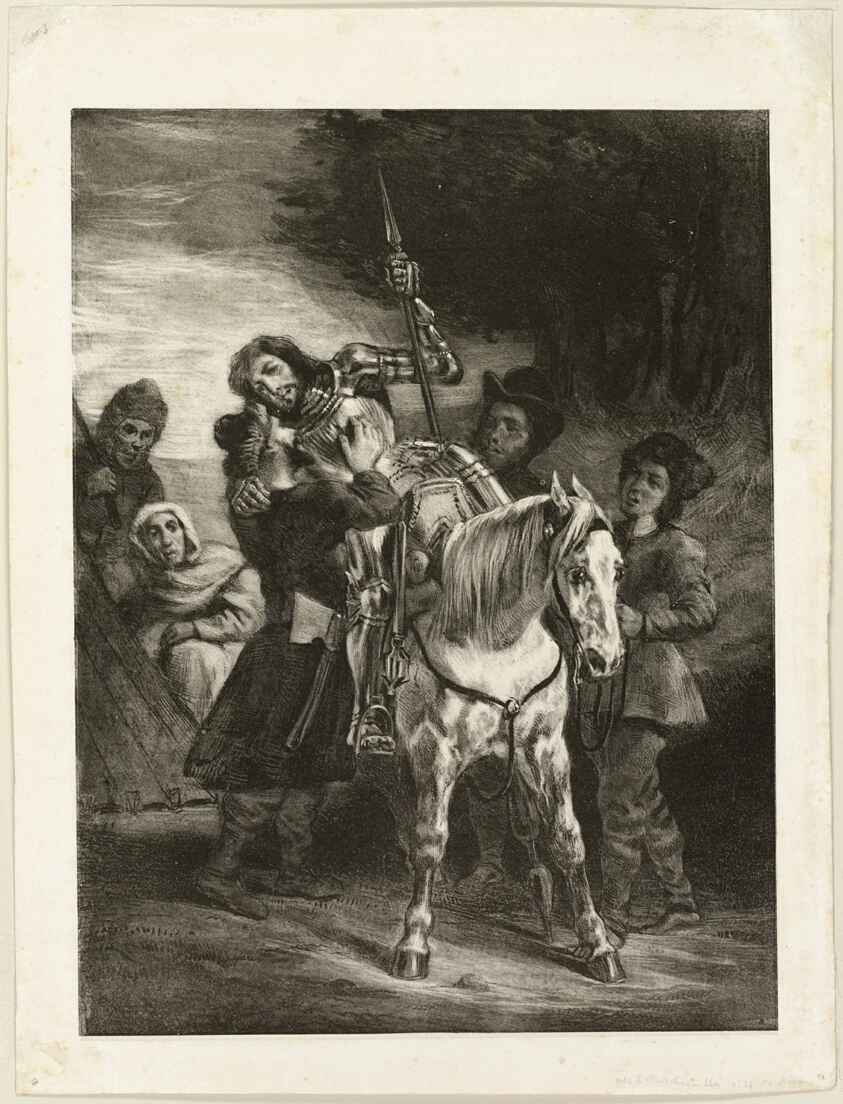
Eugène Delacroix's "Copy" is a graphite drawing on tan tracing paper, a study of a work by another artist. Tracing paper was commonly used by artists for copying and transferring compositions, and Delacroix's use of it suggests that this was a working study rather than a finished drawing. The title "Copy" indicates that Delacroix was studying the work of another master—perhaps Raphael, Michelangelo, or Rubens, the artists he most admired. Copying the works of great artists was central to artistic training and practice in the 19th century, and Delacroix continued to make copies throughout his career as a way of learning and absorbing the lessons of his predecessors. The tan tracing paper provides a smooth, translucent surface. The graphite lines are likely rapid and searching, capturing the essential forms of the original without slavish detail. This modest drawing offers insight into Delacroix's working method and his continuous engagement with the tradition of European painting.
Cultural Impact
Delacroix's copies after the Old Masters demonstrate the importance of tradition in his art, showing that the Romantic revolutionary was also a devoted student of the painters who came before him.
Why It Matters
This copy after another master reveals Delacroix's lifelong practice of learning from the great artists of the past, the tracing paper and rapid graphite line capturing the essence of a work that inspired him.