Provenance
Estate of the artist [Lugt suppl. 838a]. Sold by L'Art Ancien, Zurich, to the Art Institute, 1957.
Accession Number
6081
Medium
Graphite on tan wove paper, tipped onto board
Dimensions
25 × 19.7 cm (9 7/8 × 7 13/16 in.)
Classification
graphite
Credit Line
William McCallin McKee Memorial Endowment
Background & Context
Background Story
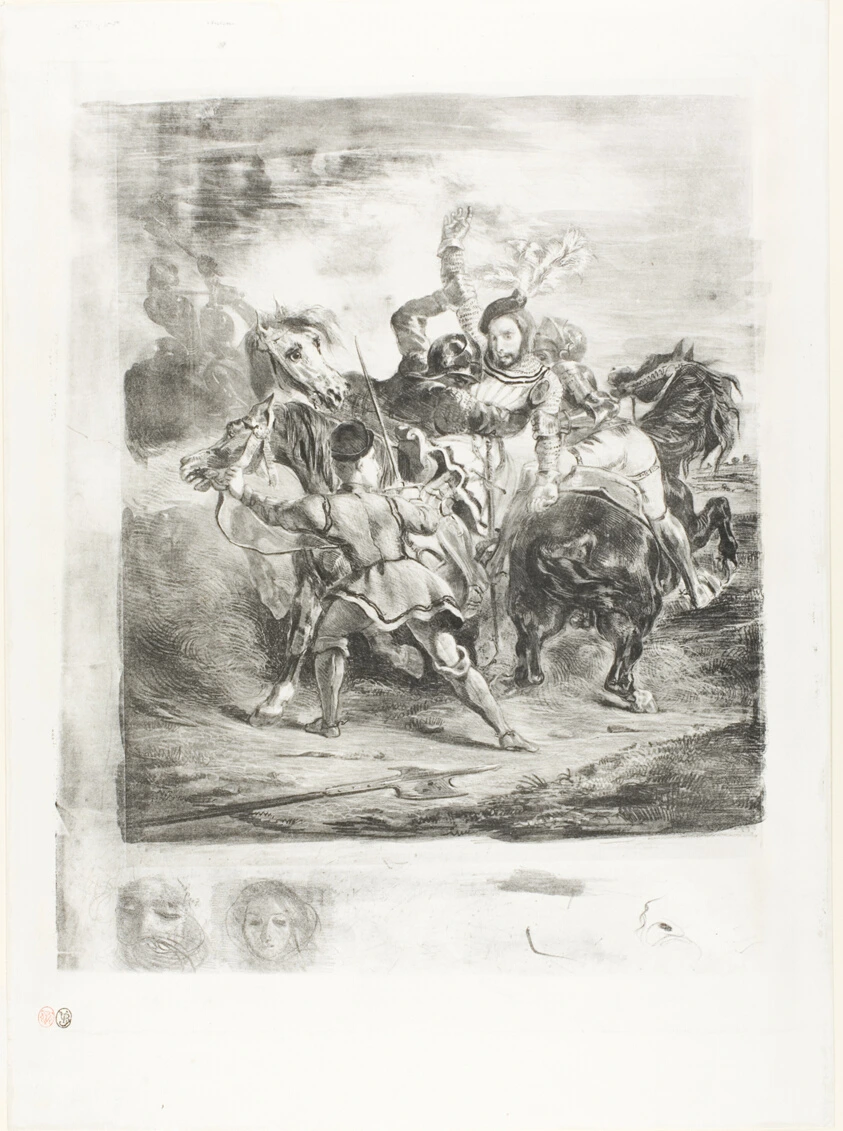
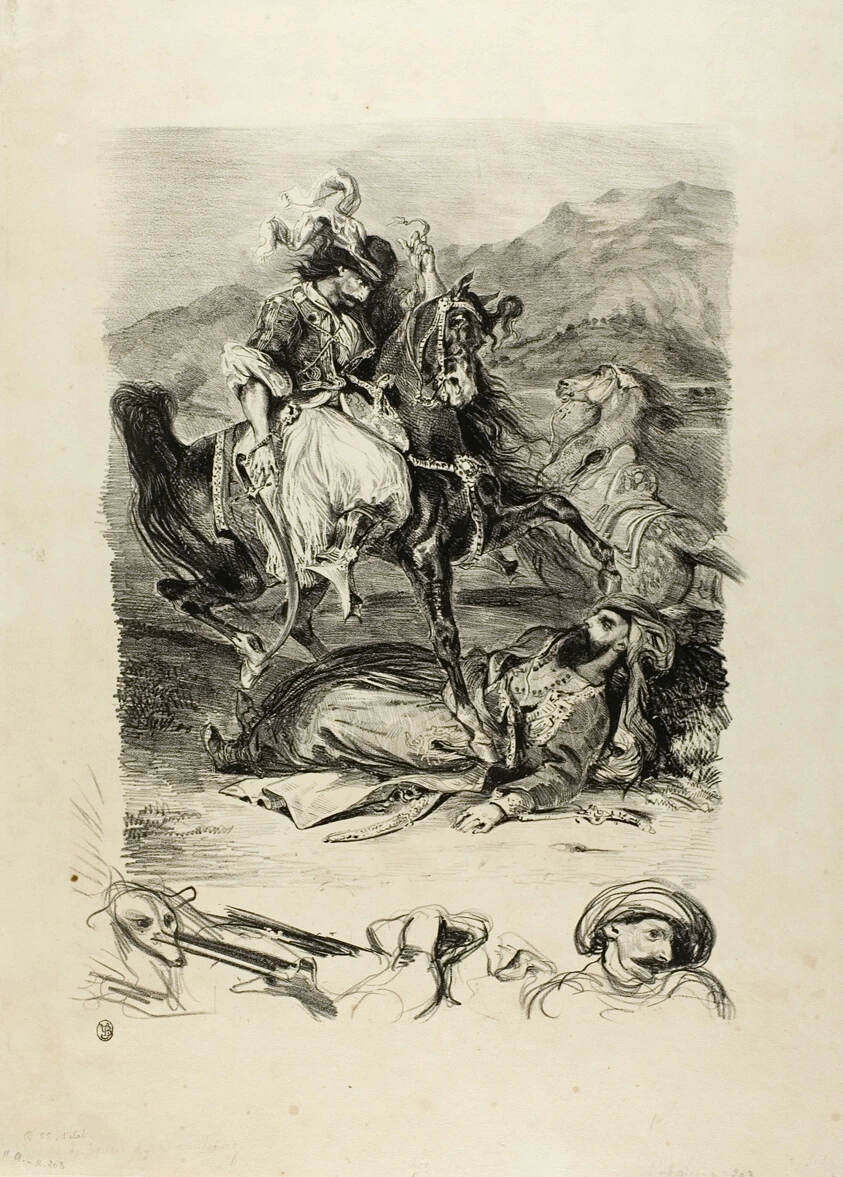
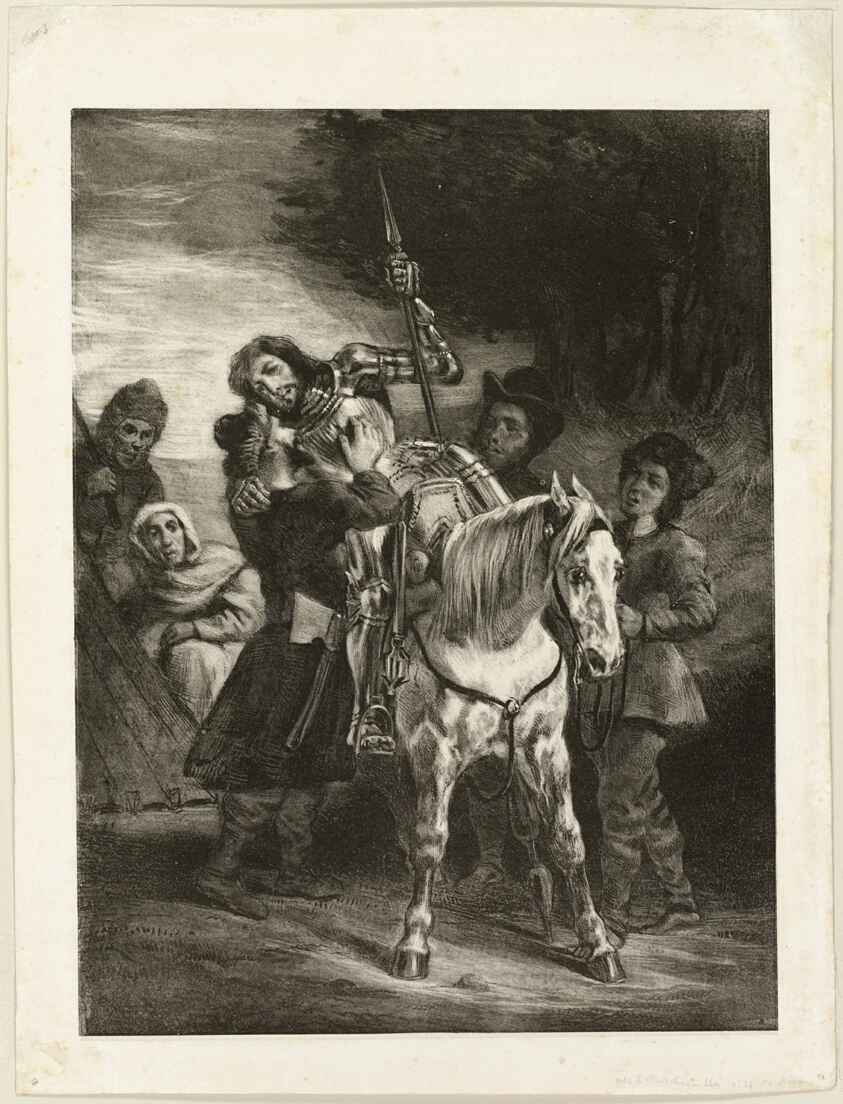
Eugène Delacroix's "Study for Marphise and the Mistress of Pinabel" (c. 1852) is a graphite drawing on tan wove paper, tipped onto board, for a subject drawn from Ludovico Ariosto's epic poem "Orlando Furioso." The poem, one of the great works of Italian Renaissance literature, was a favorite source for Delacroix, who produced numerous paintings and drawings based on its tales of knights, enchantresses, and battles. The story of Marphise, a warrior woman who defeats the arrogant knight Pinabel, was a subject that appealed to Delacroix's love of epic combat and strong female characters. This study shows him working out the composition, the figures of Marphise and the mistress of Pinabel arranged in a dynamic relationship. The tan wove paper provides a warm ground. The graphite technique is confident and expressive, the lines capturing the movement and drama of the scene. The board mount indicates that this drawing was carefully preserved, perhaps for a projected painting that was never executed or as a finished work in its own right.
Cultural Impact
Delacroix's Ariosto-inspired works demonstrate the persistence of Renaissance literary culture in 19th-century French Romanticism, showing the artist finding inspiration in the epic poetry of the Italian Renaissance.
Why It Matters
This study for a scene from Orlando Furioso captures the epic drama of Ariosto's poem, the dynamic composition and expressive graphite line conveying the energy of the warrior woman Marphise's triumph.