Accession Number
1926.1546
Medium
oil on canvas
Dimensions
Unframed: 65.4 x 81.3 cm (25 3/4 x 32 in.)
Classification
Painting
Credit Line
Hinman B. Hurlbut Collection
Tags
Painting Early Modern (1901–1950) Oil Painting Canvas American Color: Gray
Background & Context
Background Story
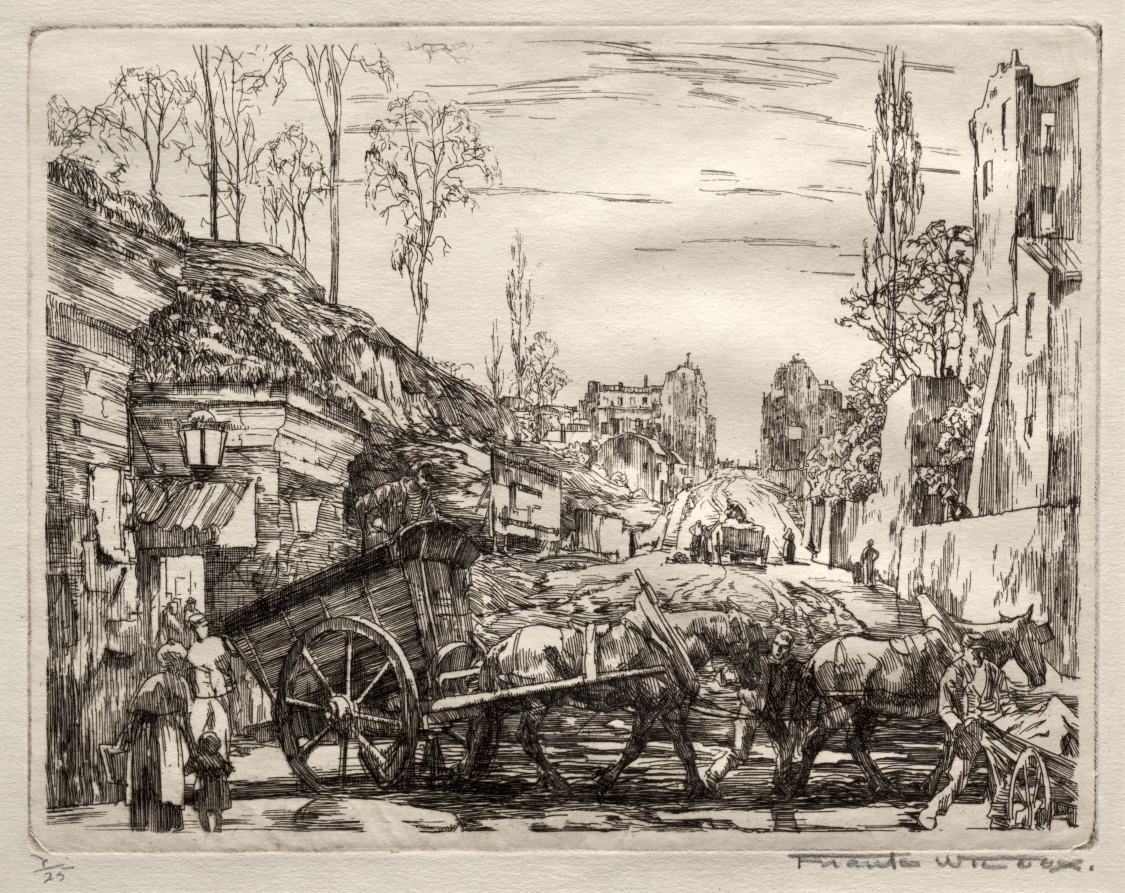
Frank Wilcox was a Cleveland-based artist and influential teacher at the Cleveland School of Art, and St. Servan represents his work in the European watercolor tradition translated into oil. The Breton port town of Saint-Servan, near Saint-Malo, was a popular destination for American artists between the wars, offering picturesque harbor views and a working maritime culture that appealed to the same sensibility that Wilcox brought to his Cleveland industrial scenes. The painting balances architectural precision with atmospheric effect, showing Wilcox's ability to find structural beauty in the specific character of a place.
Cultural Impact
Wilcox was central to the Cleveland School of watercolor painters, a regional movement that produced some of the finest American watercolors of the early 20th century. His European travels enriched his practice without displacing his commitment to documenting the American industrial landscape. St. Servan shows how a Cleveland eye processes a Breton subject — finding the same geometric interest in foreign architecture that he found at home.
Why It Matters
St. Servan is Wilcox applying his Cleveland-trained eye to a European subject and finding the same architectural and atmospheric interest that made his industrial views compelling. Regionalism at its best is portable.