Provenance
Charles L. Freer [1854-1919], Detroit, MI, given to the Cleveland Museum of Art (?-1915); The Cleveland Museum of Art, Cleveland, OH (1915-)
Accession Number
1915.105
Medium
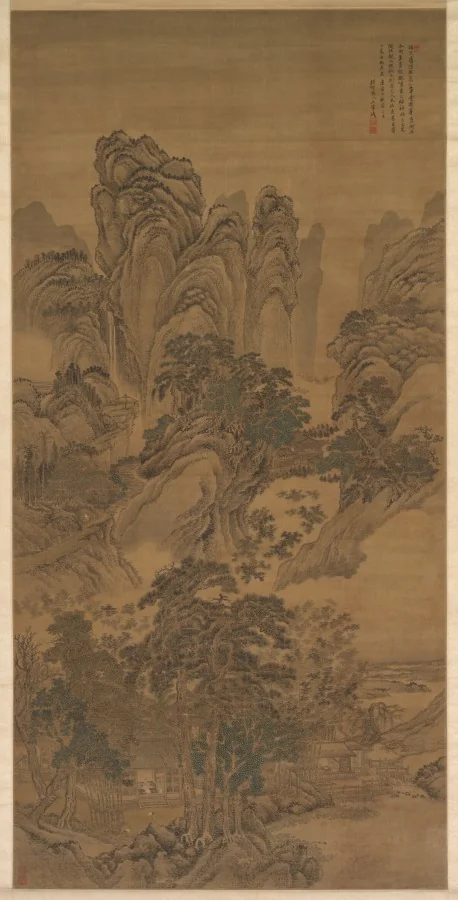
hanging scroll, color on silk
Dimensions
Overall: 200.9 x 99.2 cm (79 1/8 x 39 1/16 in.)
Classification
Painting
Credit Line
Gift of Charles L. Freer
Tags
Painting Baroque (1600–1750) Silk Painting Chinese Color: Orange Color: Gold
Background & Context
Background Story
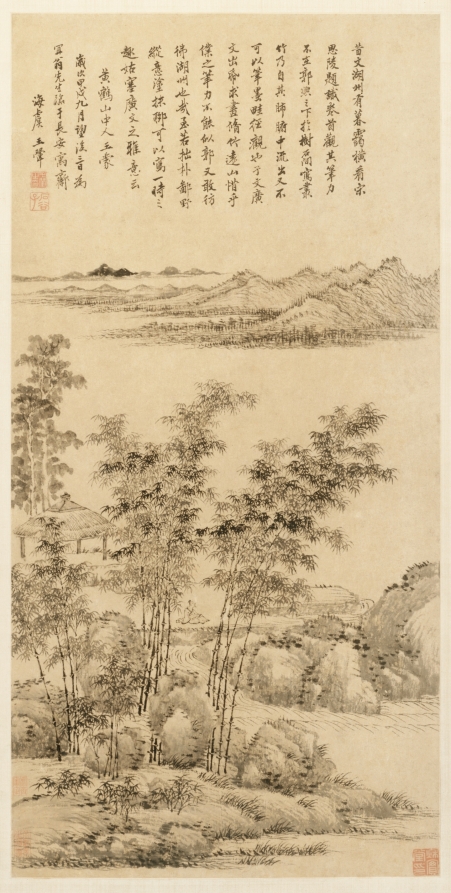
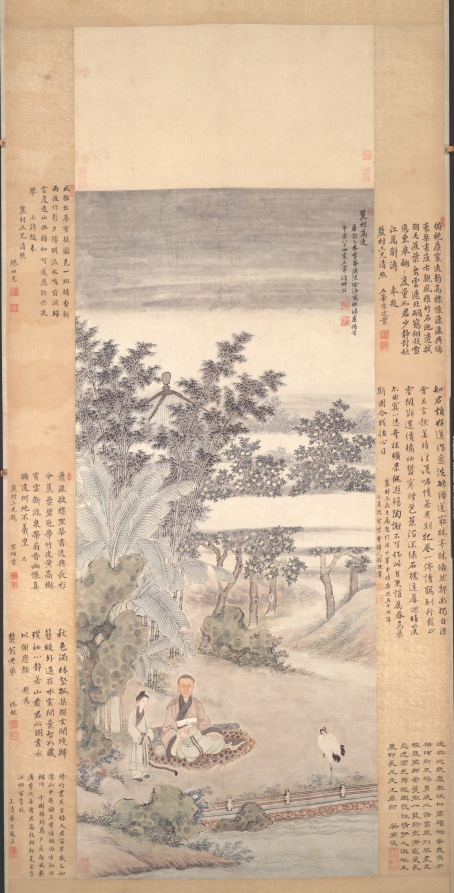
Wang Hui (1632-1717) was one of the most important Chinese landscape painters of the Qing dynasty, known for his synthesis of the classical landscape traditions of the Song, Yuan, and Ming dynasties in the orthodox manner that made him the leading painter of the Qing orthodox school. Landscape by Wang Hui demonstrates the synthesis of classical landscape traditions that distinguishes his best work—combining the brushwork of the Song dynasty masters with the compositional innovations of the Yuan and Ming painters in a manner that is simultaneously traditional and personal. Wang Hui was a favorite of the Kangxi Emperor and produced some of the most accomplished landscape paintings of the Qing dynasty.
Cultural Impact
Landscape by Wang Hui is important in the history of Chinese painting because it demonstrates the orthodox synthesis of classical landscape traditions that Wang Hui developed as the leading painter of the Qing orthodox school. Wang Hui's ability to synthesize the brushwork and compositional innovations of the Song, Yuan, and Ming masters in a manner that is simultaneously traditional and personal made him the most influential landscape painter of the Qing dynasty, and his orthodox style dominated Chinese landscape painting for centuries.
Why It Matters
Landscape is Wang Hui's orthodox synthesis: the classical landscape traditions of the Song, Yuan, and Ming dynasties combined in the simultaneously traditional and personal manner that made him the leading painter of the Qing orthodox school. Wang Hui was a favorite of the Kangxi Emperor and dominated Chinese landscape painting for centuries.