Provenance
Charles Lang Freer [1854–1919], Detroit, MI, given to the Cleveland Museum of Art (?-1919); The Cleveland Museum of Art, Cleveland, OH (1919-)
Accession Number
1915.106
Medium
hanging scroll, color on silk
Dimensions
Overall: 211.1 x 101.3 cm (83 1/8 x 39 7/8 in.)
Classification
Painting
Credit Line
Gift of Charles L. Freer
Tags
Painting Medieval (500–1399) Silk Painting Color: Orange Color: Brown
Background & Context
Background Story
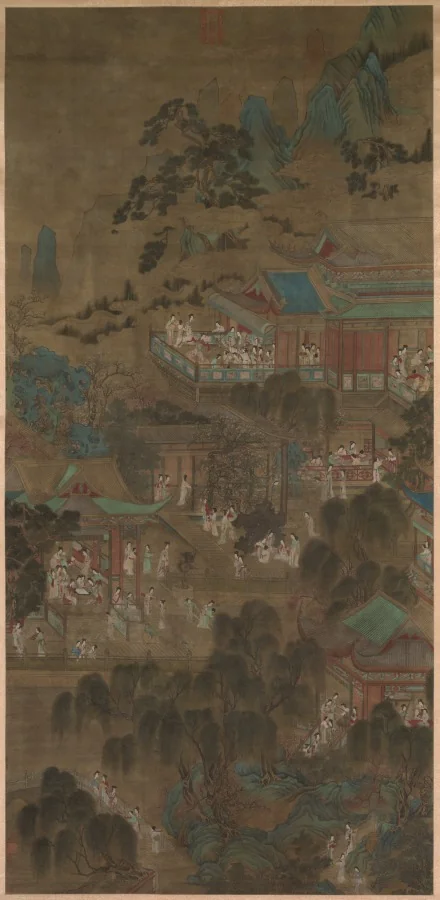
Court Ladies in the Imperial Palace from the Yuan dynasty (1271-1368) depicts court women in the imperial palace in the refined, elegant manner that distinguishes Chinese court painting of the period. The painting reflects the continuation of the court lady (shinuu-hua) tradition that had been practiced in Chinese court painting since the Tang dynasty, with Yuan dynasty court ladies rendered in the refined, colorful manner that maintains the elegance of the earlier tradition despite the Mongol rule that characterized the Yuan period.
Cultural Impact
Court Ladies in the Imperial Palace is important in the history of Chinese painting because it demonstrates the continuity of the court lady tradition during the Yuan dynasty, when Chinese court painting continued to be practiced under Mongol rule. The refined, elegant manner of the painting shows that the Chinese court painting tradition maintained its high standards even during the period of Mongol domination, and the court lady subject remained one of the most refined types of Chinese painting throughout the dynastic period.
Why It Matters
Court Ladies in the Imperial Palace is Yuan dynasty court painting maintaining Chinese elegance: court women rendered in the refined, colorful manner that continues the court lady tradition despite Mongol rule. The 1271-1368 painting shows the Chinese court painting tradition maintaining its high standards during the period of foreign domination.