Provenance
Mary Holland Bacher, New York, NY (?-1915); The Cleveland Museum of Art, Cleveland, OH (October 25, 1915)
Accession Number
1915.417
Medium
[]
Dimensions
Image: 13.3 x 22.9 cm (5 1/4 x 9 in.)
Classification
Drawing
Credit Line
Gift of Mrs. Mary H. Bacher, New York
Tags
Color: White
Background & Context
Background Story
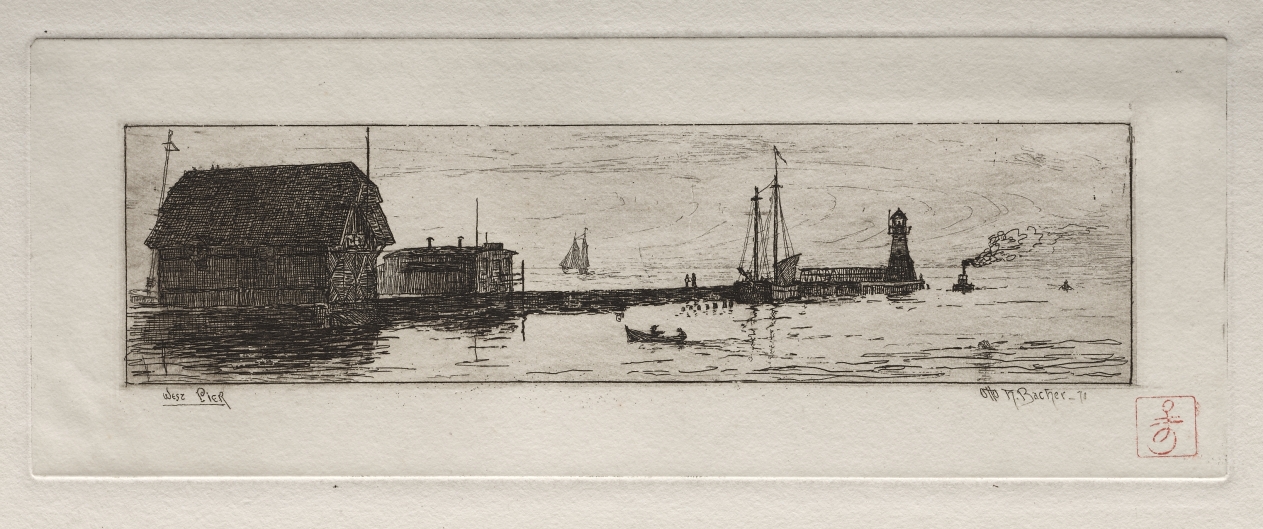
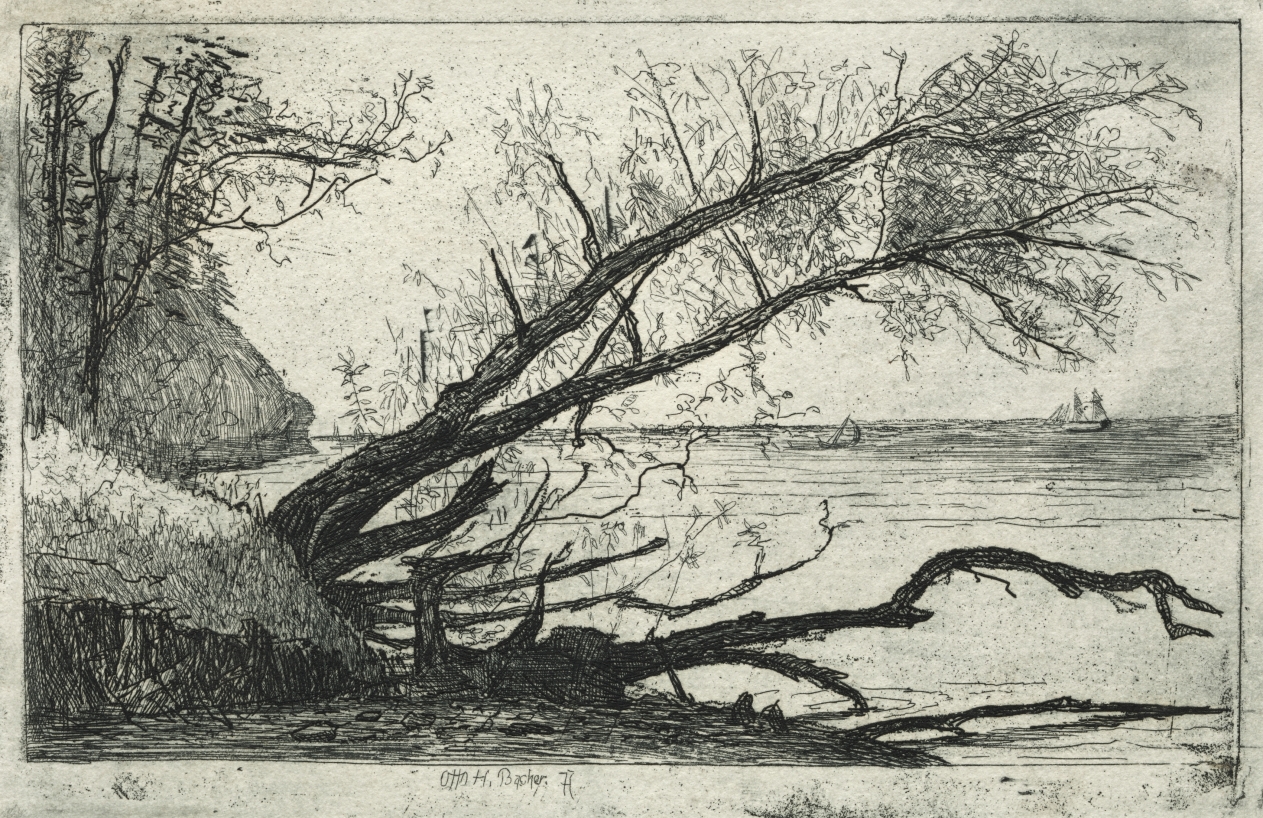
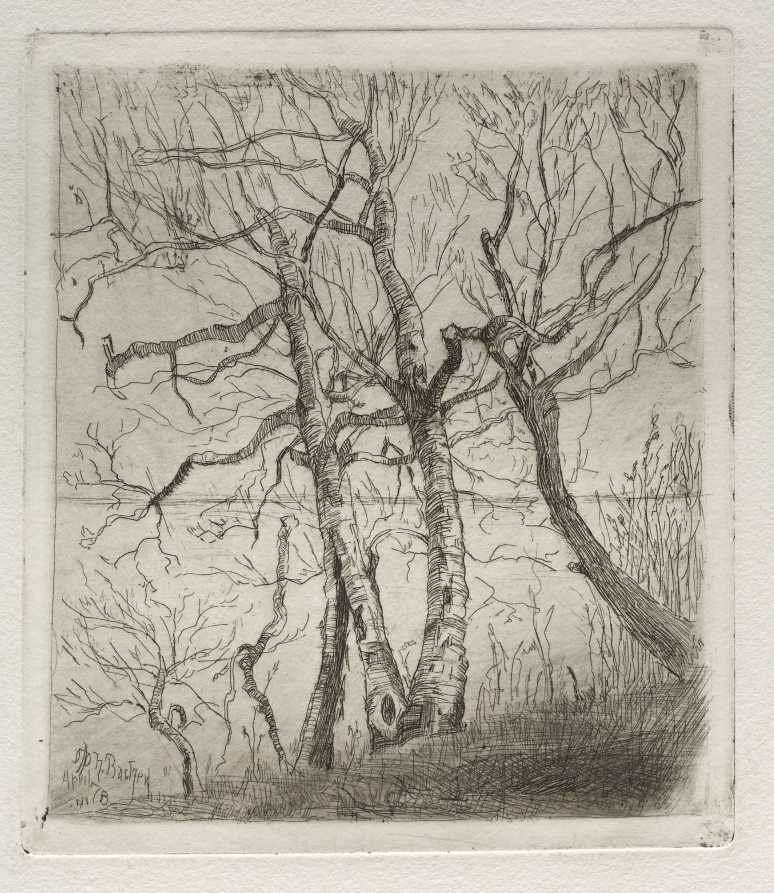
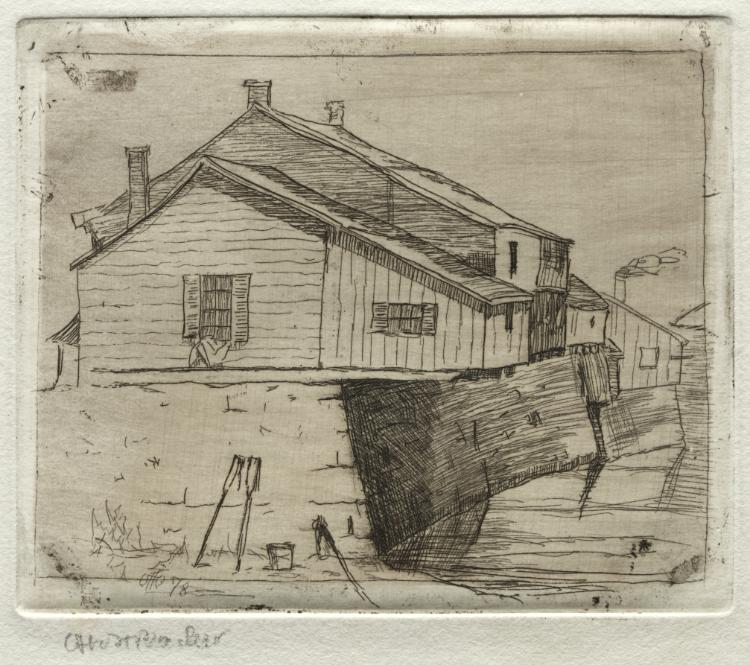
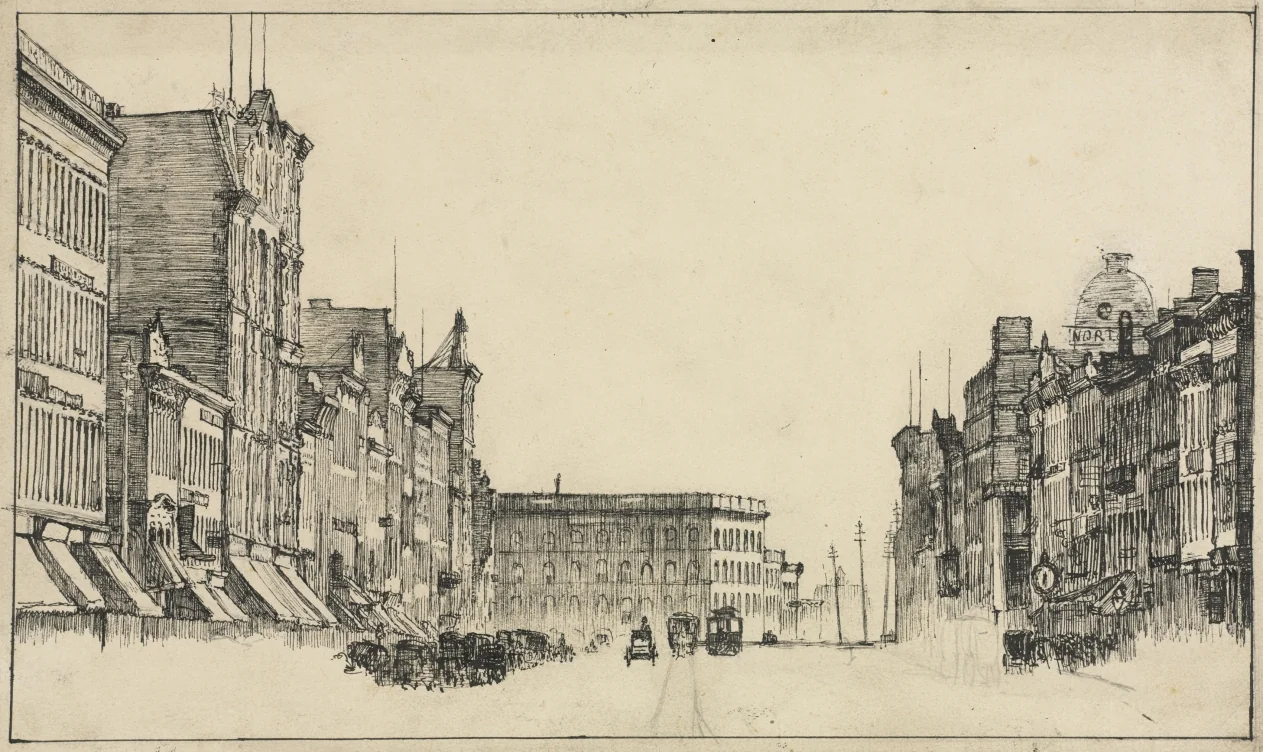
Otto H. Bacher's "Downtown, Cleveland" captures the urban landscape of his hometown during a period of explosive industrial growth. Bacher (1856–1909) was a prominent figure in the so-called "Cleveland School" of artists, a group that documented the city's transformation from a lakeside town into a major industrial center. Born in Cleveland, Bacher studied at the Royal Academy of Fine Arts in Munich and later worked alongside James McNeill Whistler in London, absorbing the tonalist sensibilities that would influence his work. This drawing likely depicts the commercial district near the Cuyahoga River, with its mix of brick buildings, warehouses, and street activity. Bacher's line work shows the influence of his training as a printmaker—he was an accomplished etcher who contributed to the revival of etching in America during the 1880s. His Cleveland cityscapes serve as an invaluable visual record of the city's 19th-century architectural character, much of which has since been lost to urban renewal and development.
Cultural Impact
Bacher's Cleveland drawings preserve the visual fabric of a rapidly industrializing American city in the late 19th century, offering contemporary viewers a window into the architectural and social landscape of the Midwest's industrial heartland.
Why It Matters
As both a gifted draftsman and a chronicler of Cleveland's urban development, Bacher's cityscape drawings are essential documents of American urban history, capturing the grit and grandeur of a city in transformation.