Provenance
(Dr. J. C. [John Calvin] Ferguson [1866–1945], Newton, MA, sold to the Cleveland Museum of Art) (?–1915); The Cleveland Museum of Art, Cleveland, OH (1915–)
Accession Number
1915.621
Medium
Hanging scroll mounted as a panel; ink and slight color on silk
Dimensions
Overall: 169.5 x 105.1 cm (66 3/4 x 41 3/8 in.)
Classification
Painting
Credit Line
Gift of the John Huntington Art and Polytechnic Trust
Tags
Painting Medieval (500–1399) Ink Panel Painting Silk Painting Chinese Color: Orange Color: Gold
Background & Context
Background Story
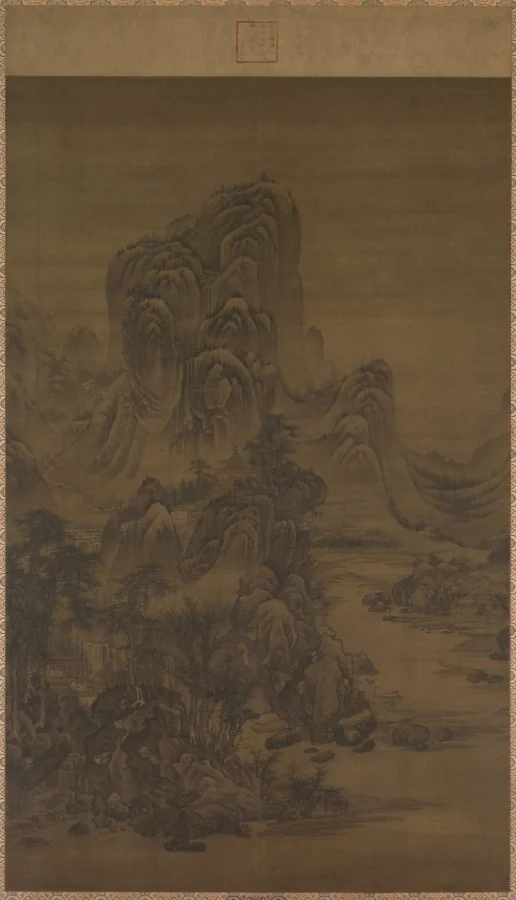
Liu Du (active 14th-17th century) was a Chinese painter known for the literati landscape paintings in the style of earlier masters that make him one of the accomplished painters of the Chinese literati tradition. Landscape in the Style of Juran from the Ming dynasty period depicts a landscape in the style of the Song dynasty master Juran, one of the most important subjects in the Chinese literati tradition of painting in the style of earlier masters. The tradition of painting in the style of earlier masters is one of the most important traditions in Chinese painting, and Liu Du's landscape in the style of Juran shows how this tradition was continued by literati painters who saw themselves as heirs to the great Song dynasty landscape tradition.
Cultural Impact
Landscape in the Style of Juran is important in the history of Chinese painting because it demonstrates the literati tradition of painting in the style of earlier masters, one of the most important traditions in Chinese art. The tradition of painting in the style of earlier masters—where literati painters created works that deliberately referenced the style of earlier masters as a form of artistic dialogue—is one of the most distinctive features of Chinese painting, and Liu Du's landscape shows how this tradition was continued by literati painters who saw themselves as heirs to the great Song dynasty landscape tradition.
Why It Matters
Landscape in the Style of Juran is Liu Du's literati painting in the style of earlier masters: a landscape referencing the Song dynasty master Juran in the tradition of the Chinese literati dialogue with the past. The Ming dynasty period shows how the tradition of painting in the style of earlier masters was continued by literati painters.


![Saint Bernard and Saint Catherine of Alexandria with the Virgin of the Annunciation [right panel]](https://api.nga.gov/iiif/e6890364-4d99-4684-a62b-5060ee3c3446/full/400,/0/default.jpg)