Description
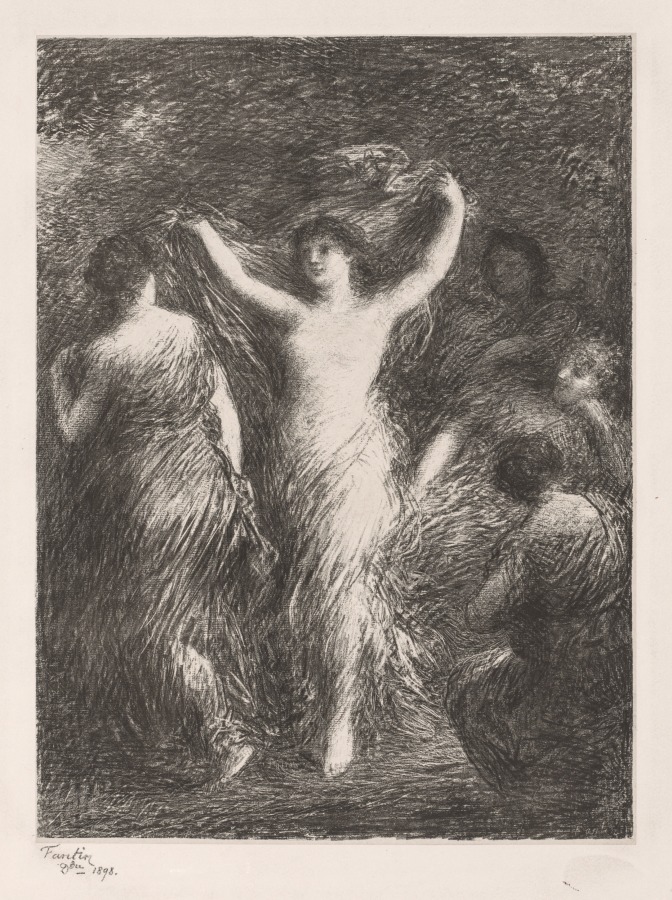
Tannhäuser, the male figure seated on the left, does not seem fully engaged in this merry scene. Among pale bodies and pastel hues, he alone is cast in shadow. The Wagner opera that inspired the painting centers on a struggle between profane and sacred love, and the tension between them appears embodied in the brooding Tannhäuser.
Provenance
Bought from the artist by Durand-Ruel, Paris, France, February 21, 1890 (stock number 2636), (1890); Sold to Durand-Ruel, New York, NY, March 6, 1890 (stock number 1000) (1890); (Durand-Ruel, New York, NY, January 4, 1891, sold to J. H. Wade) (1890-1891); Mr. and Mrs. J.H. Wade, Cleveland, OH, given to the Cleveland Museum of Art (1891-1916); The Cleveland Museum of Art, Cleveland, OH (1916-)
Accession Number
1916.1038
Medium
oil on canvas
Dimensions
Framed: 123.5 x 139.5 x 14 cm (48 5/8 x 54 15/16 x 5 1/2 in.); Unframed: 86.4 x 103.3 cm (34 x 40 11/16 in.)
Classification
Painting
Credit Line
Gift of Mr. and Mrs. J. H. Wade
Tags
Painting Impressionist & Modern (1851–1900) Oil Painting Canvas French Color: Orange Color: Brown
Background & Context
Background Story
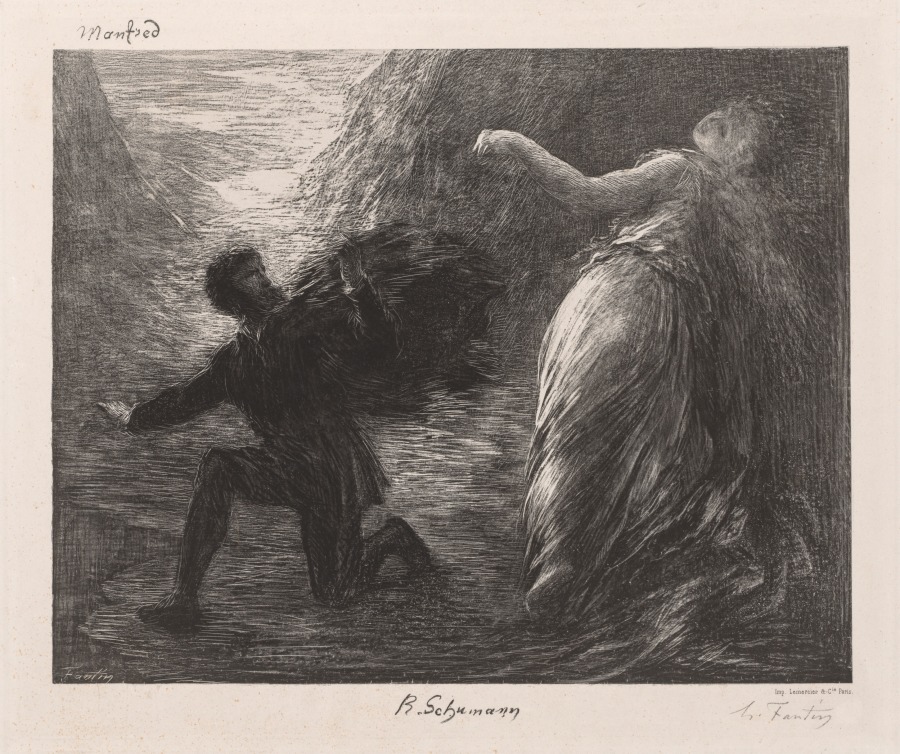
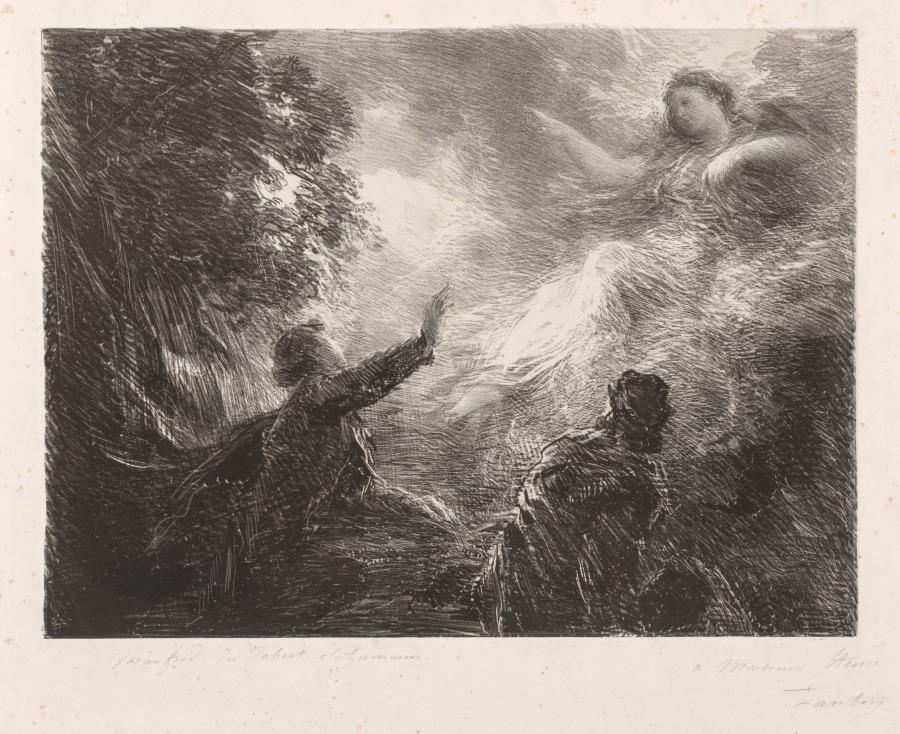
Tannhäuser (1886) represents Fantin-Latour's engagement with musical and literary subjects—the category of works that reveals his deepest artistic aspirations beyond portraiture and still life. The painting illustrates the medieval German legend of Tannhäuser, the knight who sought redemption from Pope Urban IV after falling under Venus's spell—a subject Richard Wagner had transformed into one of his most controversial operas in 1845. Fantin-Latour, a passionate Wagnerian who attended the Paris première of Tannhäuser in 1861, devoted a series of works to Wagnerian subjects that represent his most ambitious imaginative painting. The 1886 date places this late in Fantin-Latour's career, when he was devoting increasing attention to these musical-literary works. The painting likely emphasizes the opera's mystical and visionary dimensions rather than its narrative—Fantin-Latour's Wagnerian works typically aim for the experience of music rather than the illustration of plot. His approach connects to the broader Symbolist movement's interest in synesthesia and the translation of one art form's effects into another. The painting's tonal palette—subdued but with moments of luminous color—suggests the music's emotional range translated into chromatic terms.
Cultural Impact
Fantin-Latour's Wagnerian paintings influenced how opera and music were represented in visual art, establishing a tradition of music-inspired painting that influenced Symbolist artists like Gustave Moreau and Odilon Redon. The paintings influenced the cultural reception of Wagner's work in France, contributing to the Francophone Wagnerism that shaped French literature and art at the turn of the century. The paintings also influenced the broader concept of inter-art translation—the idea that one medium's effects could be rendered in another.
Why It Matters
This painting matters because it demonstrates how visual art can engage with non-visual experience—the experience of music—with genuine sophistication rather than mere illustration. Fantin-Latour's Tannhäuser does not depict the opera's events; it attempts to create a visual equivalent of the opera's emotional and spiritual effects, translating sound into color, rhythm into composition, and musical transport into visual reverie.