Accession Number
1916.1042
Medium
oil on fabric
Dimensions
Framed: 80 x 106.5 x 7.5 cm (31 1/2 x 41 15/16 x 2 15/16 in.); Unframed: 65.2 x 92.3 cm (25 11/16 x 36 5/16 in.)
Classification
Painting
Credit Line
Gift of Mr. and Mrs. J. H. Wade
Tags
Painting Impressionist & Modern (1851–1900) Oil Painting French Color: Yellow Color: Gold
Background & Context
Background Story
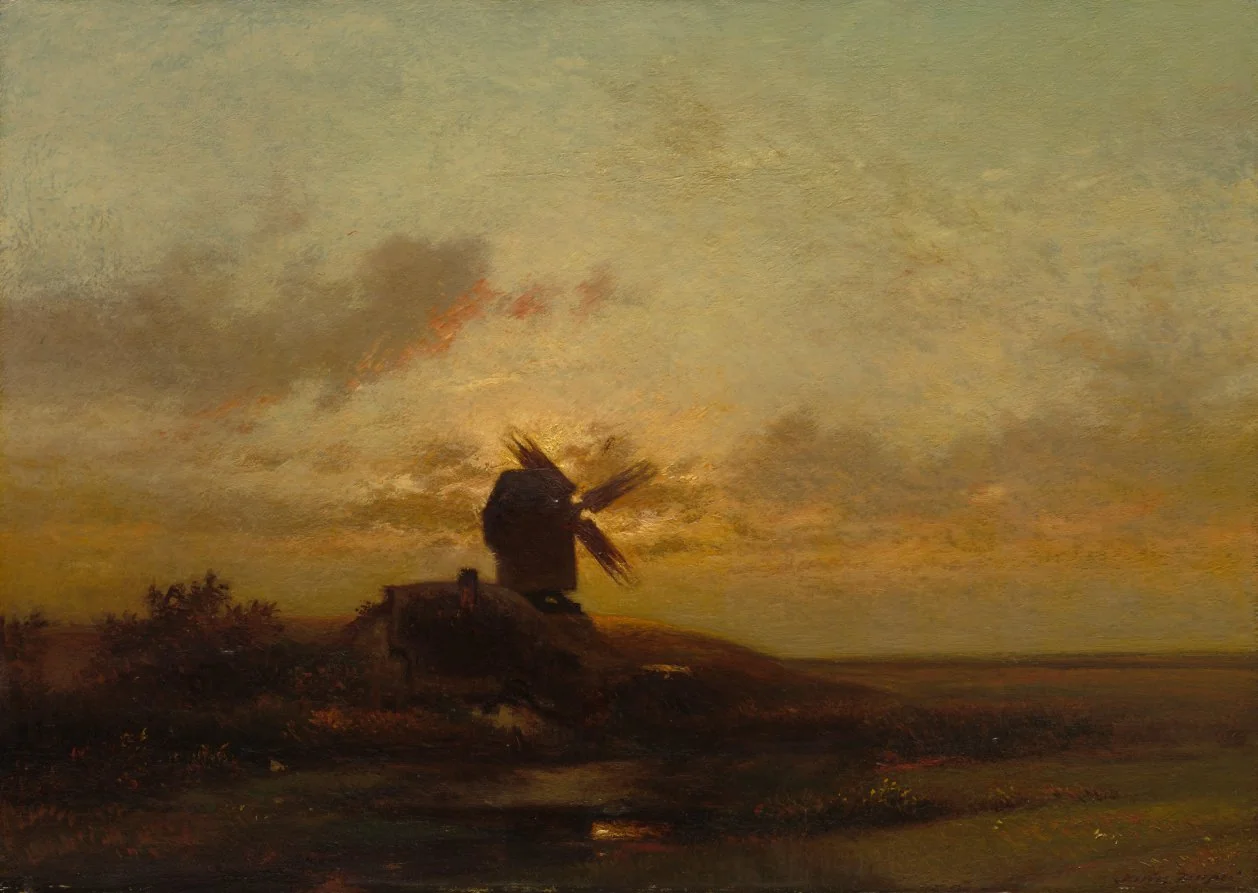
The windmill was a subject with deep resonance for French landscape painters, connecting the Barbizon generation to the Dutch Golden Age tradition they revered. Dupré's windmill rises from a flat, windswept landscape, its sails unfurled against a turbulent sky. The composition makes the windmill both a functional structure and a symbolic form — a marker of human industry that also stands as a vertical accent in a horizontal landscape. The handling is characteristically bold, with thick paint describing the clouds and thin glazes suggesting the distant fields.
Cultural Impact
Dupré visited Holland and England during his career, and The Windmill shows the influence of both Dutch marine painting and Constable's sky studies. But where the Dutch painters used windmills as topographic features of a recognizable landscape, Dupré makes his windmill a figure in a drama — a lone structure facing the elements with something approaching dignity.
Why It Matters
The Windmill is Dupré at his most theatrical. The painting transforms a utilitarian structure into a protagonist, proving that in Barbizon painting, the landscape itself could carry narrative and emotional weight without human figures.