Description
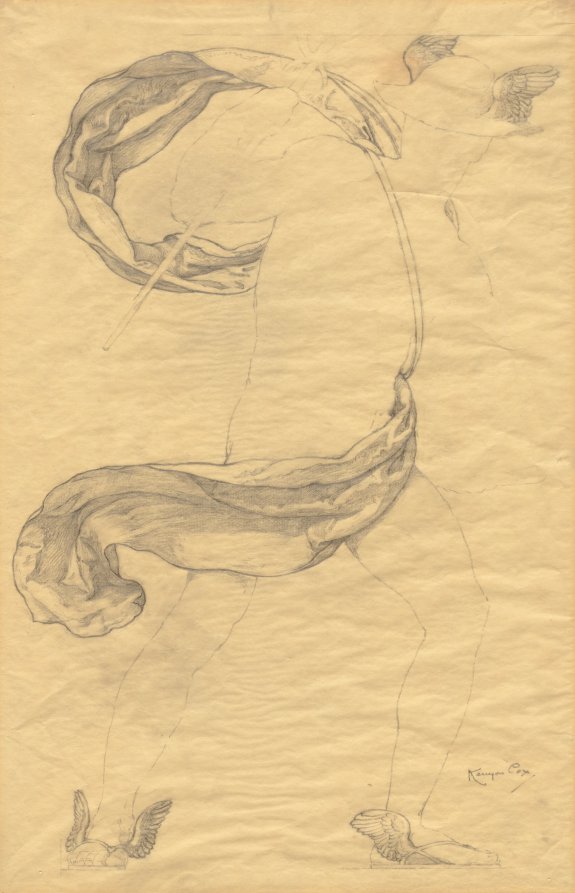
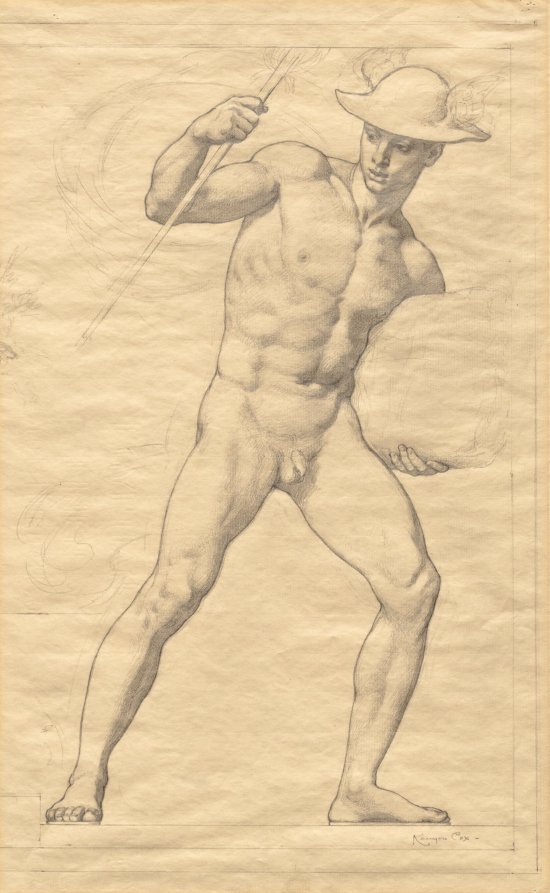
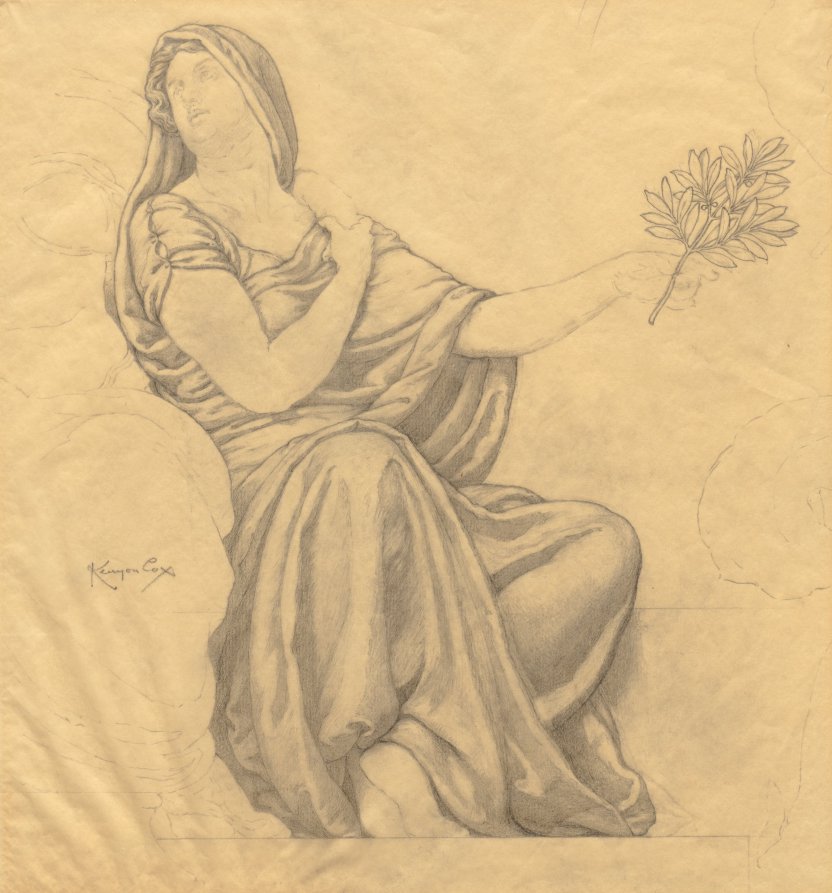
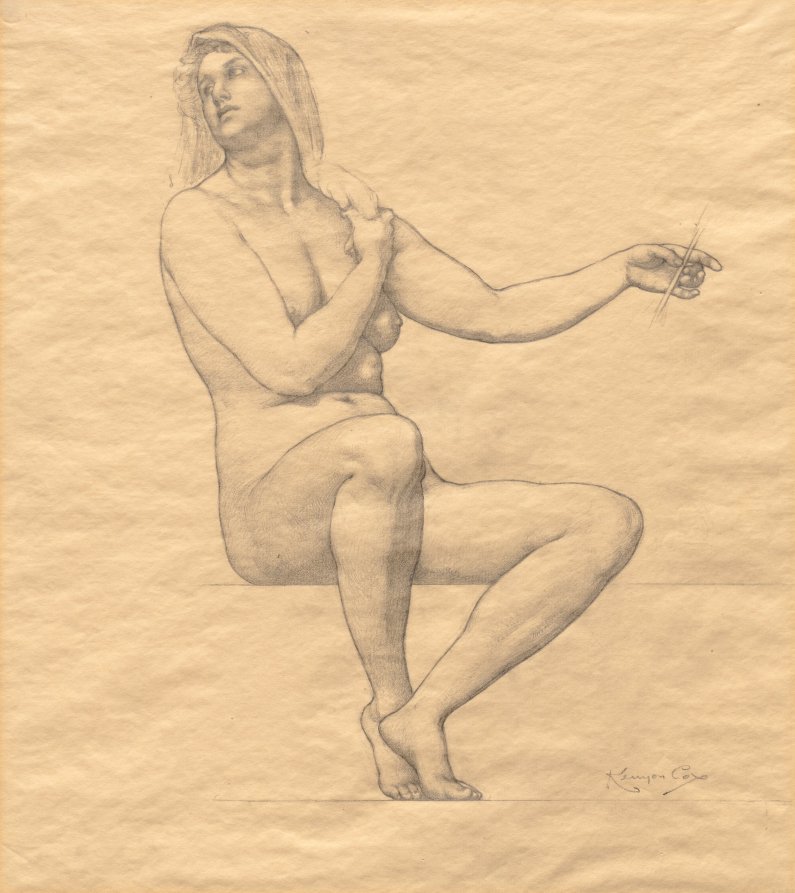
The painter and muralist Kenyon Cox viewed himself as the heir to the great traditions of the Italian Renaissance and vigorously led the resistance to all forms of modern painting. This design for U. S. currency, which was rejected by the government, shows the care with which he planned his compositions. Cox's son, Allyn, who also became a successful mural painter, posed for the male figure. Cox's brother, J. D. Cox, a prominent civic leader in Cleveland, played an active role in the formation of the Cleveland Museum of Art. He gave the museum the three works by his brother that are in this exhibition.
Provenance
Mr. Jacob D. Cox, Sr., Cleveland, OH, given to The Cleveland Museum of Art, Cleveland, OH (?–1916); The Cleveland Museum of Art, Cleveland, OH (October 5, 1916–)
Accession Number
1916.1069
Medium
graphite
Dimensions
Image: 15.9 x 37.8 cm (6 1/4 x 14 7/8 in.); Sheet: 30.3 x 50.8 cm (11 15/16 x 20 in.)
Classification
Drawing
Credit Line
Gift of J. D. Cox
Tags
Drawing Early Modern (1901–1950) Graphite & Pencil American Color: White
Background & Context
Background Story
Kenyon Cox's Design for United States Currency, dated 1912, is a work that sits at the intersection of fine art and governmental design by one of the most accomplished academic artists and muralists of the American Renaissance. Cox (1856-1919) was a painter, muralist, illustrator, and writer who studied in Paris under Carolus-Duran and at the Ecole des Beaux-Arts before returning to America to become a leading advocate of academic art principles. He was renowned for his murals in the Library of Congress, the Wisconsin State Capitol, and other major public buildings, and his writings on art were among the most articulate defenses of classical tradition in an era of increasing modernism. The design for American currency represents a fascinating commission, as banknote and currency design requires a unique combination of artistic skill, symbolic clarity, and resistance to counterfeiting. The artists commissioned to design American currency in this period worked within strict constraints: their compositions had to project authority, embody national ideals, and withstand the technical demands of intaglio engraving on small format. Cox's classical training made him ideally suited for this work, as currency design drew on the same repertoire of allegorical figures, symbolic attributes, and dignified composition that he employed in his mural projects. The year 1912 fell during a period when American currency design was undergoing significant changes, with the establishment of the Federal Reserve System approaching in 1913. The design of paper money was understood as a matter of national prestige and visual identity, and commissions for currency work were awarded to artists of the highest reputation. Cox's involvement in this project demonstrates how the academic art establishment was called upon to create the visual symbols of American governmental authority.
Cultural Impact
Currency design by fine artists like Cox represents a unique intersection of art and national identity. The visual vocabulary of American currency, with its allegorical figures and classical references, was shaped by academic artists who believed that national symbols should embody the highest artistic ideals of the Western tradition.
Why It Matters
This design reveals how American currency served as a canvas for the nation's most accomplished academic artists, linking financial authority to classical artistic tradition.