Accession Number
1917.276
Medium
watercolor
Dimensions
N/A
Classification
Drawing
Credit Line
Gift of Albert Rosenthal
Tags
Drawing Early Modern (1901–1950) Watercolor American Color: Brown Color: Gray
Background & Context
Background Story
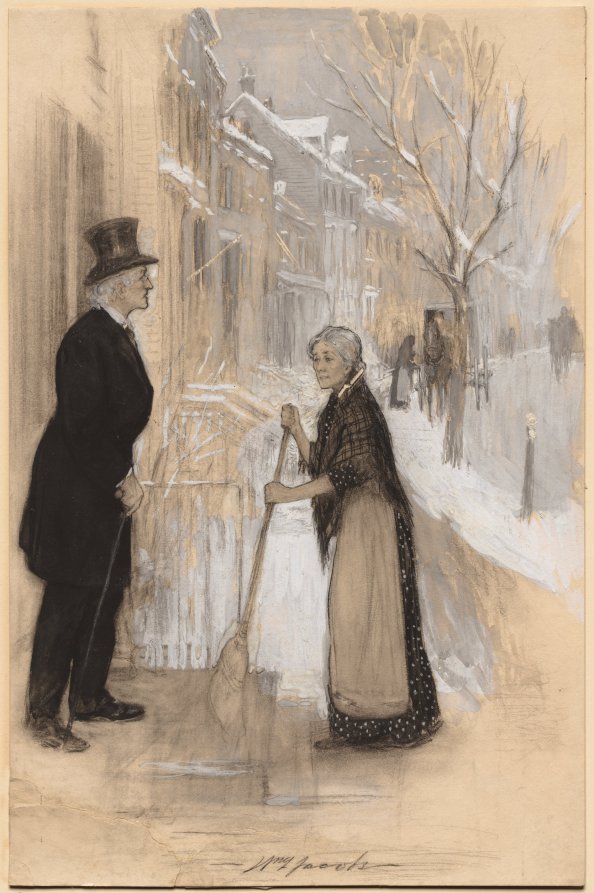
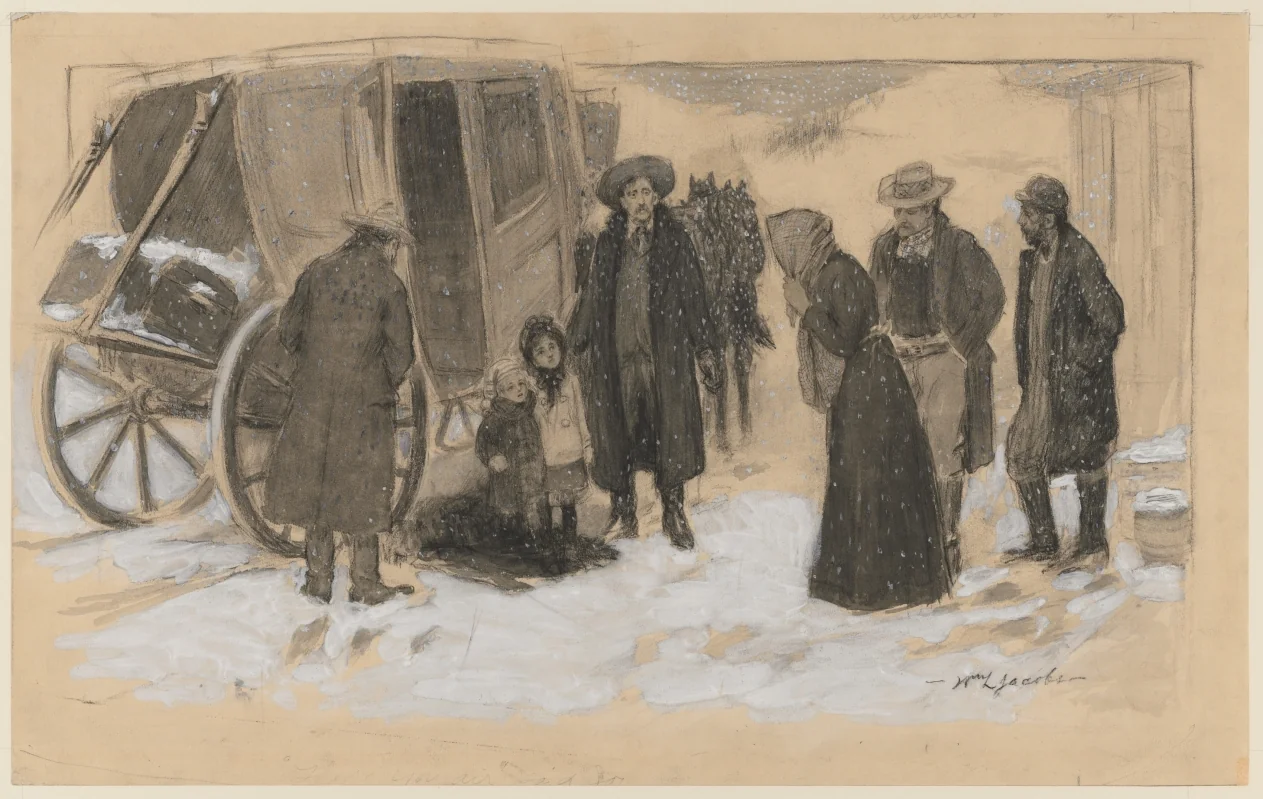
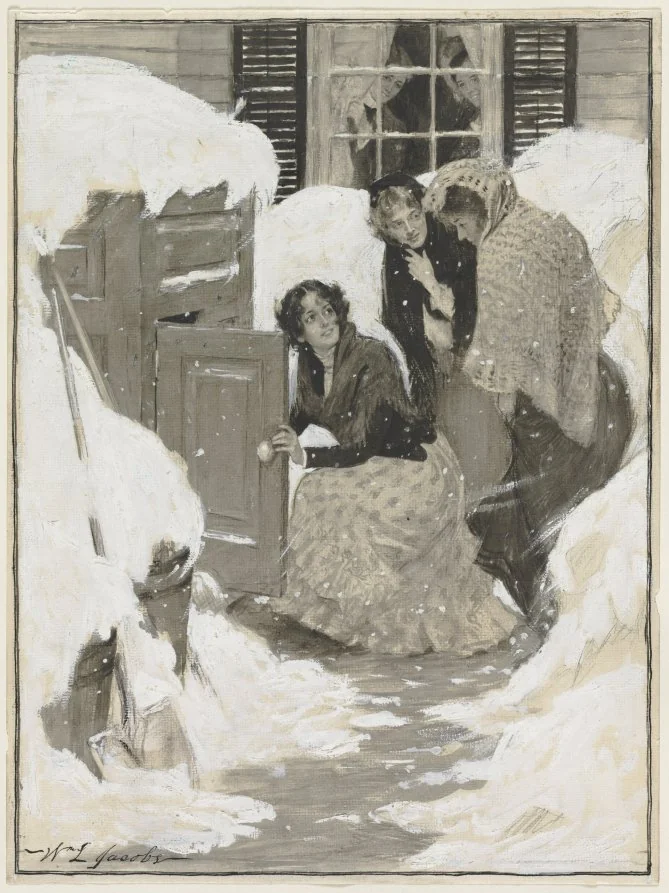
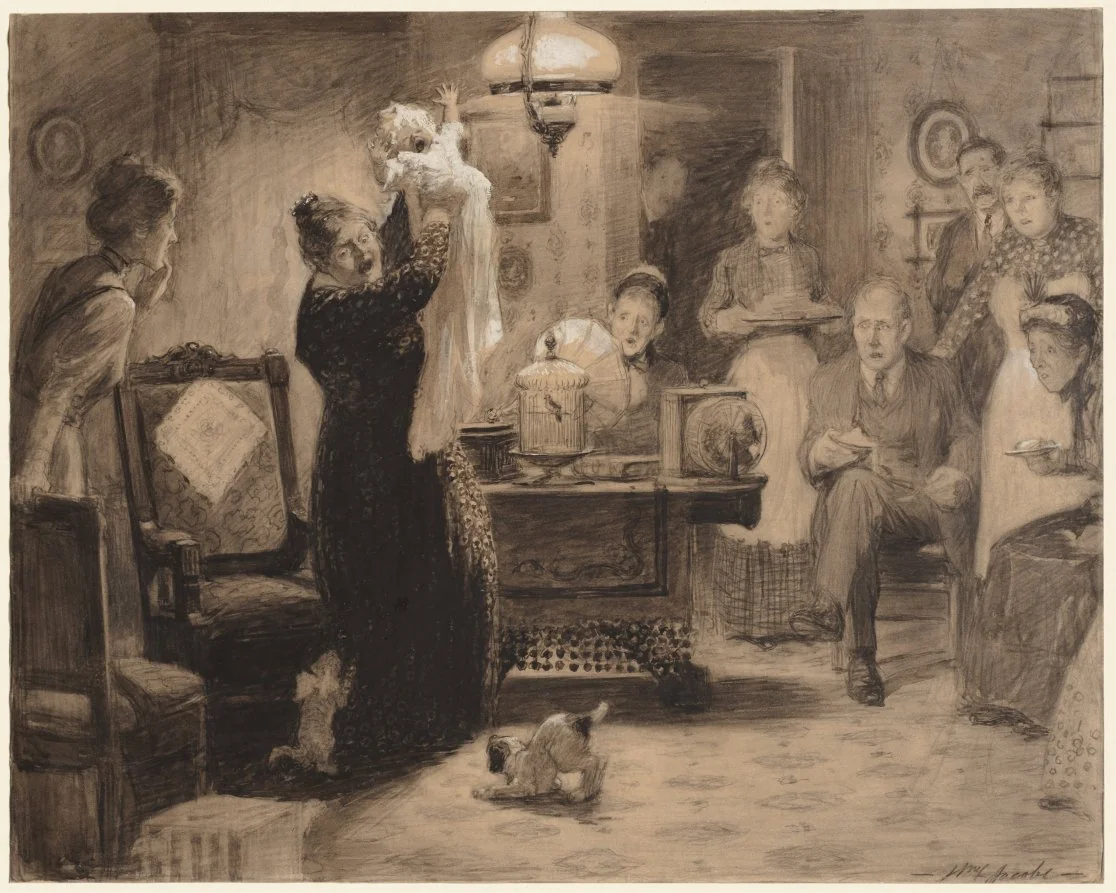
William Leroy Jacobs' Sketch to Illustration The Stationary Baby, dated 1912, is a preparatory drawing connected to a specific illustrated publication of the early 20th century. The title suggests a children's story or humorous piece, as the concept of a stationary baby carries comic potential that would have appealed to the period's taste for domestic humor and lighthearted genre subjects. Jacobs was an American illustrator active during a period when the golden age of American illustration was in full flower. The early 1910s saw illustrated magazines, books, and advertising reaching vast audiences, and illustrators like Jacobs worked within a professional ecosystem that demanded both technical skill and narrative clarity. The transformation from sketch to finished illustration was a multi-stage process: the artist typically produced rough concept sketches, developed a more refined compositional study, and then executed the finished illustration in the medium required by the publication. A sketch titled specifically for its connection to The Stationary Baby indicates that this is a preparatory work tied to a known publication, providing valuable documentation of the illustrator's working method. Children's illustration of this period drew on both the British tradition of Lewis Carroll and Kate Greenaway and the American tradition established by Howard Pyle, combining whimsy with careful attention to the child's perspective. The year 1912 places this work in the period before American illustration was transformed by the modernist revolution, when narrative clarity and decorative charm were still the primary virtues of the illustrator's art.
Cultural Impact
Preparatory sketches for children's illustrations provide insight into the professional practices of early 20th-century illustrators and the creative decisions that shaped the visual culture consumed by millions of Americans. The golden age of American illustration created a vast body of work that influenced visual culture for generations.
Why It Matters
This sketch reveals the preparatory stage of early 20th-century illustration, showing how artists developed narrative images for publication during the golden age of American illustration.