Description
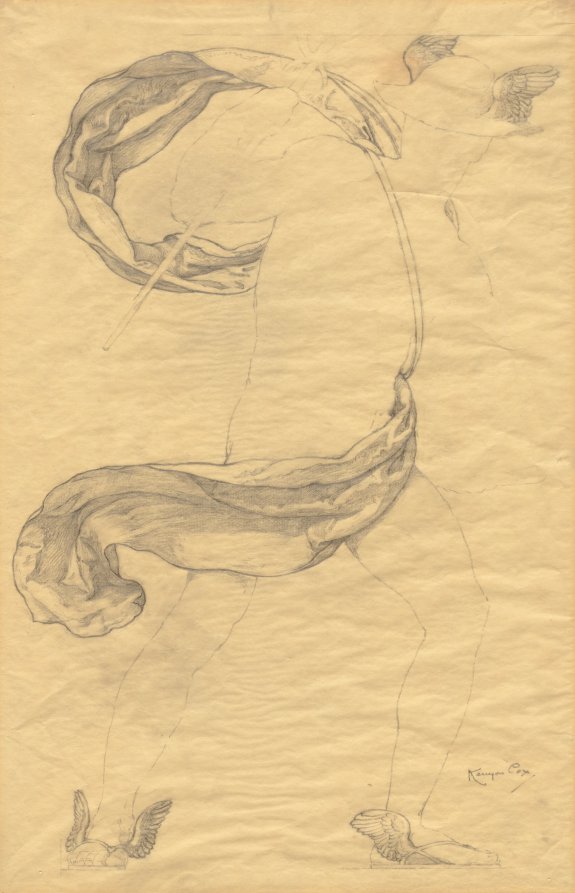
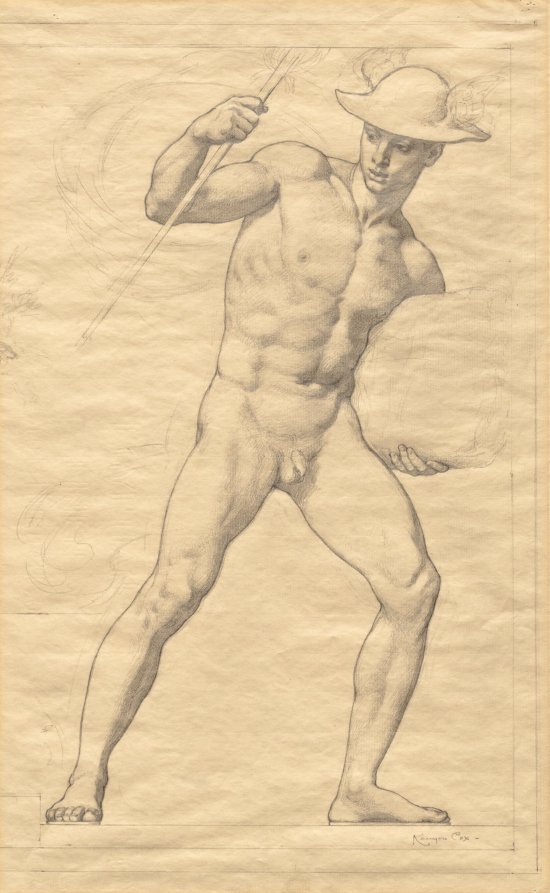
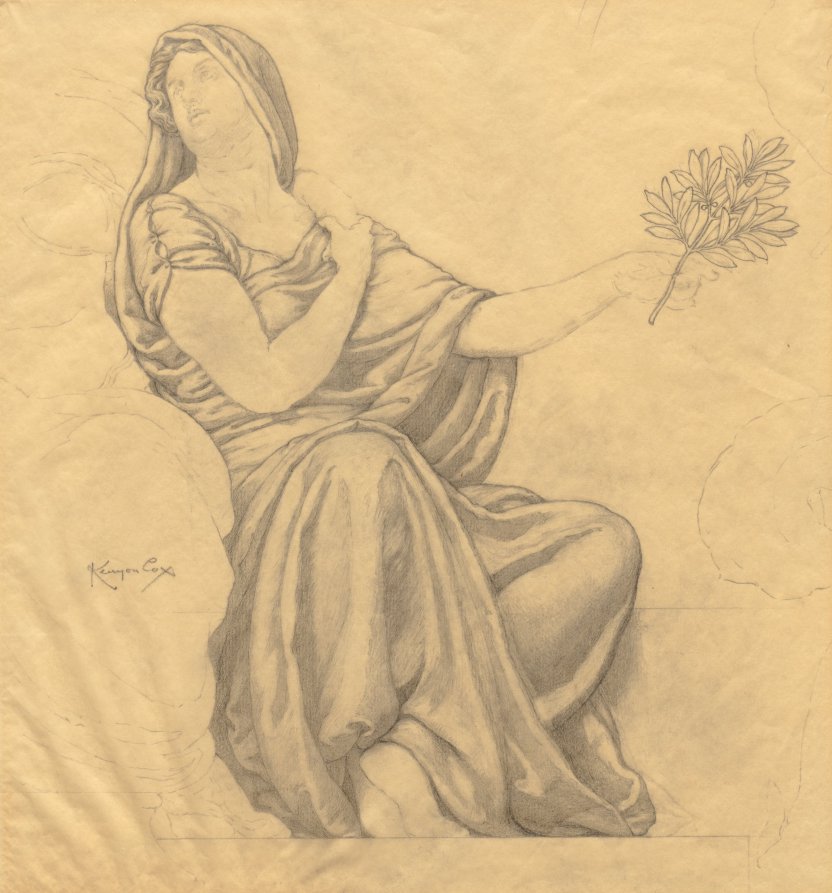
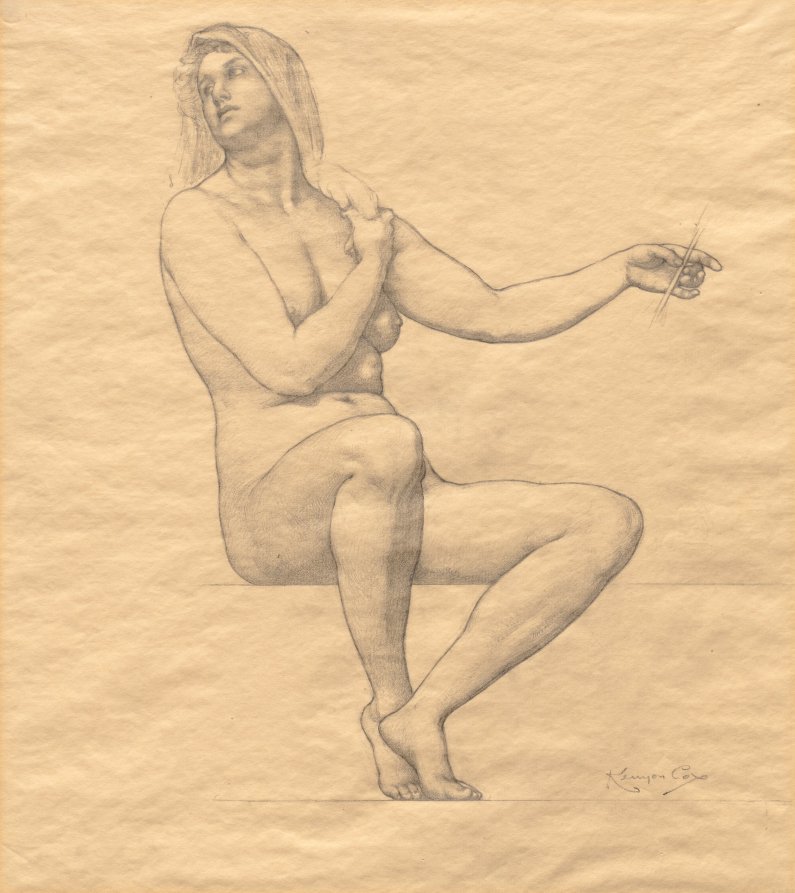
This painting demonstrates Cox's ideas about the importance in art of tradition and the classical spirit. Two figures in Grecian costumes, representing the arts of the past, pass on the eternal flame of tradition to two figures in Renaissance dress. Literature wears the laurel crown, and Painting holds the palette. Born in Warren, Ohio, Cox studied art in Cincinnati and at the Pennsylvania Academy of Fine Arts in Philadelphia. In 1877, he moved to Paris to study under Carolus Duran (1838-1917) and Jean-Léon Gérôme (1824-1904). Five years later, Cox returned to New York where he established himself as a leader in the academic and conservative movement known as the American Renaissance. The artist achieved particular fame as a muralist; however by 1916, his health deteriorating, he turned his attention to paintings on canvas.
Provenance
artist's brother.
Accession Number
1917.9
Medium
oil on canvas
Dimensions
Unframed: 106 x 165.5 cm (41 3/4 x 65 3/16 in.)
Classification
Painting
Credit Line
Gift of J. D. Cox
Tags
Painting Early Modern (1901–1950) Oil Painting Canvas American Color: Orange
Background & Context
Background Story
Kenyon Cox (1856-1919) was an American painter known for the classical, academic paintings and murals that make him one of the most important proponents of the American academic tradition in the late 19th and early 20th centuries. Tradition from 1916 depicts an allegorical figure in the classical, academic manner that distinguishes Cox's best work from the more modern painting of his contemporaries. Cox was a vocal defender of the academic tradition against modernism, and his paintings represent one of the most accomplished expressions of the American academic tradition at the moment when it was being challenged by modernism.
Cultural Impact
Tradition is important in the history of American painting because it represents one of the most accomplished expressions of the American academic tradition at the moment when it was being challenged by modernism. Cox's classical, academic paintings—defending the academic tradition against the challenge of modernism with the accomplished technique of a classically trained painter—represent one of the most important expressions of the academic tradition in American painting, and the 1916 painting shows this tradition at the moment of its greatest challenge.
Why It Matters
Tradition is Cox's classical academic painting: an allegorical figure rendered in the accomplished manner of one of the most important proponents of the American academic tradition. The 1916 painting represents the academic tradition at the moment when it was being challenged by modernism—defending tradition with the technique of a classically trained painter.