Accession Number
1920.277
Medium
oil on canvas
Dimensions
Framed: 77.5 x 93.5 x 9 cm (30 1/2 x 36 13/16 x 3 9/16 in.); Unframed: 64.8 x 81.3 cm (25 1/2 x 32 in.)
Classification
Painting
Credit Line
Gift of The Cleveland Art Association
Tags
Painting Early Modern (1901–1950) Oil Painting Canvas American Color: Green
Background & Context
Background Story
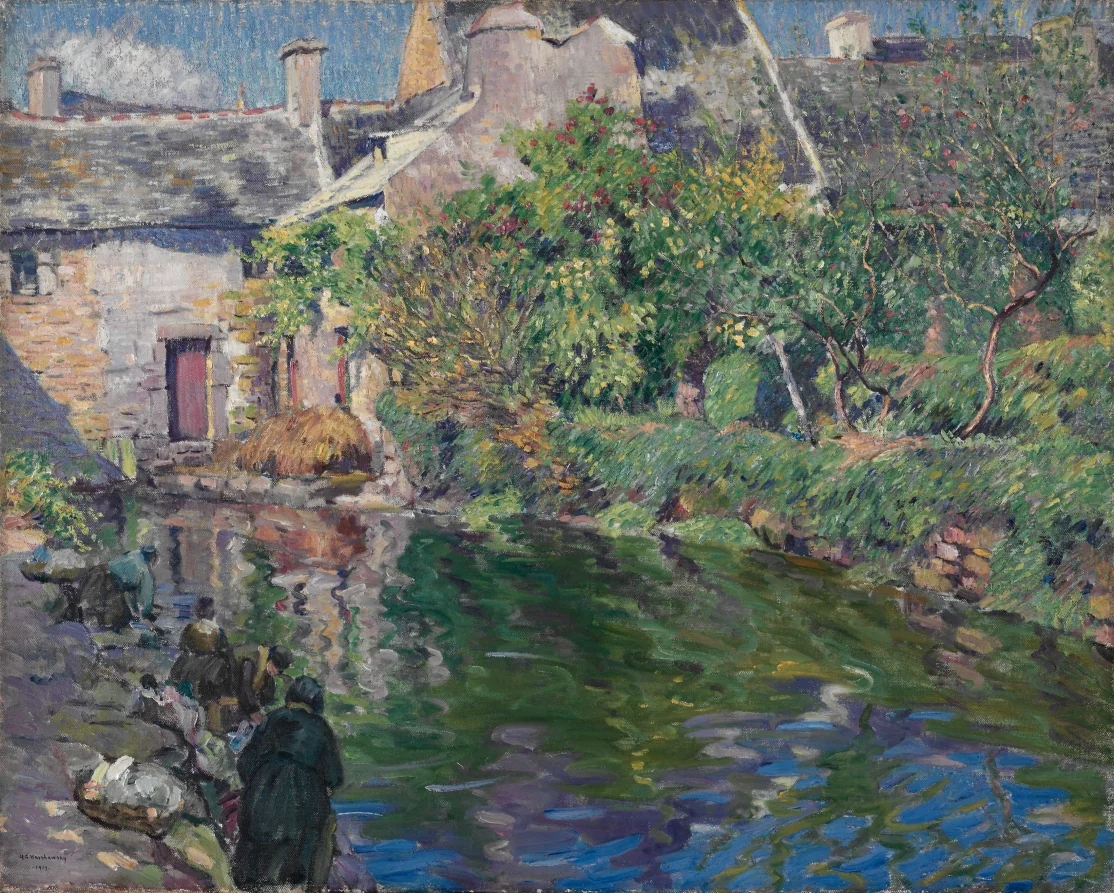
Abel George Warshawsky (1883-1956) was an American painter known for the precisely observed, atmospheric landscape and genre paintings of France that make him one of the accomplished American painters working in France in the early 20th century. Washerwomen at Goyen from 1917 depicts washerwomen at the Goyen River in France in the precisely observed, atmospheric manner that distinguishes Warshawsky's best work from the more general painting of his contemporaries. The 1917 date places this in the period when American painters working in France were producing some of their most accomplished works, and the washerwomen subject shows Warshawsky's talent for depicting French genre subjects with precise observation.
Cultural Impact
Washerwomen at Goyen is important in the history of American painting because it demonstrates the precisely observed, atmospheric manner that Warshawsky brought to French genre subjects as one of the accomplished American painters working in France. Warshawsky's precisely observed genre paintings of French life—combining the precise observation of the French genre tradition with the atmospheric effect that is his most distinctive contribution—represent one of the accomplished traditions in American painting in France, and the 1917 painting shows this tradition at its most precisely observed.
Why It Matters
Washerwomen at Goyen is Warshawsky's precisely observed French genre: washerwomen at the Goyen River rendered in the atmospheric manner of one of the accomplished American painters working in France. The 1917 painting shows the combination of precise observation with atmospheric effect in French genre subjects.
![Saint Bernard and Saint Catherine of Alexandria with the Virgin of the Annunciation [right panel]](https://api.nga.gov/iiif/e6890364-4d99-4684-a62b-5060ee3c3446/full/400,/0/default.jpg)