Description
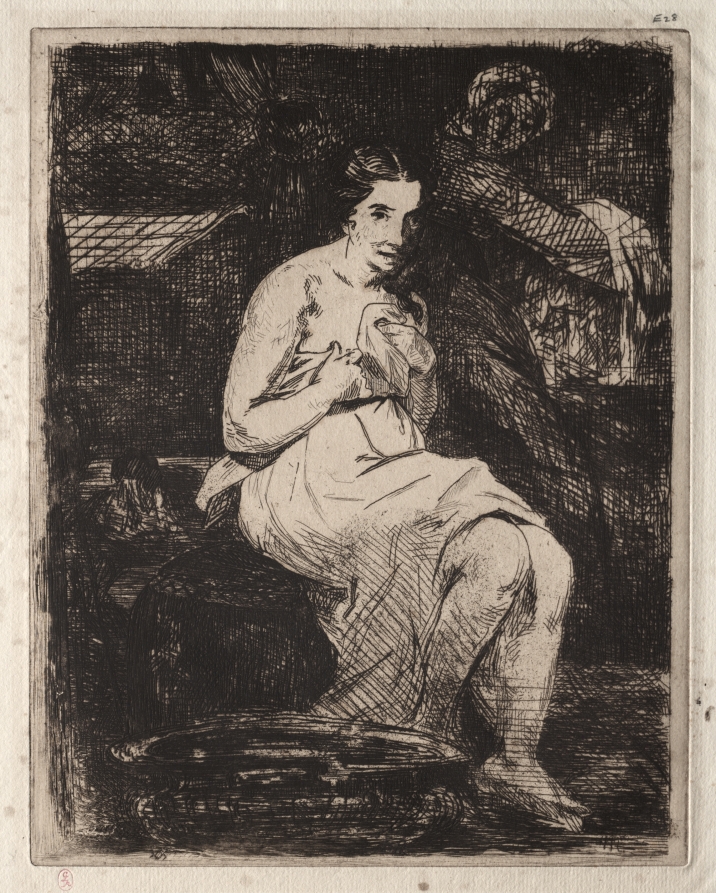
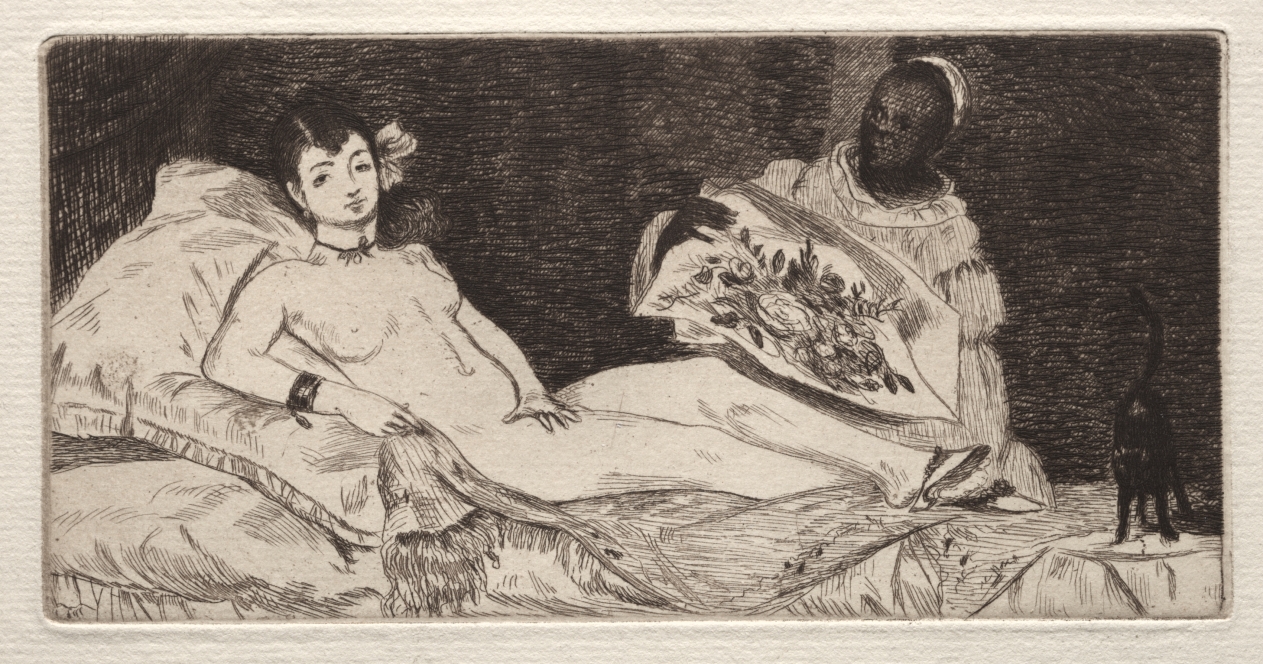
When Edouard Manet’s painting Olympia was exhibited in Paris in 1865, it was met by the critics and general public with jeers, laughter, criticism, and distain. Manet had depicted his model, Victorine Meurent, as a modern day courtesan, confrontational rather than seductive. Manet’s depiction of a prostitute’s body in a contemporary setting was a radical rejection of the idealized beauty of the traditional female nude. Olympia forced recognition of troubled and contradictory attitudes toward prostitution in the mid-19th century, much to the discomfort of contemporary audiences. The artist made this etching to reproduce his controversial painting.
Provenance
[]
Accession Number
1922.186
Medium
etching
Dimensions
N/A
Classification
Credit Line
Gift of Ralph King
Background & Context
Background Story
When Manet's painting Olympia was exhibited at the Paris Salon of 1865, it provoked jeers, laughter, and outright hostility. The painting depicts his model Victorine Meurent as a modern-day courtesan — reclining nude on a bed, wearing only a ribbon around her neck and a flower in her hair, staring directly and confrontationally at the viewer.
Behind her, a Black servant (modeled by Laure) offers a bouquet — likely from an admirer that Olympia has already dismissed. A black cat sits at the foot of the bed, replacing the traditional sleeping dog of modesty with a symbol of independence and sexuality.
Cultural Impact
Olympia is widely considered a founding work of modern art — the moment when artists began to depict the contemporary world on its own terms, without the protective armor of classical references. It forced recognition of contradictory attitudes toward prostitution in mid-19th century Paris, much to the discomfort of contemporary audiences.
Why It Matters
Nude women were standard subjects in academic painting — but always as mythological goddesses, safely removed from reality. Manet's radical innovation was to paint a real contemporary woman — recognizable, specific, unapologetic — as a sex worker. Her direct gaze refused the viewer the comfortable position of detached observer.