Accession Number
1924.128
Medium
graphite and watercolor
Dimensions
Sheet: 32 x 49.3 cm (12 5/8 x 19 7/16 in.)
Classification
Drawing
Credit Line
Gift of Mrs. Albert Roullier and Miss Roullier in memory of Albert Roullier
Tags
Drawing Impressionist & Modern (1851–1900) Watercolor Graphite & Pencil Color: Orange Color: White
Background & Context
Background Story
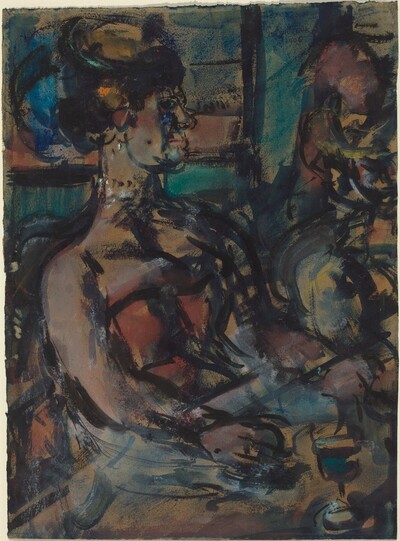
The Reflection from c. 1900-1910 is attributed to Hand B working in the circle of Auguste Rodin (1840-1917), the French sculptor known for the expressive, unfinished manner that transformed sculpture from the polished neoclassical tradition to the modern expressiveness of the 20th century. The Hand B attribution indicates that this is one of the hands that Rodin used in his studio to work up his sculptural ideas, and The Reflection shows the expressive, unfinished manner that Rodin developed from the 1880s onward—the rough, seemingly unfinished surface that suggests the emergence of form from raw material.
Cultural Impact
The Reflection is important in the context of Rodin's sculptural practice because it demonstrates the expressive, unfinished manner that Rodin developed as an alternative to the polished neoclassical tradition. Rodin's practice of leaving his sculptures seemingly unfinished—allowing the rough surface to suggest the emergence of form from raw material—was one of the most important innovations in the history of sculpture, and The Reflection by Hand B shows this manner as it was practiced in Rodin's studio.
Why It Matters
The Reflection is Rodin's studio practice in expressive sculpture: a hand from Rodin's studio rendered in the expressive, unfinished manner that Rodin developed as an alternative to the polished neoclassical tradition. The c. 1900-10 sculpture shows the emergence of form from raw material that was Rodin's most important innovation in the history of sculpture.