Accession Number
1924.328
Medium
black crayon
Dimensions
Sheet: 43.6 x 27.9 cm (17 3/16 x 11 in.); Image: 19 x 20 cm (7 1/2 x 7 7/8 in.)
Classification
Drawing
Credit Line
Gift of Ralph King
Tags
Drawing Impressionist & Modern (1851–1900) French Color: White
Background & Context
Background Story
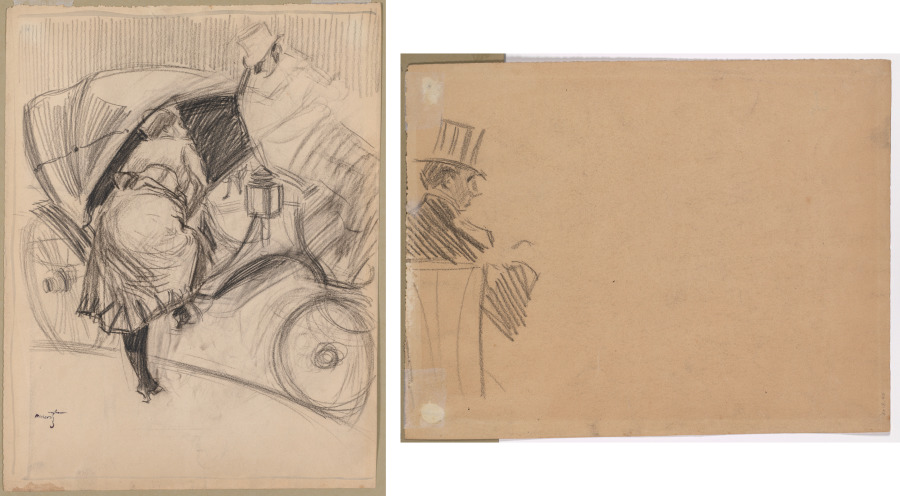
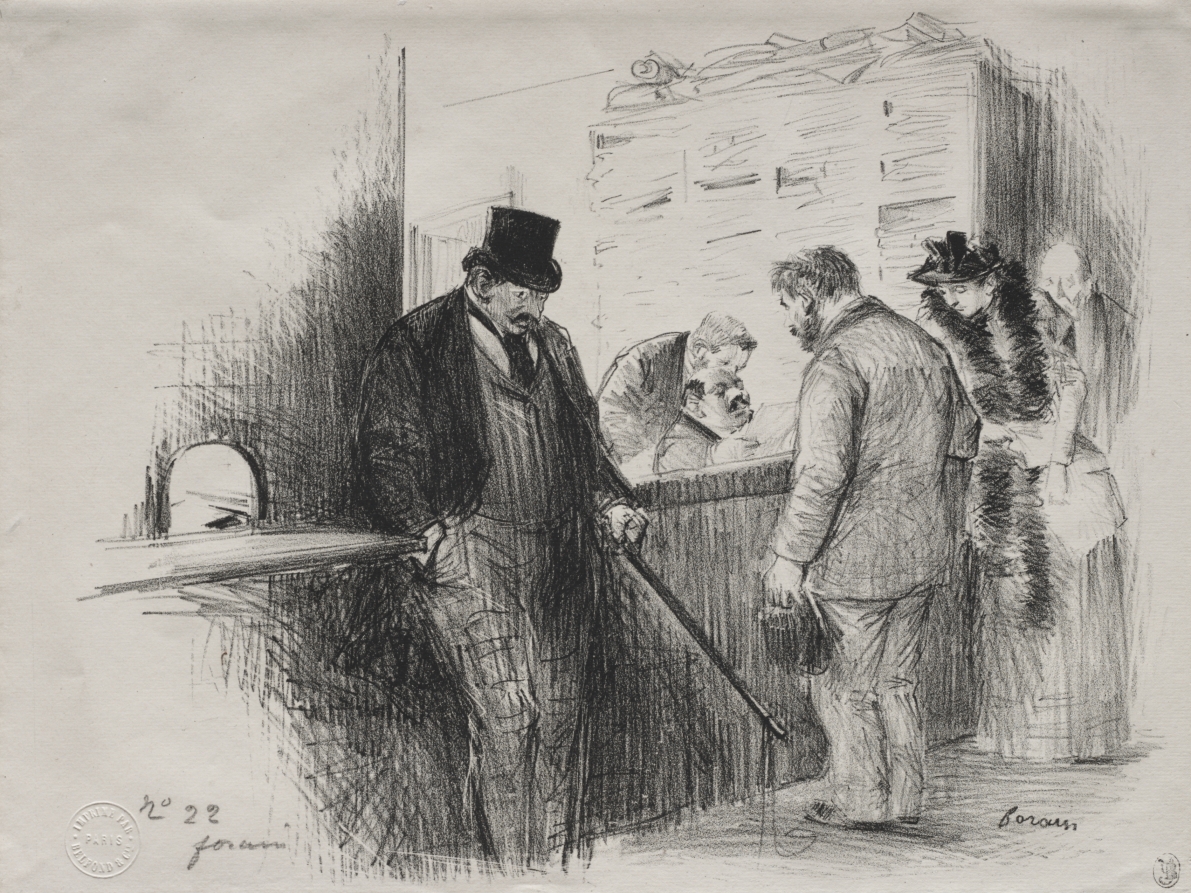
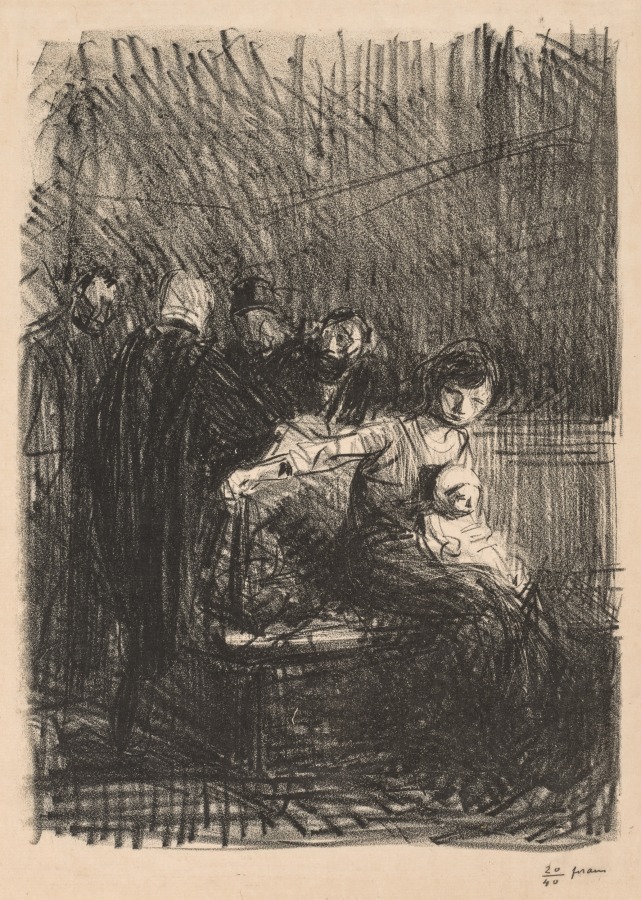
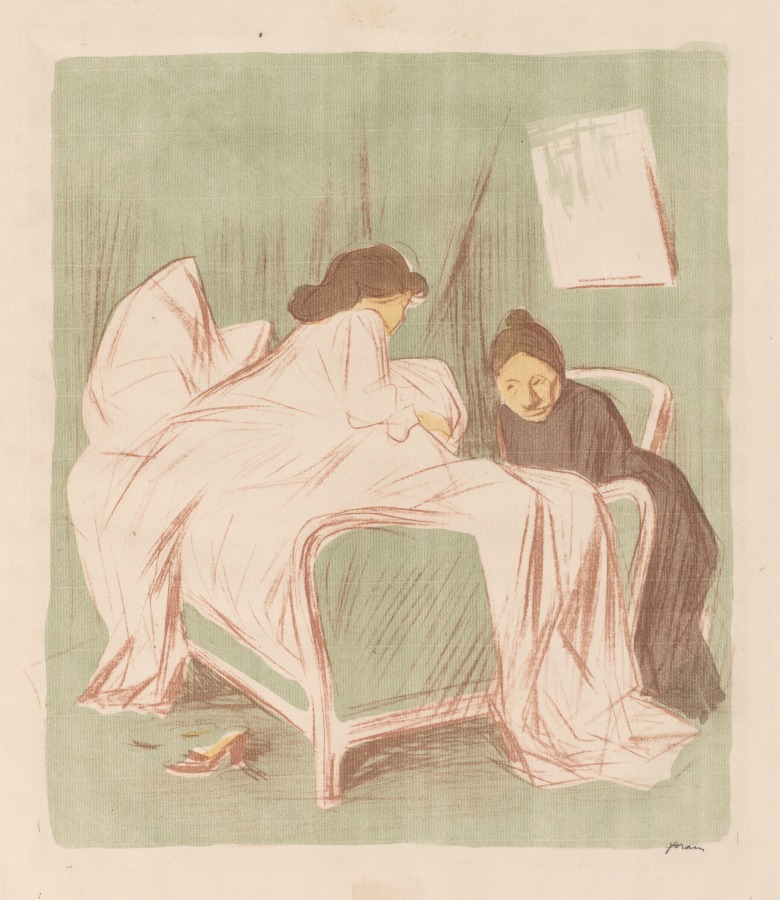
An Idyll (c. 1880-1890) by Jean Louis Forain depicts a scene of bourgeois leisure or romantic encounter—the kind of social ritual that Forain chronicled with the satirical precision that made him one of the most incisive commentators on Parisian society. The title 'An Idyll' is likely ironic: Forain's work consistently exposed the gap between the romantic ideal that bourgeois society professed and the transactional reality that actually governed relationships. The 1880-90 date places this during the period when Forain was establishing his reputation as a satirical observer of Parisian life, contributing drawings to Le Courrier Français and other publications that chronicled the Third Republic's social rituals. His treatment of the idyll subject likely reveals the economic and social mechanisms that produced bourgeois romance: the exchange of money, status, and sexual access that formal courtship concealed. Forain's approach to social subjects was influenced by his friendship with Degas—they shared an interest in the behind-the-scenes reality that social rituals concealed—but Forain's approach was more overtly satirical, exposing the hypocrisies that Degas merely documented. An Idyll thus represents Forain's characteristic method: taking a scene that bourgeois society would identify as romantic and revealing the transactional reality underneath.
Cultural Impact
Forain's satirical paintings influenced how Parisian social hypocrisy was represented in art, establishing a tradition of social satire that influenced later artists and writers. The paintings influenced the development of social commentary in visual art, connecting satire to the Impressionist commitment to modern life. An Idyll influenced how the relationship between romantic ideal and social reality was represented in French art.
Why It Matters
This painting matters because it exemplifies Forain's satirical method—taking a scene that bourgeois society would identify as romantic and revealing the transactional reality underneath. The title's irony is Forain's characteristic gesture: the idyll is not an idyll, and art's responsibility is to expose the gap between social pretense and social reality.